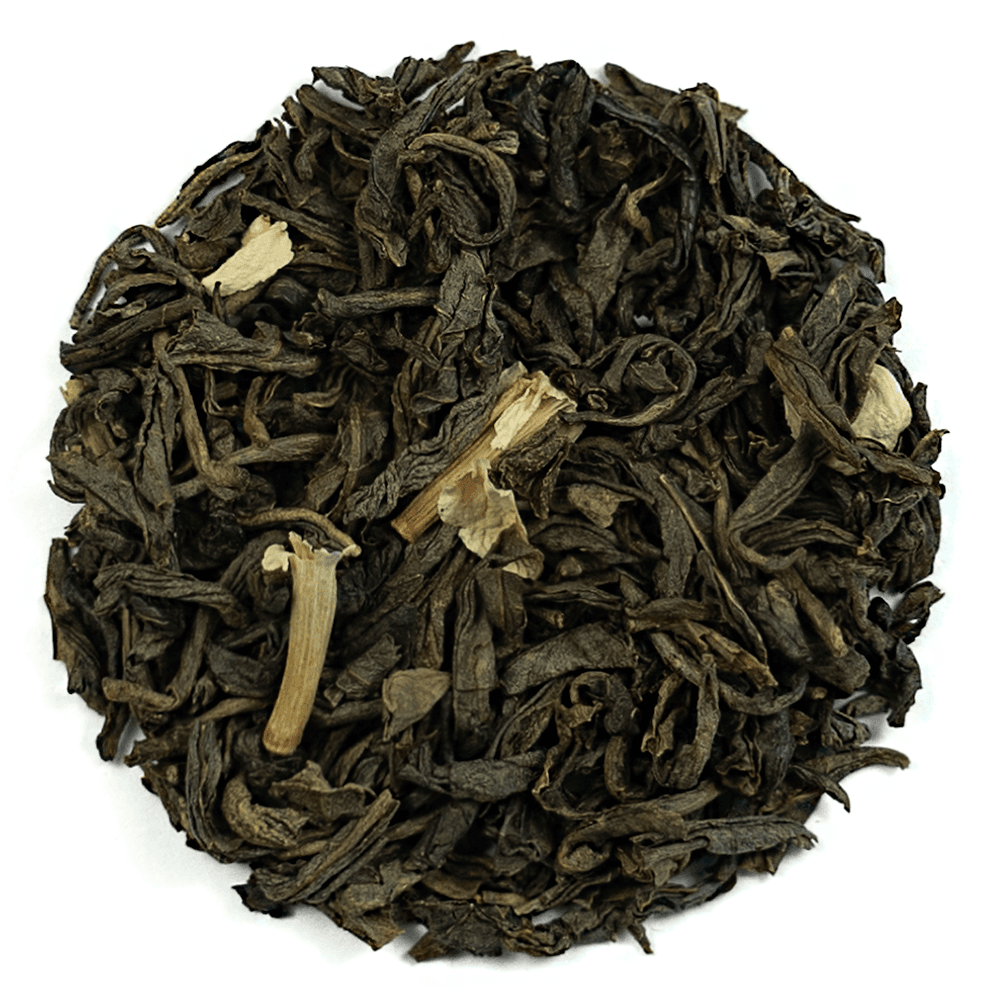
Jasmine tea gets its scent the old way: buds are picked in early afternoon during June, July and August, chosen specifically for the ones due to bloom that same evening, then left to rest until dark. Once the blossoms open and release their fragrance into the cool night air, they're layered over green tea leaves in trays — the "scenting process" — and left for hours so the leaves absorb the flavour. Higher-grade batches go through this more than once. The tradition goes back a long way in Chinese history, thought to originate in the Song Dynasty and only becoming widely known under the Ming, an era with a documented fondness for floral motifs across its porcelain, embroidery and literature.
This organic version is grown without pesticides, insecticides, bio-engineered genes or petroleum and sewage-based fertilisers. The tea itself is a green loose leaf from Fujian Province, and the cup shows a pale yellow liquor. The scent carries through into the flavour: floral jasmine up front, with lemon and honey notes, some smoothness reminiscent of coffee, and nothing sharp or bitter about it.
Brew it with freshly boiled water cooled to 75-80°C, and give it 3 to 5 minutes to infuse. It stands well on its own, though a touch of honey or lemon suits it if you want to bring those notes forward. Tea & Coffee suggests pairing it with a traditional Chinese meal. Jasmine tea in general has long been drunk as part of an active, healthy lifestyle, and organic growing is often said to leave higher levels of antioxidants like catechins intact — though that's more folk wisdom than settled fact, and worth taking as such rather than a guarantee of any particular health outcome.