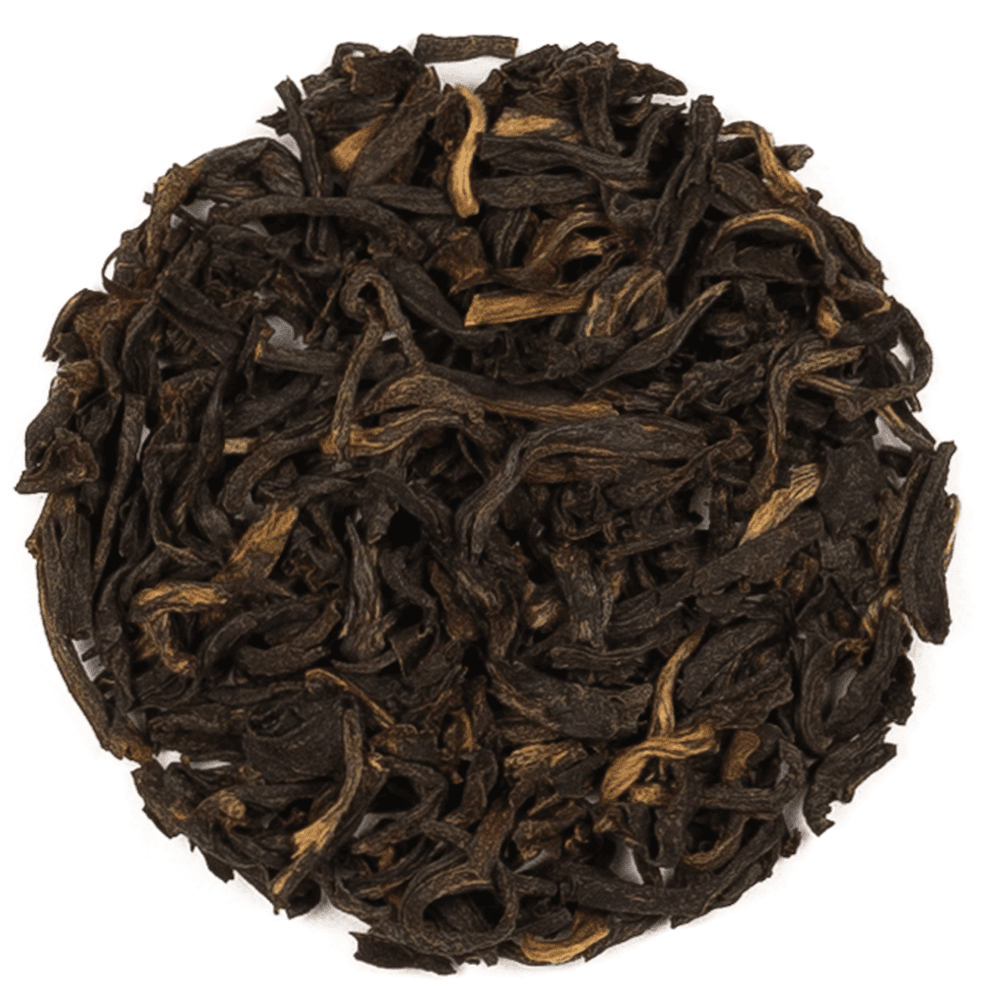
Nepal's tea industry only got going in 1863, a blink of an eye next to China's five millennia of cultivation, and it took political upheaval and decades more before mass planting in the Ilam hills became economically viable in the 1950s. This particular batch grows on a family smallholding at 1,000 to 2,000 metres, where the altitude and climate shape a cup that turns out coppery-yellow and light in the glass. The leaf is medium-sized and well-worked, with plenty of tips, and it comes from natural Chinese hybrid plants rather than the Assamica varieties more common elsewhere in South Asia.
In the cup expect lemon and honey up front, with milk, butter and a vegetal edge underneath, finishing on a trace of smoke — soft and sweet rather than heavy. Locally, people in Nepal tend to drink tea like this at least twice a day, often starting with a hot cup against the Himalayan cold, milk and sugar stirred in as a matter of course; some go further and add a spoonful of ghee. Lemon, honey and sugar all work well if you'd rather keep it dairy-free, or it can be taken black.
Brew it with freshly boiled water and let it steep for three to five minutes — five if you want the smoky note to come forward. Tea & Coffee packs this one to order at its factory in Kent. As with other black teas, it has a moderate caffeine content, and black tea generally has long been drunk as part of everyday routine rather than for any specific health claim.