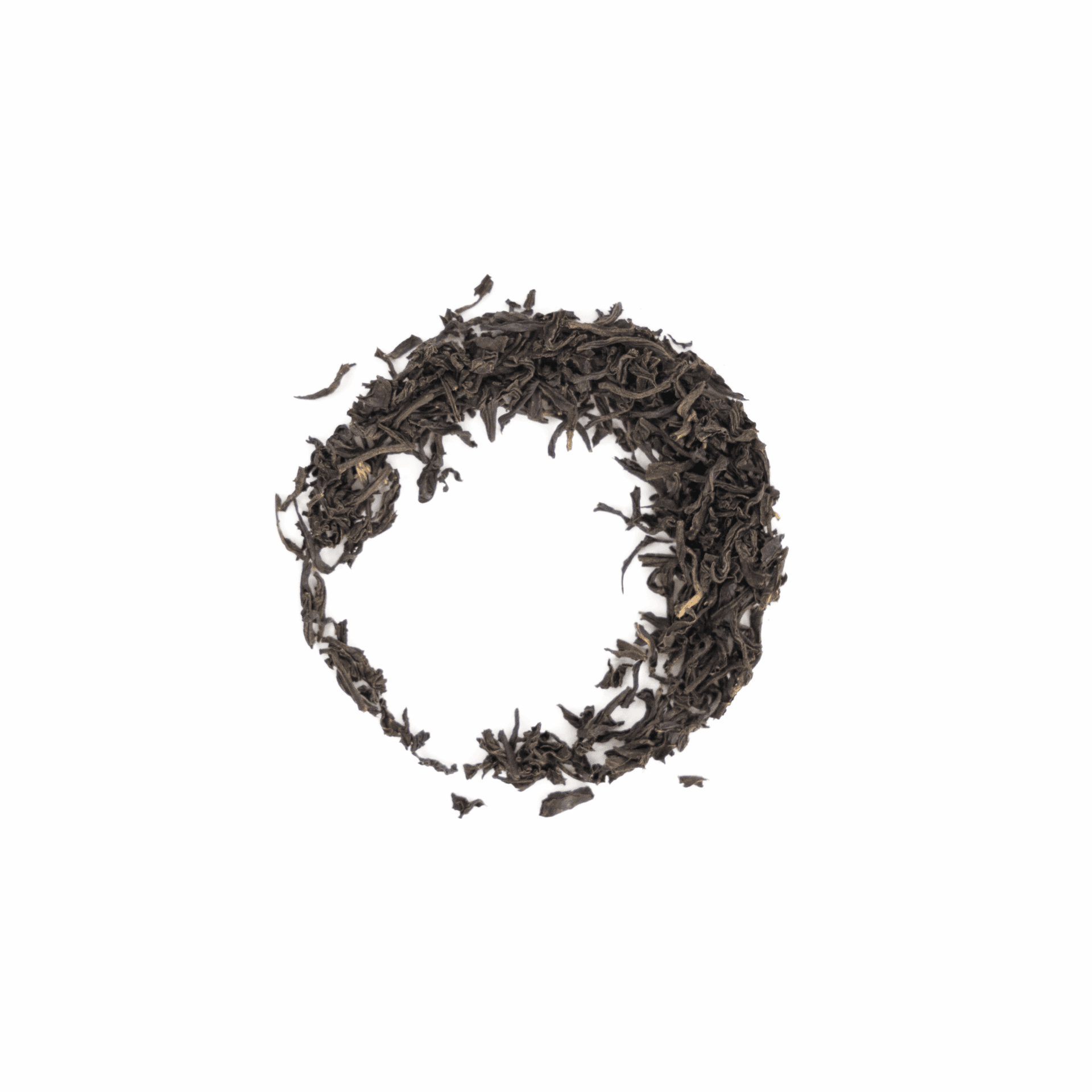
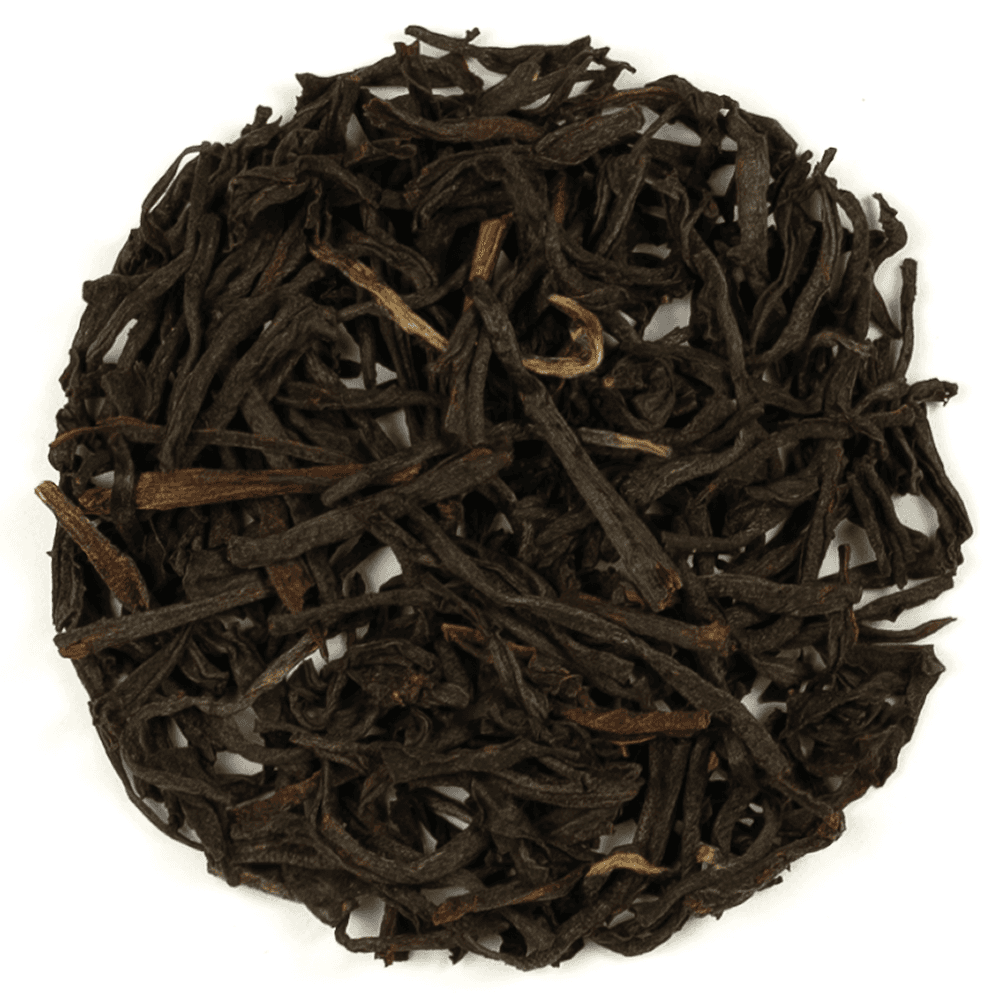
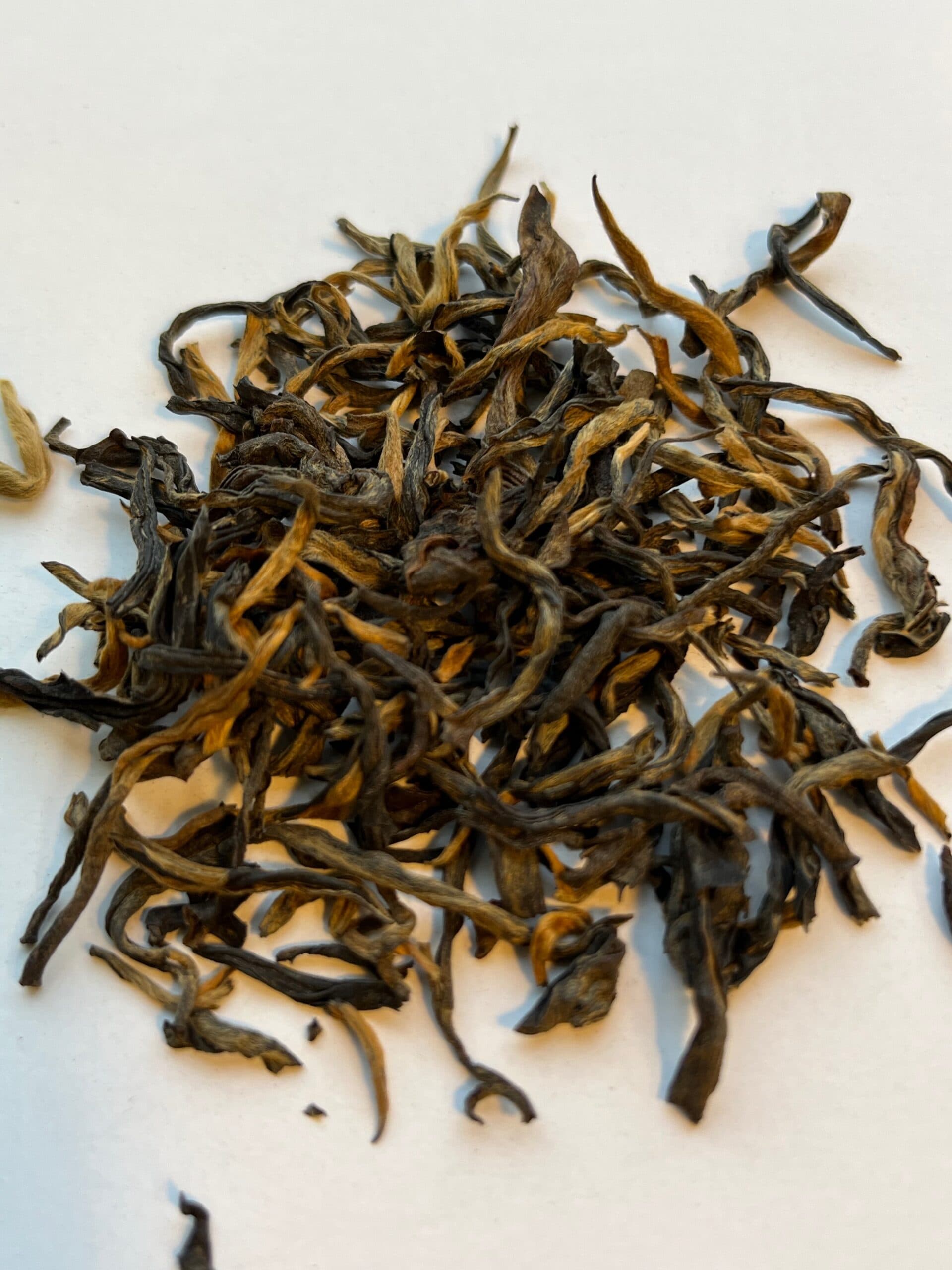
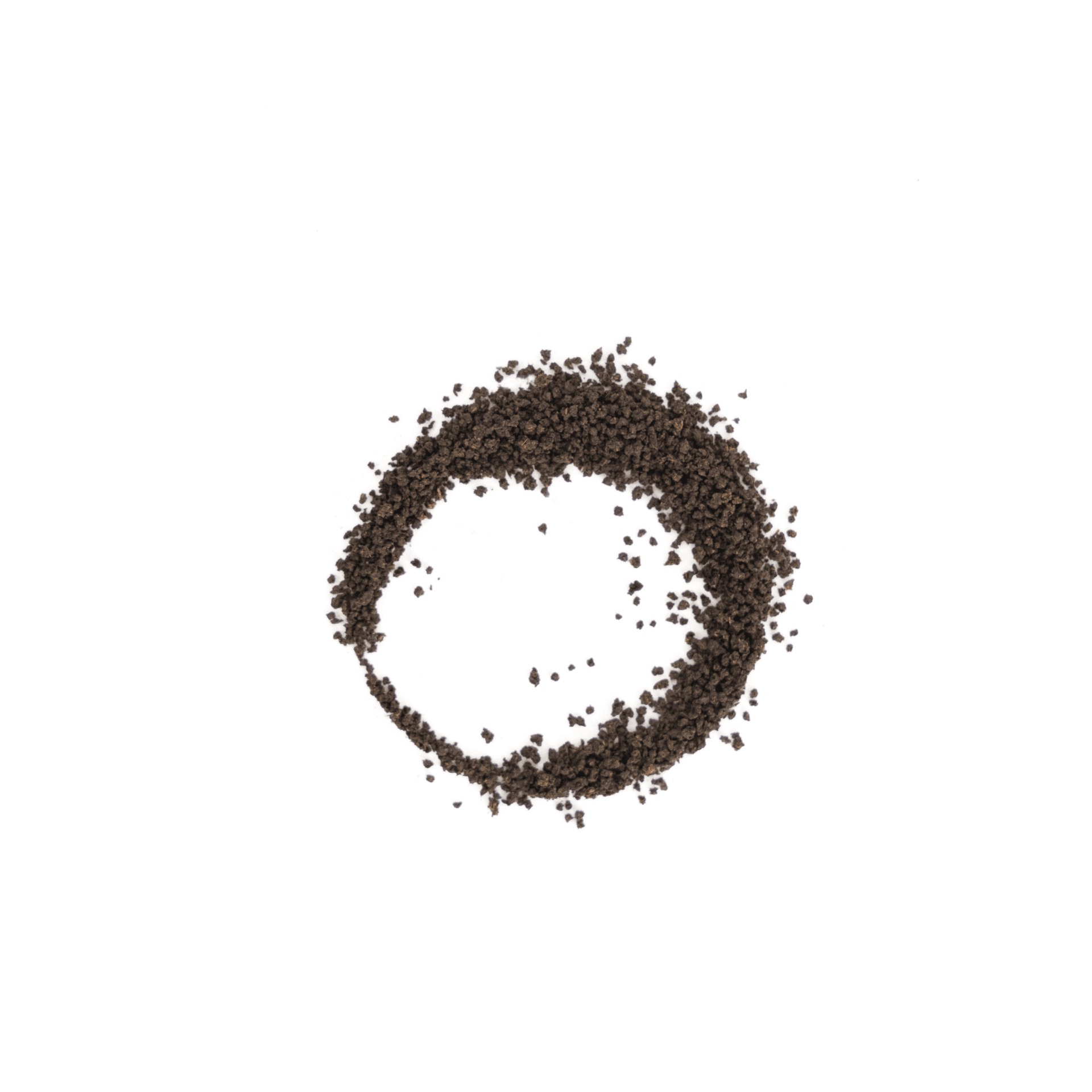
Assam gets its reputation from leaves like this: broken-grade, meaning the leaf has been fragmented during processing rather than left whole, which speeds up the infusion and pulls more colour and flavour into the cup faster than a full-leaf tea would. The result is a dark amber liquor with a malty backbone, layered with caramel and molasses, a citrus lift of lemon and orange, and a nutty, roasted-nut finish that rounds out into something close to milk chocolate. It's a brew built for strength rather than subtlety, and it holds up well with milk if that's how you take your tea.
The leaf goes through the standard black tea sequence: withering to drive off moisture, rolling to break the leaf structure and release its oils, oxidation to darken the colour and build the malty notes, then drying to fix everything in place before the leaves are sorted by size. That processing is also what "broken" refers to in the name — the leaf particles are smaller and more fractured than a whole-leaf grade, which is why this tea steeps quickly and brews strong.
Brew it with water at 93°C and give it about 5 minutes to steep — long enough to draw out the malt and caramel without tipping into harshness, though you can pull it earlier for a lighter cup. A teaspoon of leaves per cup is the usual starting point; adjust to taste. Strain before serving, and add milk or a touch of sugar if you want to soften the edges, or take it plain to get the full malt and roasted-nut character. Like most Assam teas, it carries a moderate amount of caffeine, making it a reasonable substitute for a morning coffee without the same intensity.