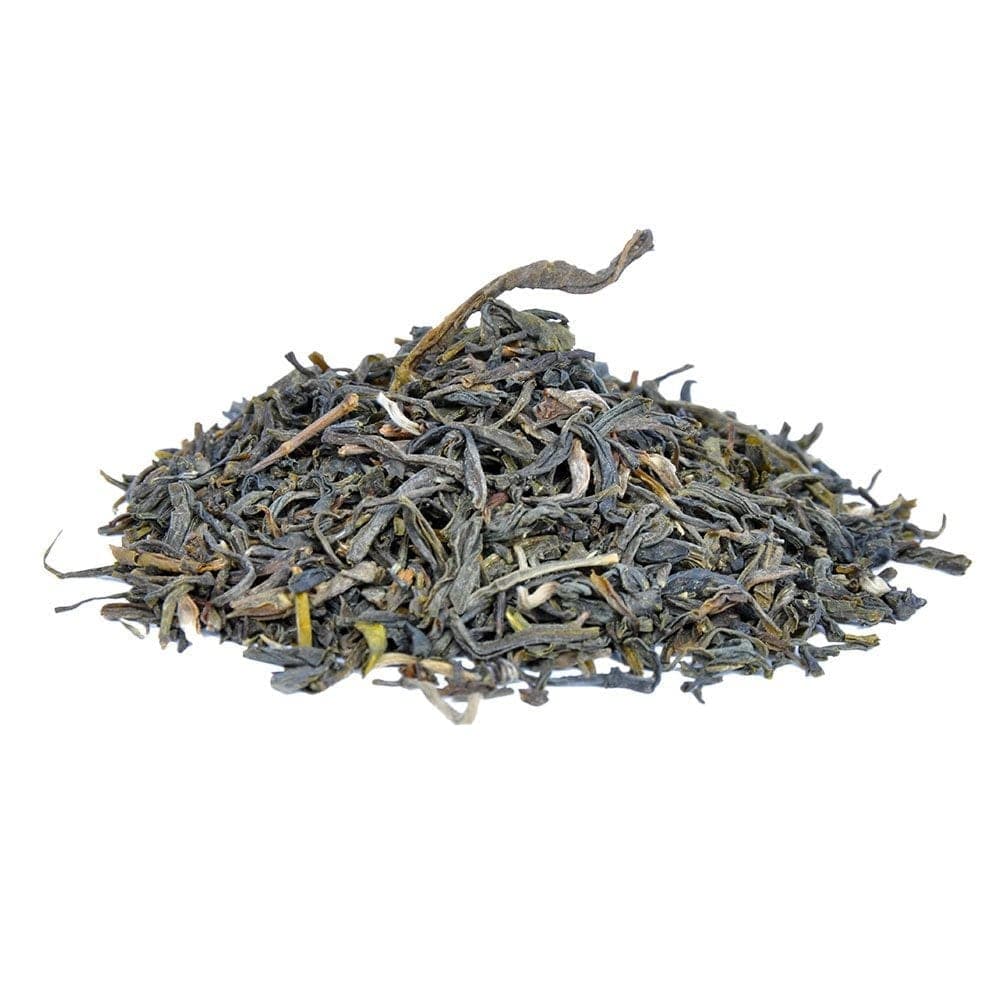
A cup of this steeps up honeyed and earthy, with a herbal, woody backbone and a faint sweetness that suits it as well to late afternoon as to evening. The blend pairs crushed Korean red ginseng root with green tea leaves, and it's the green tea that gives it a modest caffeine lift, around 30mg a serving, enough to notice without displacing a proper morning cup.
Ginseng's own history is murkier than most tea origin stories. For centuries the standard account has placed it in Shangdang, China, during the Han dynasty, roughly two thousand years ago, but that theory rests on thin evidence and doesn't hold up well under scrutiny. A more convincing case points to Manchuria and Korea as the plant's original home. Ancient Chinese characters used for ginseng seem chosen for their sound rather than their meaning, and that sound lines up closely with the indigenous Korean word "sim" — which suggests the plant, and its name, moved from Korea into China rather than the other way round. Tea & Coffee packs its orders by hand at its factory in Kent, England.
Ginseng has long been drunk in Korea and across other parts of Asia as a tonic, traditionally valued for its antioxidant properties and reached for as a pick-me-up through the day. This particular tea also carries B vitamins (B-1, B-2, B-6) and vitamin C, contributed by its ingredients. None of that makes it medicine, but it goes some way toward explaining why the blend has held on as a household staple for so long.
Brewing it is straightforward. Bring a cup of filtered water to the boil, then let it cool to somewhere between 75°C and 80°C before adding a teaspoon of crushed ginseng root. Give it three to five minutes to steep, strain, and pour. A spoonful of honey suits it well if you prefer things on the sweeter side.