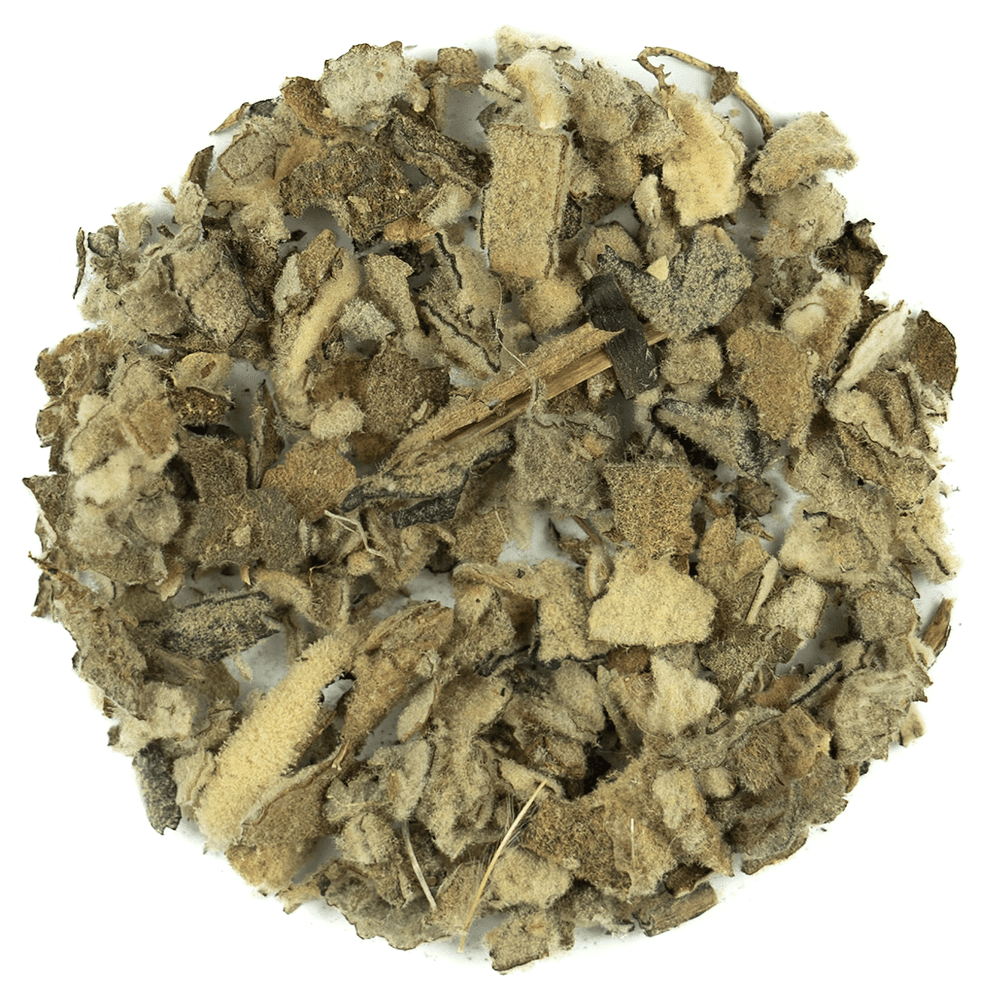
Gardeners tend to curse milk thistle as a weed, but the seeds it drops each season make a genuinely pleasant tea. Milk Thistle, or Silybum Marianum, belongs to the Asteraceae family and grows across southern Europe and Asia, reaching up to about 1.5 metres tall on stems with glossy, white-veined, deeply lobed leaves edged in small thorns. The botanical name carries its own story: "Silybum" comes from Greek words for tassel or tuft, while "Marianum" nods to a legend that the white marbling on the leaves came from the milk of the Virgin Mary during her flight into Egypt.
The seeds, rather than the leaves, are what go into this cup, and they brew noticeably milder than tea made from milk thistle's leafy tops. Expect an earthy base with a hint of garlic underneath, rounded out by notes tasters have picked up ranging from lemon and honey to milk, coffee, herbs, and something faintly medicinal, even a trace of alcohol. It's naturally caffeine-free, so it suits an evening cup as easily as a morning one, with none of the jitters that come from stronger stimulants.
In Greece, Italy, and Germany, milk thistle seed has long been used to support the liver, kidneys, and gallbladder. The seeds are prized for two compounds, silymarin and silibinin, thought to work as antioxidants at a molecular level. The Greek physician Dioscorides and the 17th-century herbalist Nicholas Culpeper both wrote about the plant centuries before modern labs took an interest in it, which says something about how long people have been steeping these seeds for reasons beyond flavour.
To brew it, add the seeds to a filter or infuser, pour freshly boiled water over them, and let them steep for around seven to eight minutes. It stands on its own without any additions, though a little honey or a squeeze of lemon suits it if you want something softer, and either pairing echoes flavours already present in the cup.