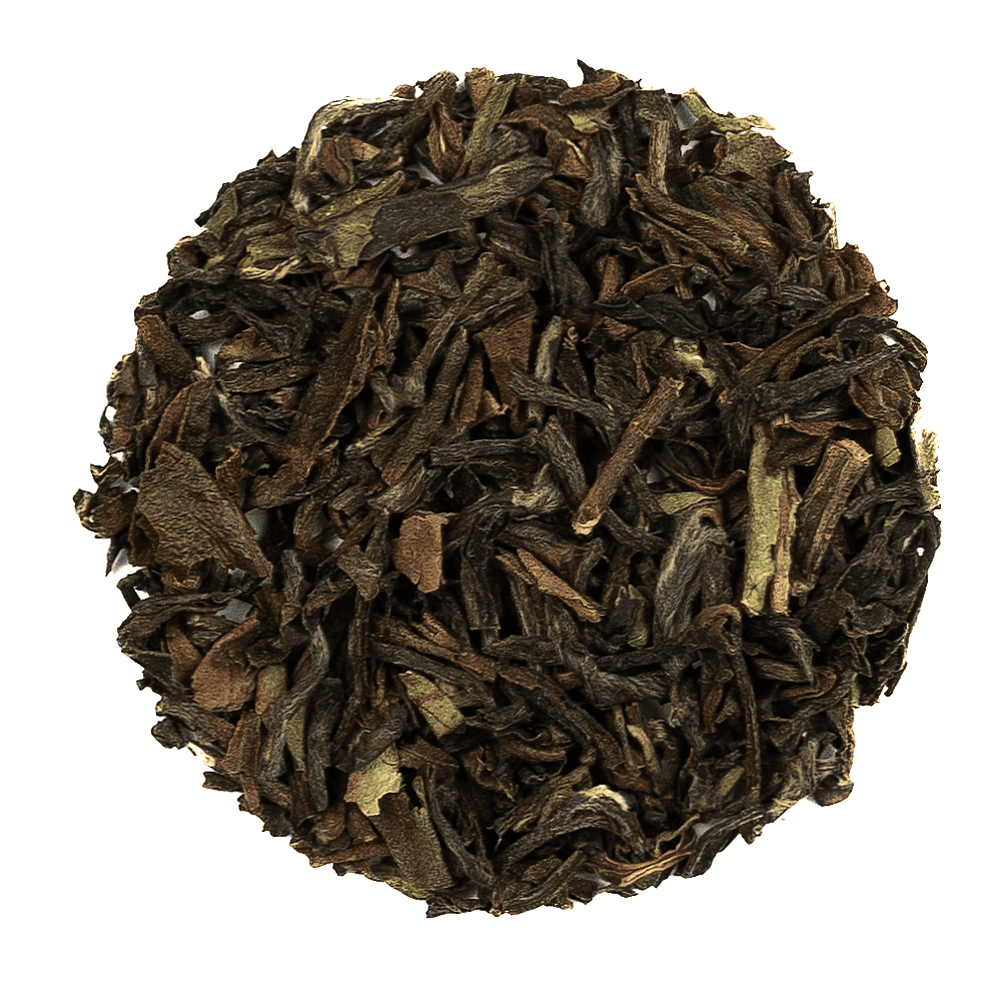
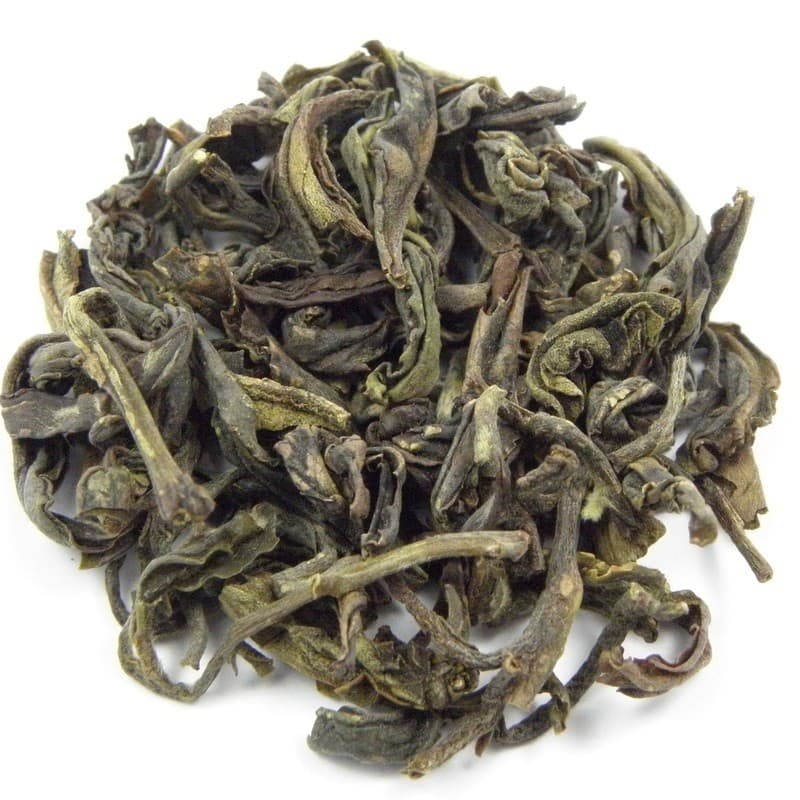
Nepal produces just a fraction of the world's tea, and this leaf comes from one of its better-known gardens. Himshikhar sits in the Himalayan foothills near the Indian border, growing tea at altitudes up to 1,700 metres and working organically — no synthetic fertilisers, herbicides or pesticides. The leaves themselves are olive-coloured, well-worked, with green flecks and a good showing of silver tips.
In the cup this one leans floral and complex, with muscatel running through it alongside lemon, orange and a note of tropical fruit. There's honey and a touch of milk on the palate too, plus something faintly olive-like that echoes the dry leaf. The liquor comes out light, coppery-orange. It's a black tea with real depth rather than a straightforward brisk cup, and worth tasting on its own before deciding whether it needs anything added.
Nepal's tea industry dates back to 1863, though it struggled for decades under political instability and only found its footing economically in the 1950s. The country's first mass-production factory didn't open until 1978, in the Ilam district. Production remains small relative to neighbours like India and China, which is part of why teas like this stay something of a rarity.
To brew, use freshly boiled water and steep for 3 to 5 minutes. It stands up fine on its own, though some drinkers add milk, milk alternatives, sugar, honey or a squeeze of lemon. Tea & Coffee packs this leaf fresh to order at its factory in Kent.