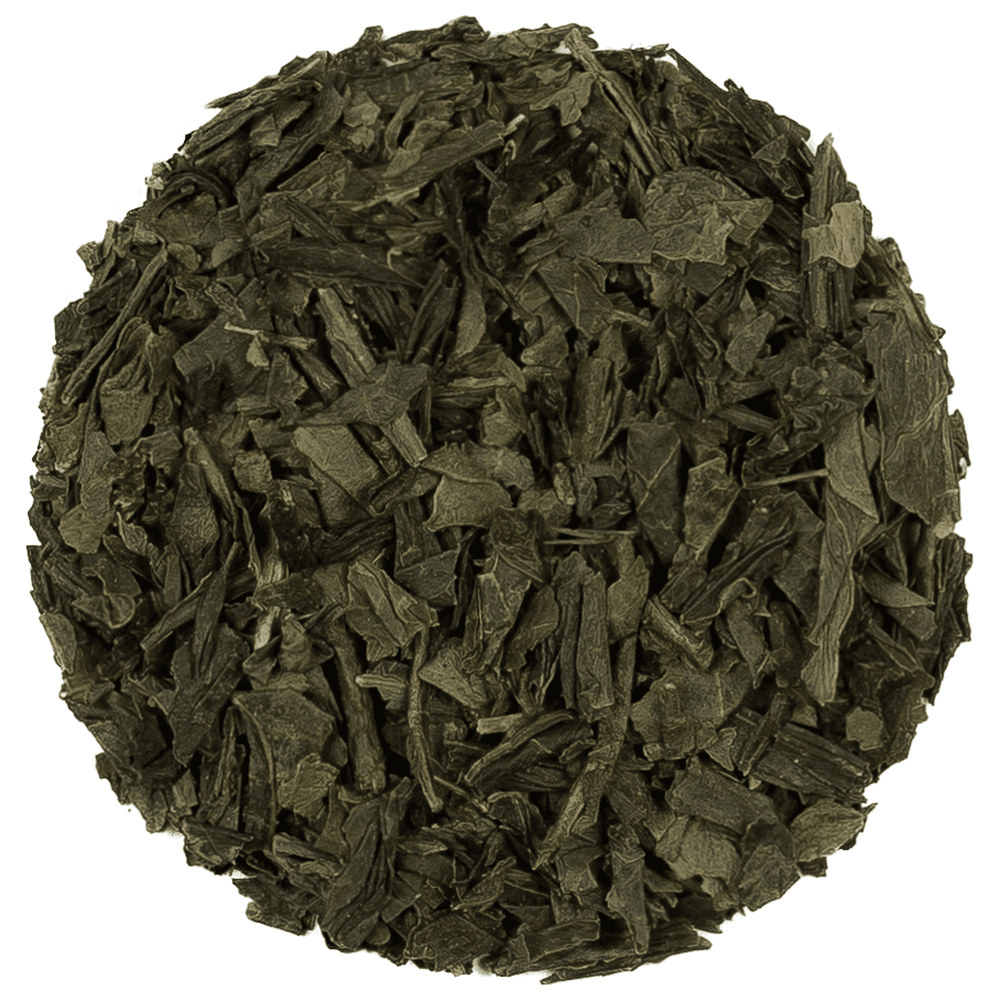
Sencha comes with a good origin story, even if it probably isn't true. Legend credits a Japanese tea maker named Nagatani Soen with inventing the style in 1738 after years of experimenting with production methods. The more likely history is that sencha actually developed first in China. Whatever its real beginnings, the style caught on hard in Japan — something like 78% of Japanese tea drinkers name it as their favourite. This version takes that base and scents it with fresh lemon alongside lemongrass, giving a cup that reads citrusy from the first sip to the last.
Lemongrass is worth a word on its own rather than just riding along in the name. It comes from the leaves of a tall perennial grass, and outside of tea it has a long history in Brazilian folk medicine, where Quilombo communities have traditionally turned to it in the belief that it supports immunity. That's a traditional use rather than a proven one, but it explains why the plant turns up in herbal blends well beyond Brazil.
In the cup, lemon leads, backed by grass and herbal undertones, with an odd trace of something almost like coffee underneath. It suits either temperature: a warming pour on a cold evening, or an iced tea when the weather turns hot.
To brew it, load a filter or infuser with leaf, boil fresh water, and let it cool to around 70°C before pouring over. Give it about two minutes to steep. Sencha turns bitter quickly if the water runs too hot or the leaves sit too long, so a cooler pour and a shorter steep than you'd use for black tea is the safer bet. The Kent and Sussex Tea and Coffee Company, which sells this blend, suggests a wider window of 70–90°C and one to three minutes, so there's room to adjust once you've tried the baseline. A splash more lemon on top suits anyone after an extra citrus kick.