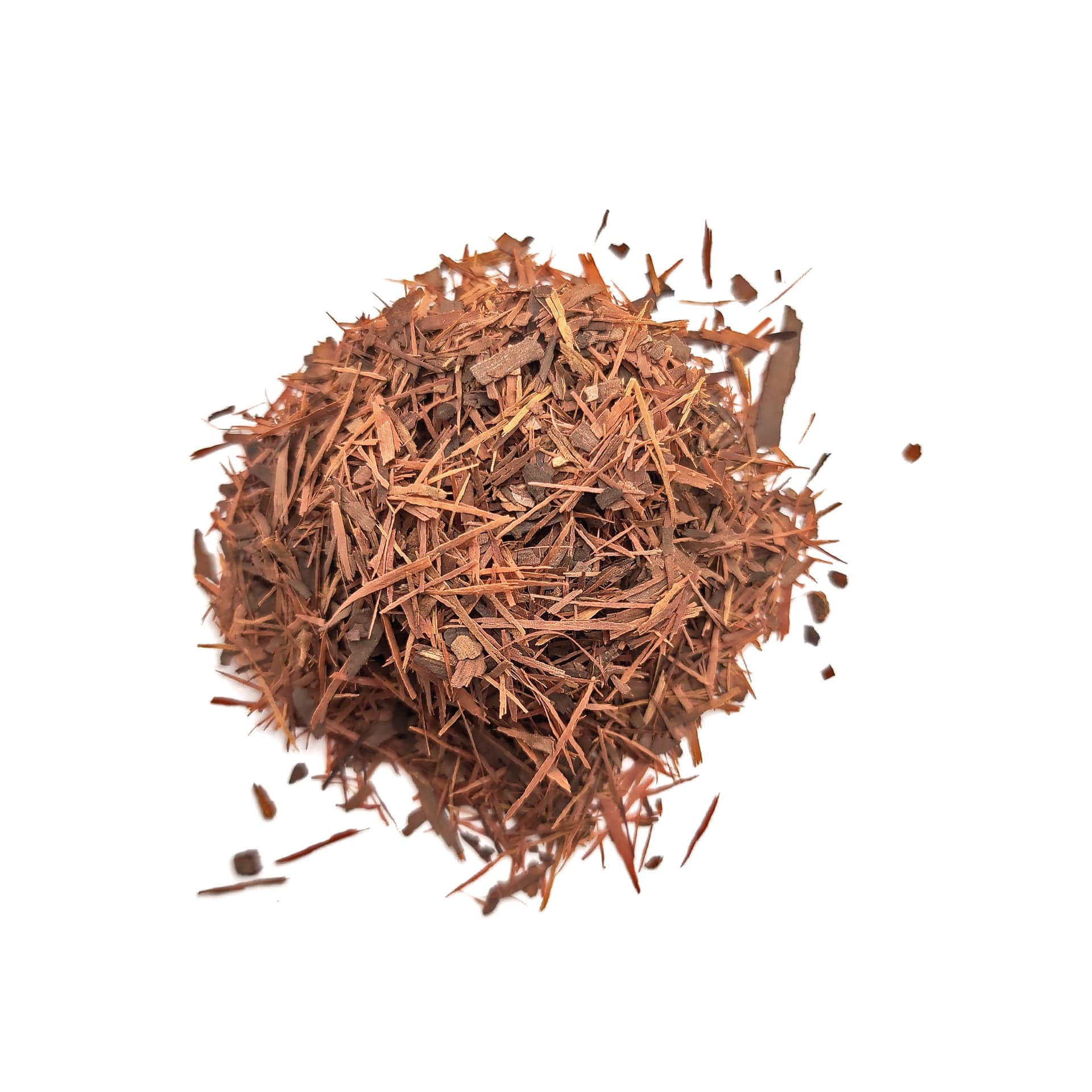
Lapacho comes from the inner bark of the pau d'arco tree, deep in the Amazon rainforest, rather than from leaves or flowers the way most herbal infusions do. The tree belongs to the Bignoniaceae family, and the bark is also sold under the name Taheebo. Indigenous communities across Argentina, Brazil and Paraguay — including the Tupi, Guarani, Kallawaya, Quechua and Aymara — have been drinking it for a long time, well before it found a wider audience elsewhere.
Brewed, it settles into woody and nutty notes with a touch of vanilla, and floral and forest-floor undertones round it out, giving it more depth than a typical bark infusion suggests. It's naturally caffeine-free, which sets it apart from yerba mate, South America's better-known caffeinated herbal option, and makes lapacho a reasonable pick for an evening cup or for anyone cutting back on caffeine generally.
Traditionally, lapacho bark has been used by these communities for its believed antimicrobial and antifungal properties, and some preliminary research has looked at whether it can limit the growth of infectious bacteria in the digestive system, among other effects — though none of this amounts to an established treatment for anything, and it's worth treating those findings as early rather than settled.
To brew it, use about 10 grams of bark per litre of water, bring it to a boil, then let it simmer for five minutes before removing it from the heat. Letting it sit and infuse a little longer afterward deepens the flavour. It's best taken plain, without milk or sweetener, so the bark's natural notes come through.