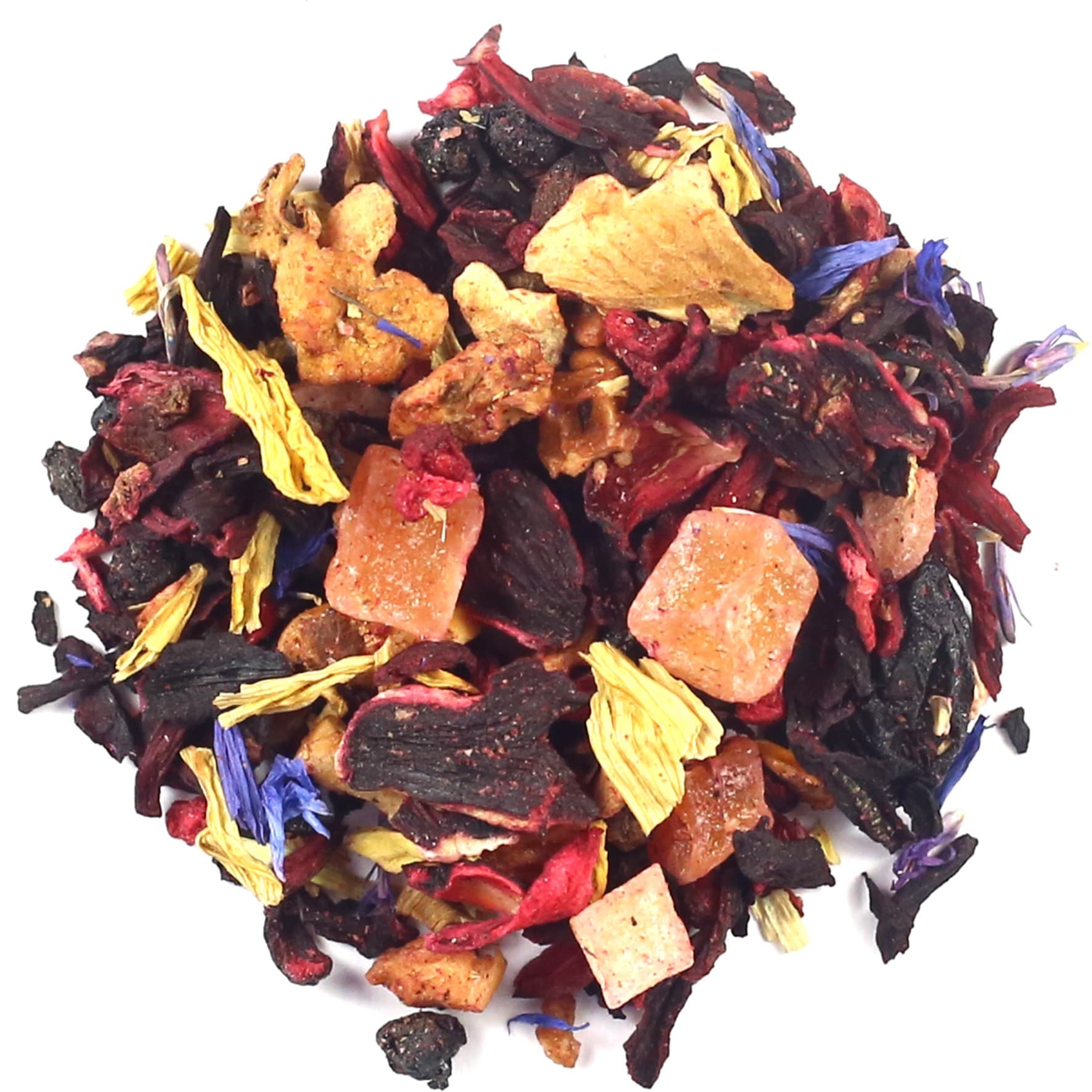
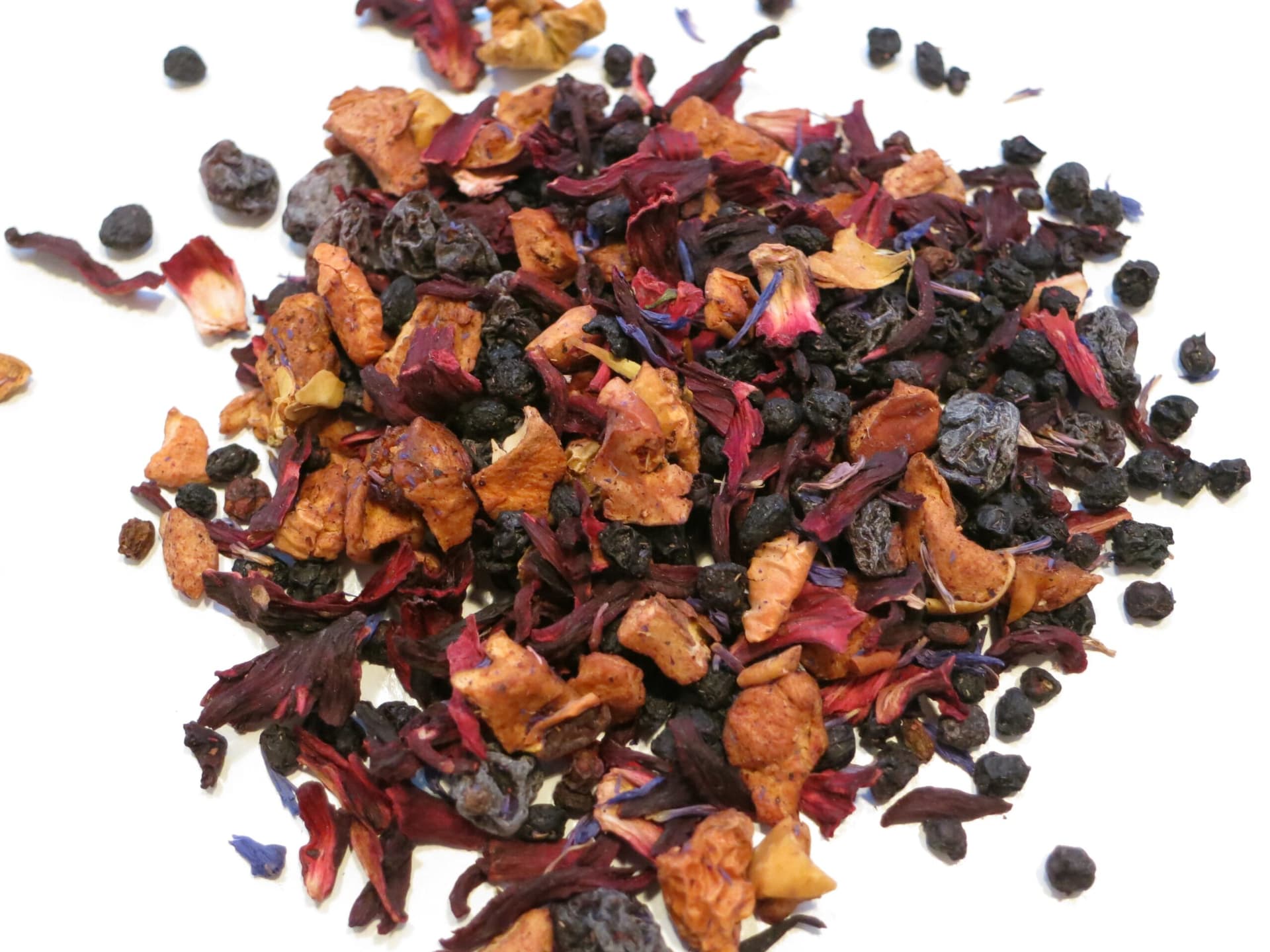
A rich purple cup gives this one away before you taste it: hibiscus, blackcurrant, blueberry and elderberry brewed dark, with sultanas rounding out the sweetness. The tasting profile leans floral and fruity, with a honeyed thickness on the tongue and just enough hibiscus tang to keep it from going flat.
Iced fruit blends like this one trace back further than most drinkers assume. Fruit and herbal infusions became common in America after the Boston Tea Party in 1773, when colonists protesting British tea taxes dumped hundreds of chests into the harbor and, in the years that followed, reached for whatever fruit and herbs were on hand instead. Iced versions of these brews stayed a mostly domestic, recipe-box tradition through the 1800s, sometimes made with green tea and even spiked with spirits. It took the 1904 World's Fair in St Louis to bring iced tea into public view: tea vendor Richard Blechynden couldn't get anyone to try his hot tea in the summer heat, so he packed it with ice instead, and the crowds came.
For brewing, Tea & Coffee recommends two teaspoons per person, just enough freshly boiled water to cover the leaves, and a steep of eight to ten minutes. Strain, then top up with cold water and ice — sugar or honey stirred in in the boiling-water stage suits anyone after a sweeter glass. Serve with whatever garnish or extra ice you like; the dark purple liquor holds up well over ice and doesn't need a summer occasion to justify pouring a glass.