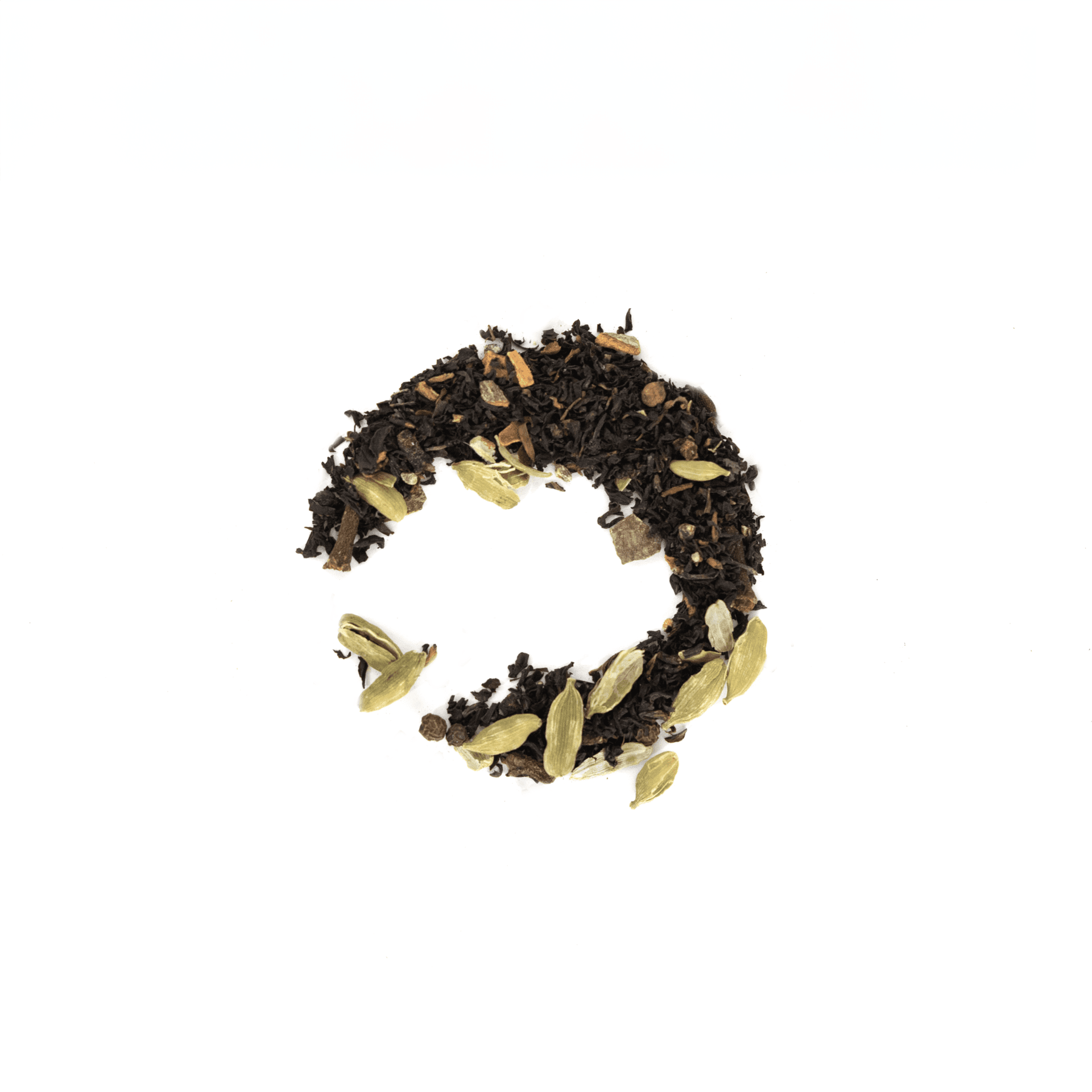
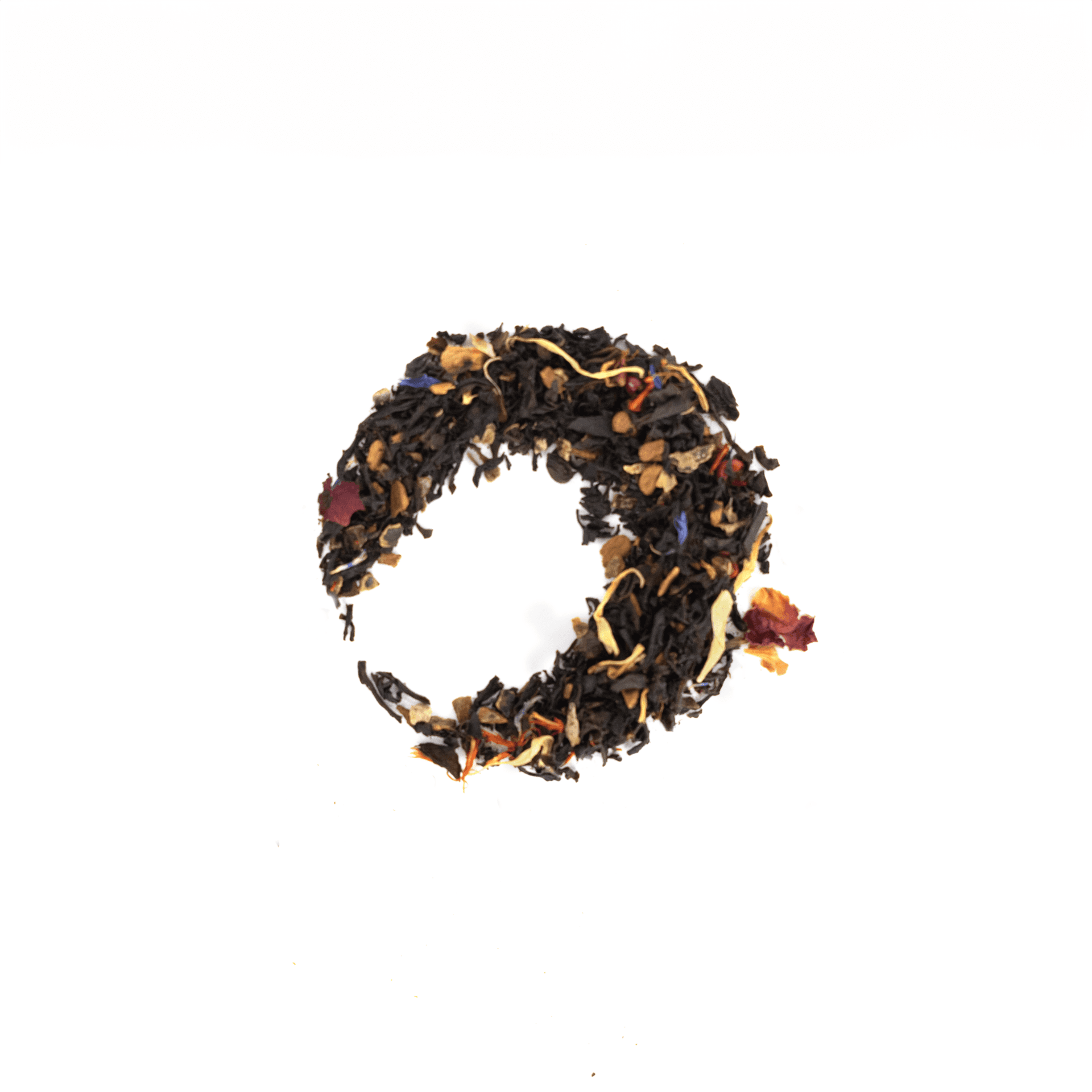
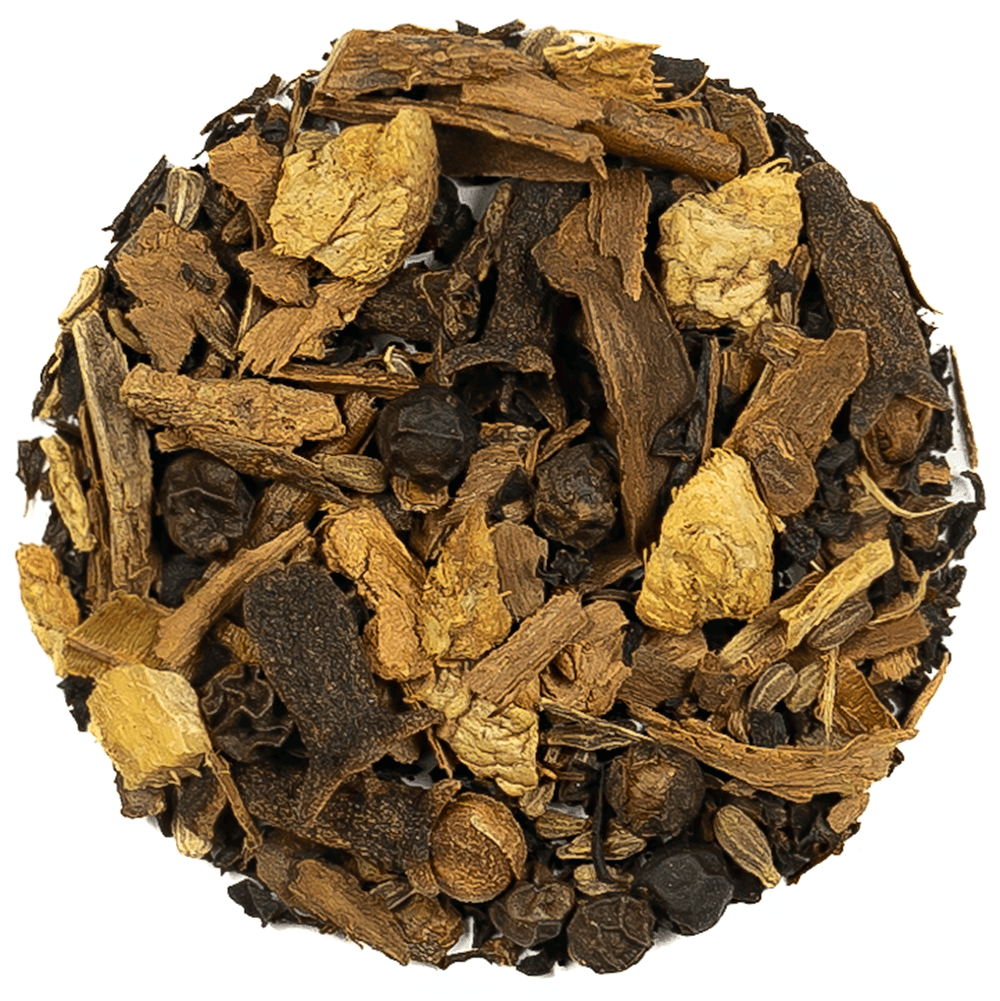
Masala chai gets its identity from the mix stirred into the tea, not the tea itself. Assam forms the base here, robust and malty, and into it go cardamom, cinnamon, cloves, and ginger — a combination that produces a coppery, full-bodied cup with real spice presence rather than a faint suggestion of it. Ginger and cardamom bring the zesty, piquant edge; cloves add a warm sweetness; cinnamon rounds the whole thing out. Milk softens it further, giving the cup the vanilla, cream, and even white-chocolate-like notes people associate with a good chai, alongside hints of honey, chocolate, and something faintly floral and citrus-bright underneath.
The word itself is really just "spiced tea" — chai means tea, masala means the spice mix — and the drink has a long history in India as an everyday ritual rather than a novelty, sold from street stalls and made at home long before it became familiar elsewhere. Black tea joined the spice-and-herb infusions of Indian tradition later, in the 19th century, when Assam production expanded; the version most people know today, tea and spices simmered together with milk and sweetener, grew out of that pairing.
Traditional preparation simmers the tea and spices directly with milk, but it also works as a simpler steep: pour hot water over the blend and let it sit for about five minutes, then strain and add milk and sweetener to taste. Whole milk gives a creamier result, and a little honey or a squeeze of lemon can round out the spice further. Some regard the ginger, cardamom, cinnamon, and cloves in chai as traditionally supportive of digestion and general wellbeing, though that's folk use rather than anything clinically established. Keep it in a sealed, dark container and the spice aroma holds up well over time.