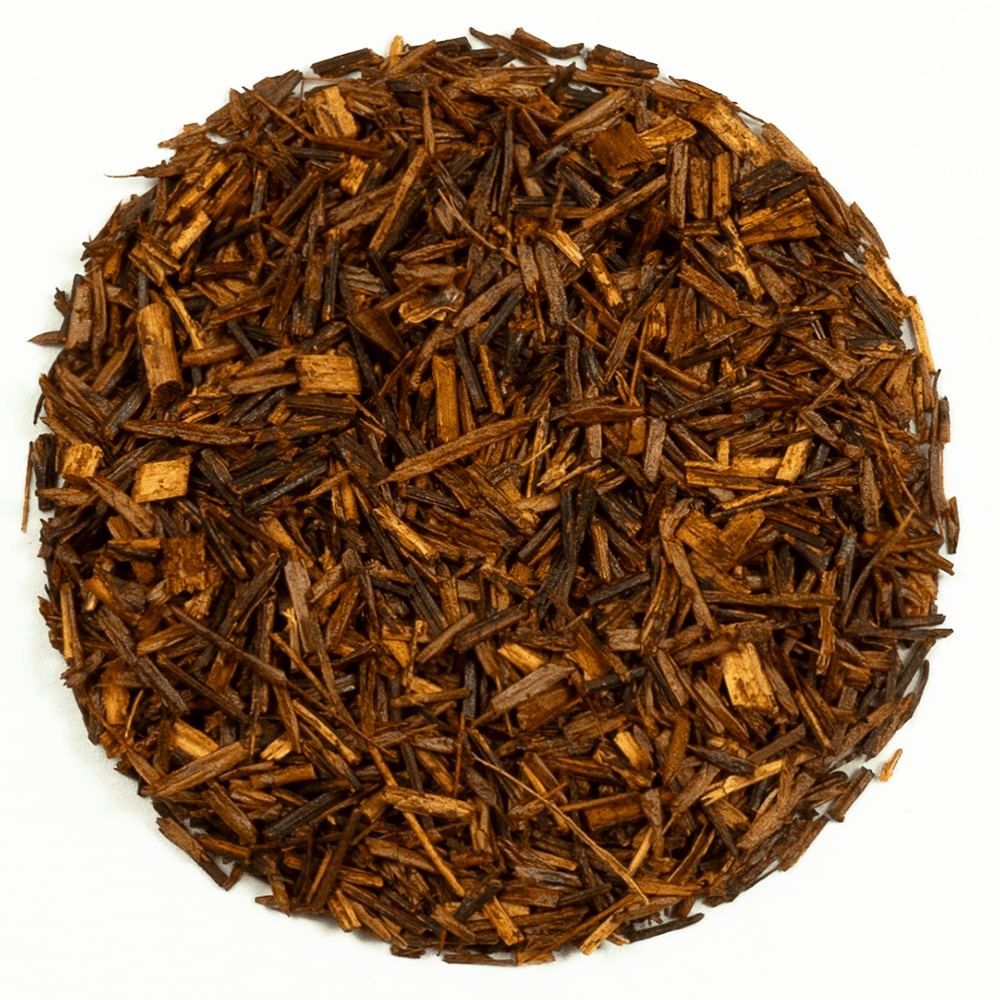
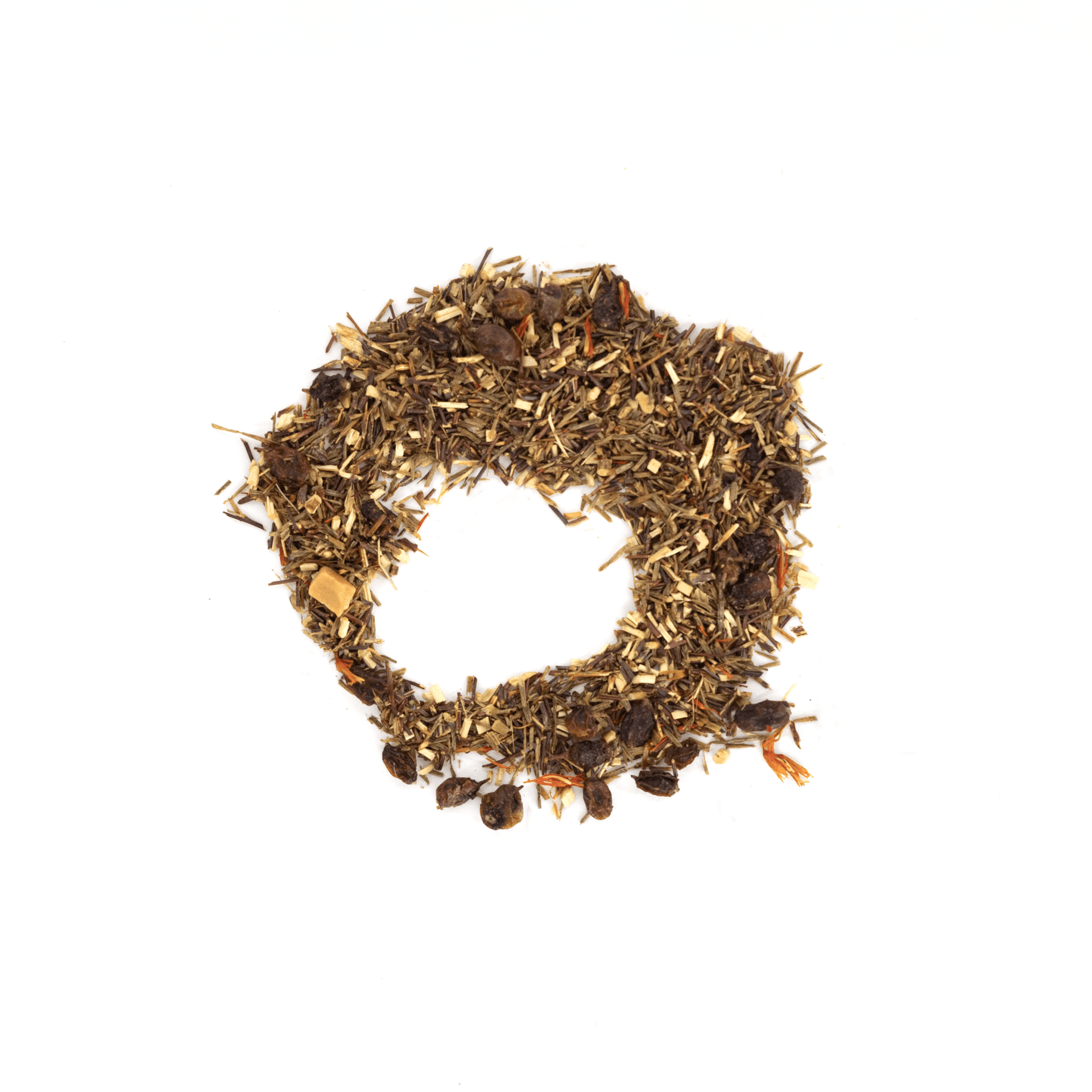
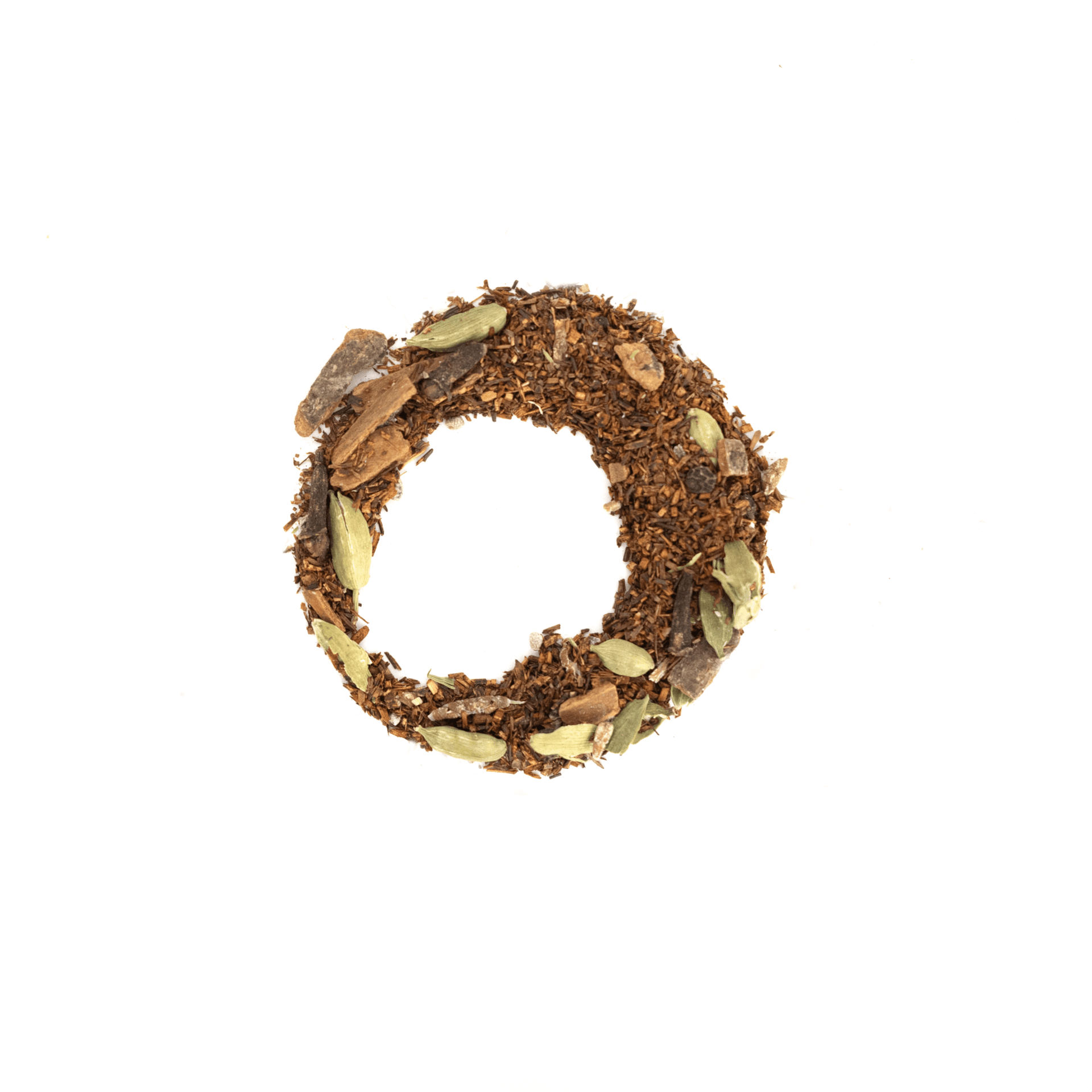
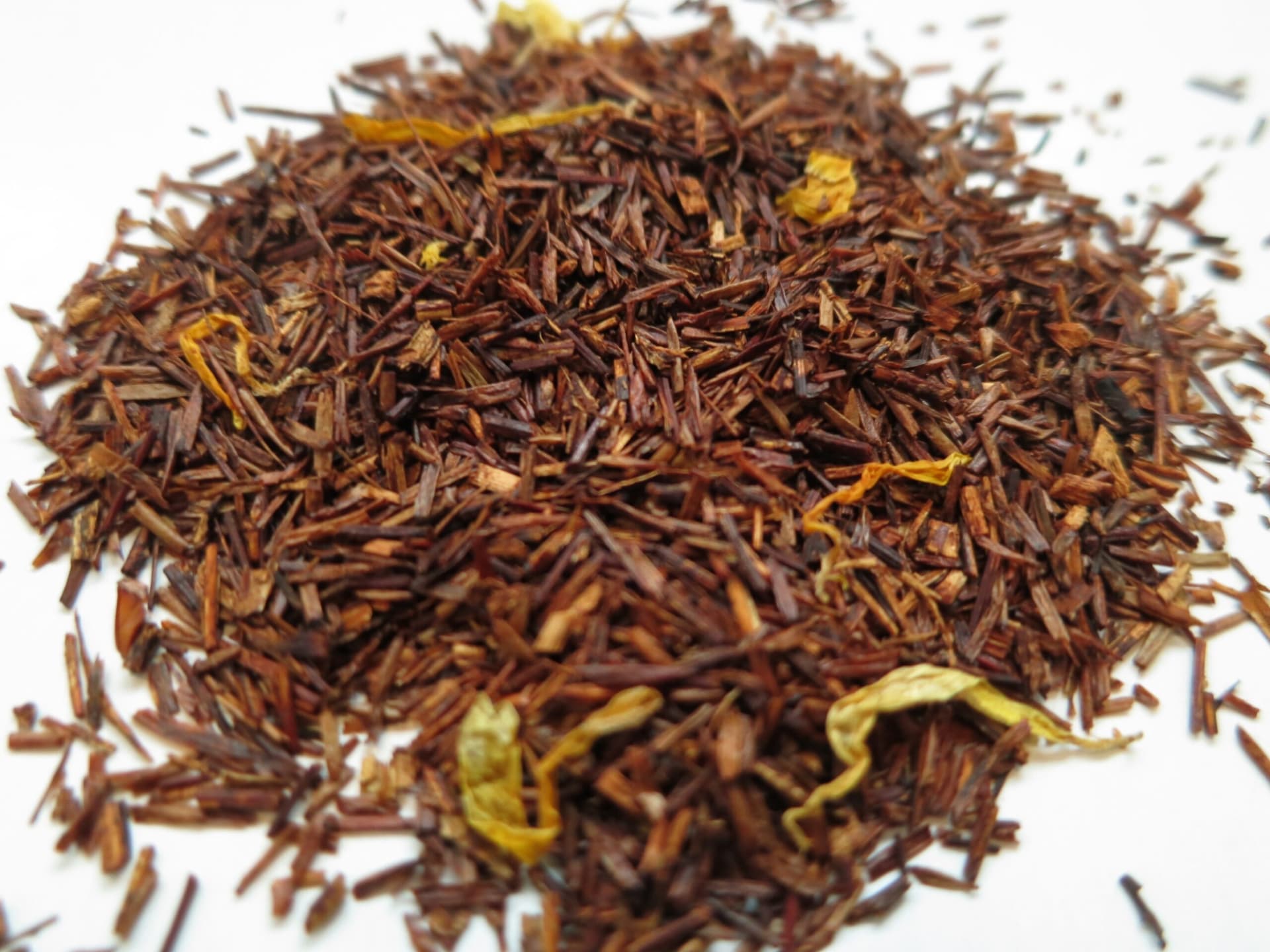
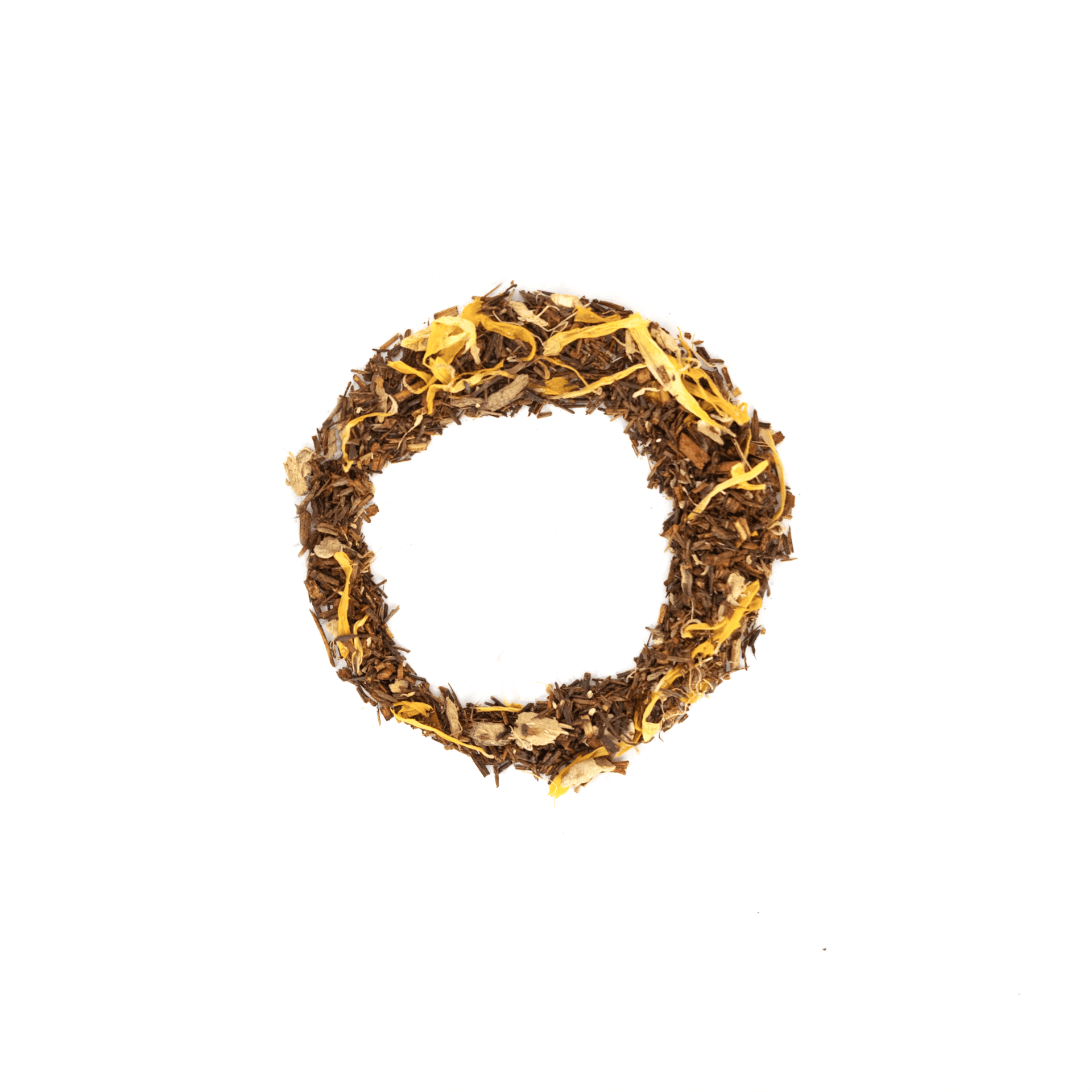
Rooibos comes from a single shrub, Aspalathus linearis, that grows only in the Cederberg region of South Africa's Western Cape. People also call it red bush tea, bush tea, or simply red tea, and pronounce it "roy-boss." There are two forms: green rooibos, left mostly unprocessed, and red rooibos, made by oxidising the leaves — this organic version falls into that broader family. Grown without pesticides, insecticides, bio-engineered genes, or petroleum- and sewage-based fertilisers, the cultivation leans toward protecting the land around the estates and the people working it, while supporting local biodiversity.
In the cup it's smooth and mellow, carrying honey sweetness alongside roasted nuts, caramel, a touch of lemon, and a faint mineral or coffee-like depth. The liquor comes out a rich amber-red with a clean finish. Steep loose leaves in an infuser with freshly boiled water, around 100°C, for five to ten minutes. It holds up well on its own, though a little honey or lemon deepens the flavour further.
Since rooibos comes from Aspalathus linearis rather than Camellia sinensis, it has no caffeine at all and nothing to do with coffee botanically, which makes it a relaxed choice any time of day, including right before bed. It's rich in antioxidants and minerals such as calcium, iron, magnesium, zinc and potassium, along with compounds like aspalathin and quercetin, and it has long been drunk to help settle the stomach and ease bloating, and traditionally associated with supporting heart health. Pregnant women often find it a calming, caffeine-free alternative, and South African families have given it to babies for generations to soothe colic, though that use remains anecdotal — worth checking with a healthcare provider before offering herbal tea to a young child. Tea and Coffee packs this batch fresh to order to keep it consistent.