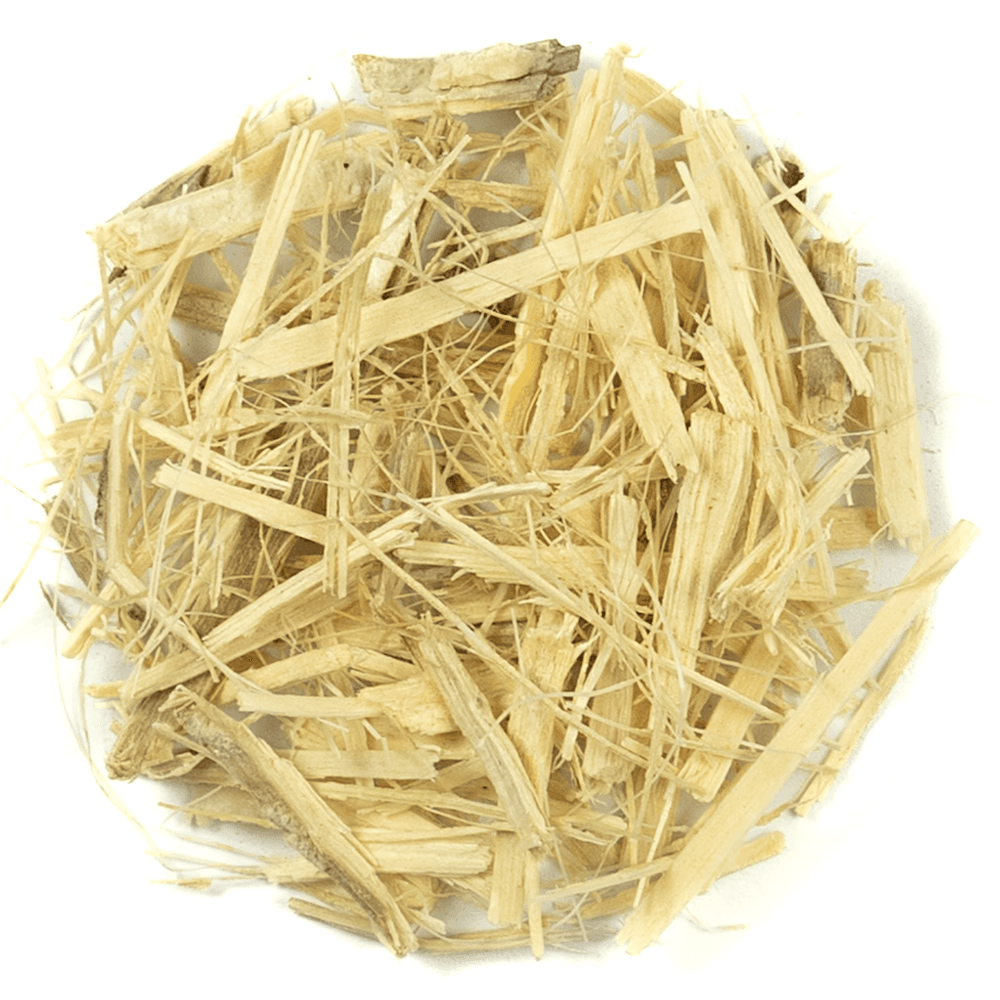
Ginseng gets treated more like a spice than a leaf here — the root itself goes into the cup, dried and cut, rather than any part of the tea plant. That earthy, faintly bitter backbone is what carries the tasting notes people usually pick out: something vegetal underneath, a lemon brightness on top, and a trailing honey sweetness if it's sweetened at all. Traditionally the root has been valued across East Asia for centuries, drunk as a way to steady the body through stress and long days, and it's this reputation — not just the taste — that's kept ginseng tea in circulation for so long as a daily habit rather than a novelty.
It works both hot and cold. For a hot cup, dried root steeps for around ten minutes; the longer it sits, the more the bitterness comes forward, so shorter steeps favor the sweeter, more vegetal side of the flavor. A cold steep is the gentler route — root left in cold water overnight, then strained before drinking, often finished with honey or a twist of lemon to soften the earthiness. Caffeine content is negligible either way, which is part of why it's reached for later in the day rather than as a morning jolt.
Ginseng has long been used in traditional medicine as a tonic for energy and resilience under stress, and some drinkers reach for it specifically to take the edge off fatigue. Those are traditional uses rather than settled science, and ginseng can interact with certain medications — including diabetes treatments — so it's worth a word with a doctor before making it a regular habit if you're on other medication. Note that Korean (or Asian/Panax) ginseng is a distinct plant from Siberian or American ginseng, so it's worth checking which one is actually in the cup.