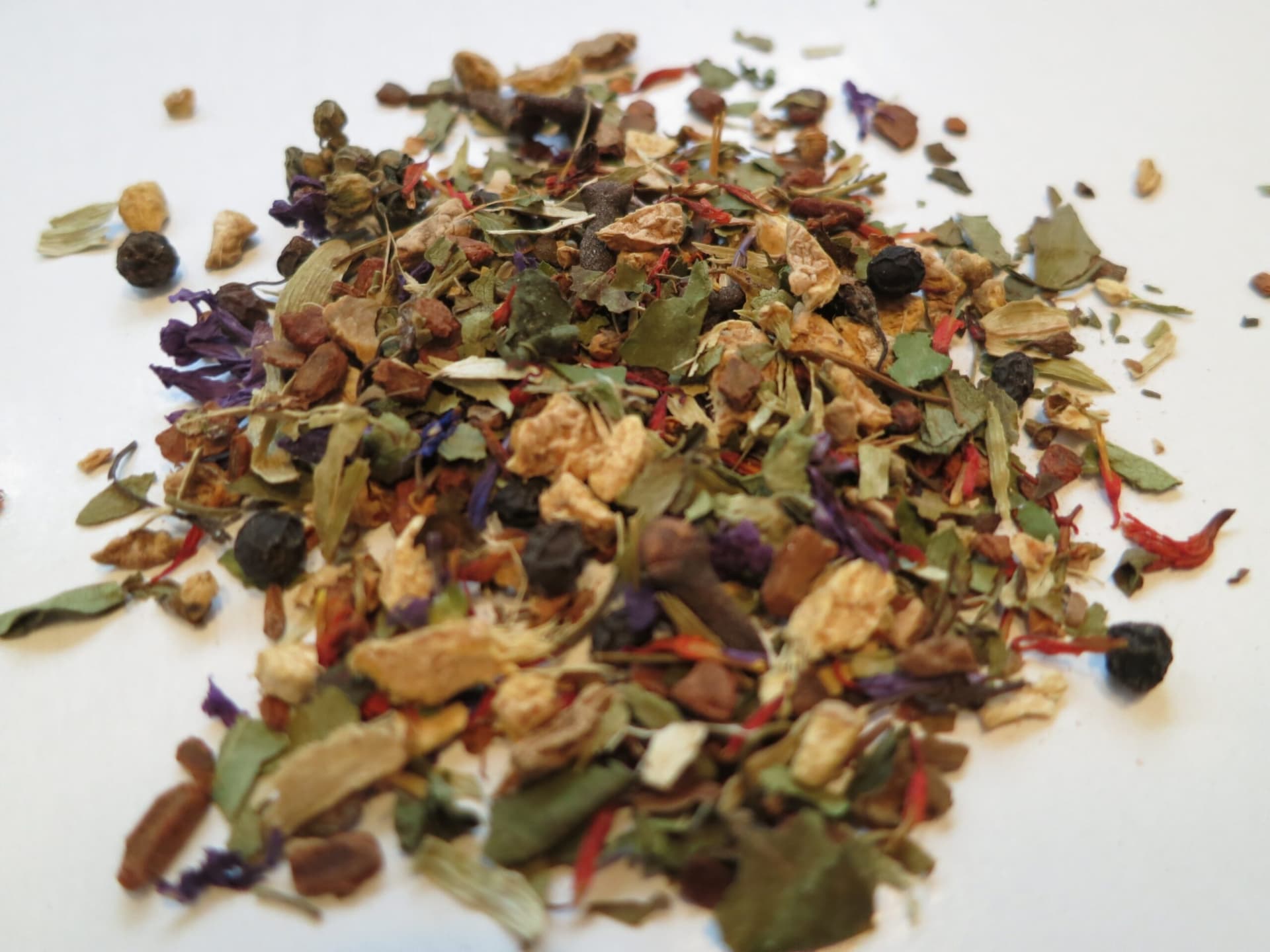
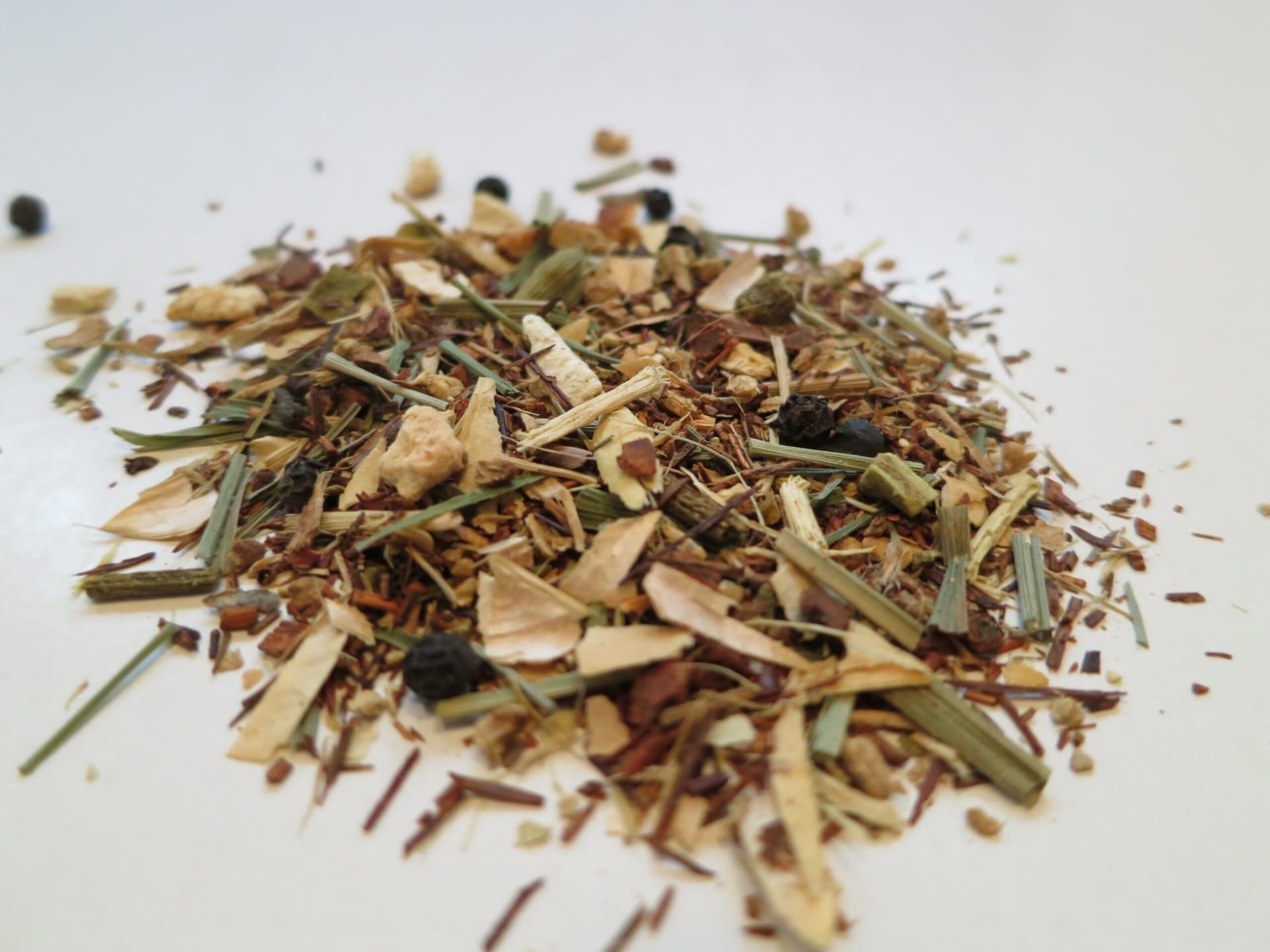
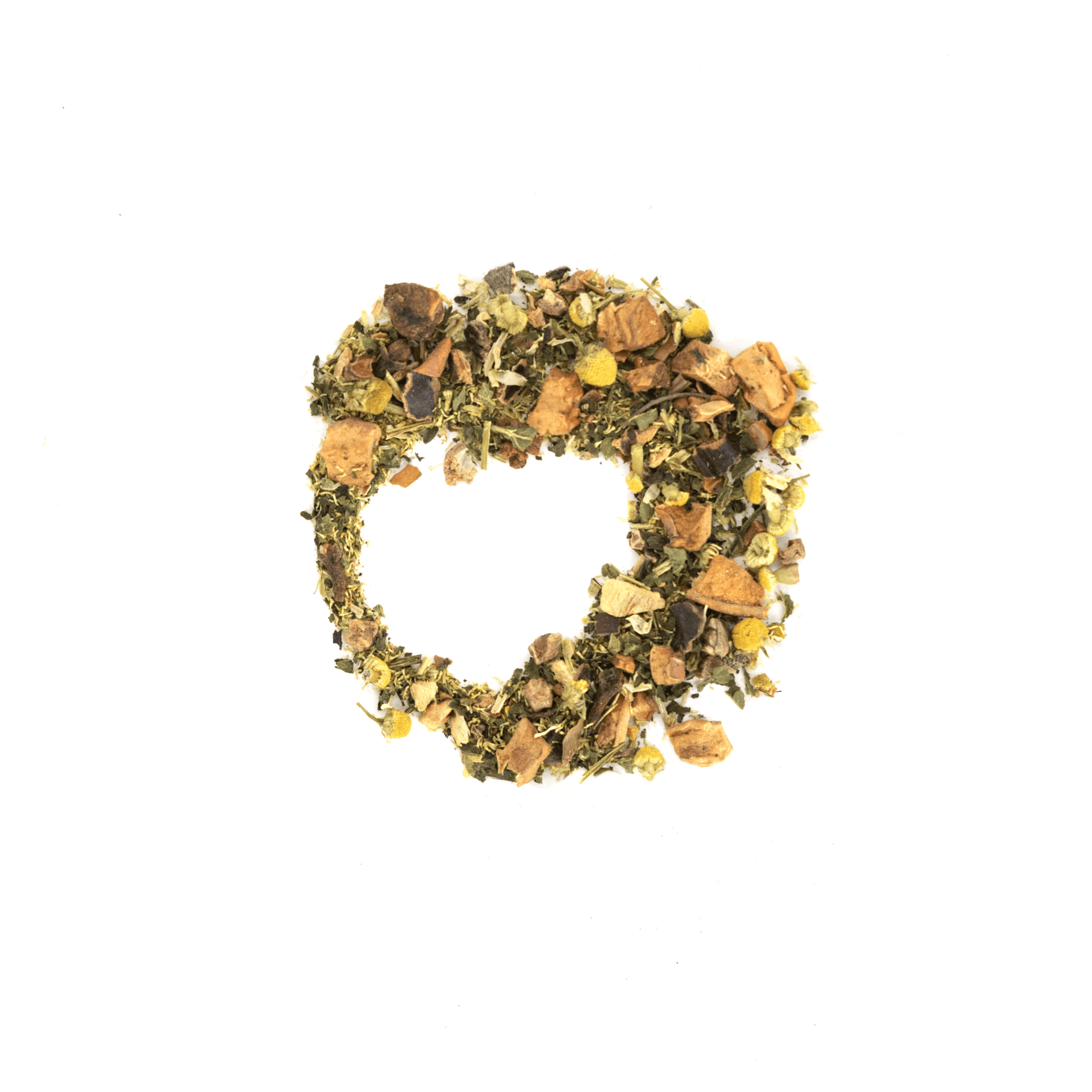
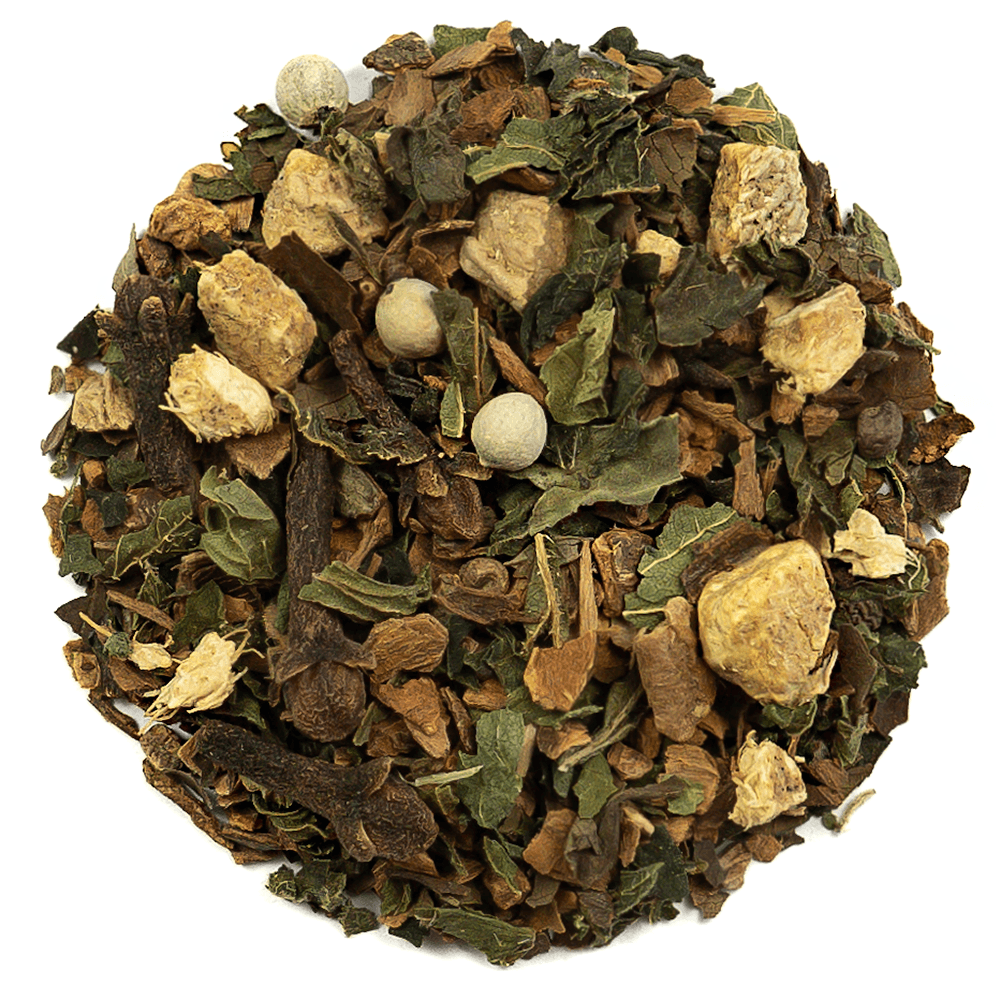
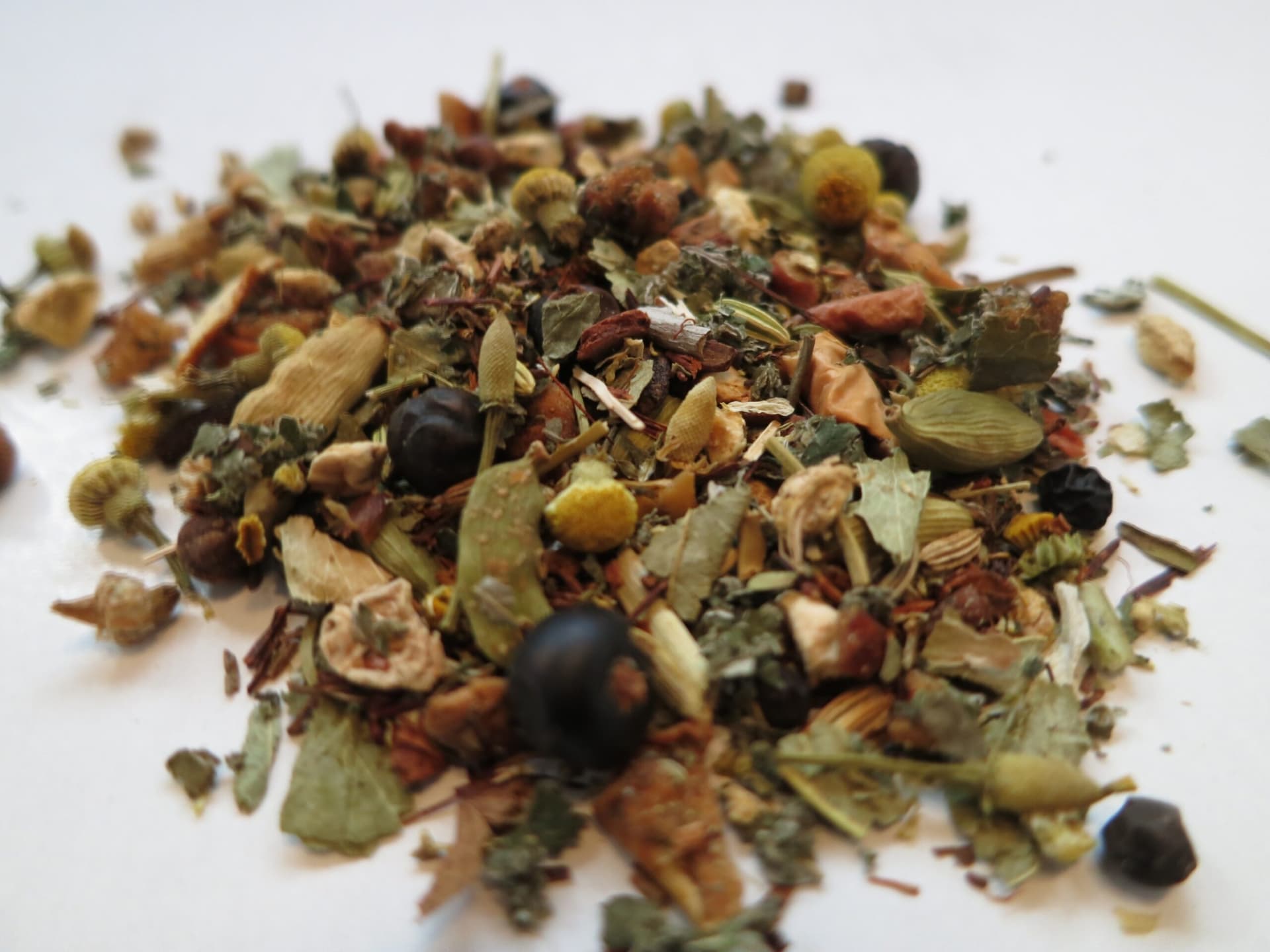
Turmeric's story stretches back roughly 4,500 years to ancient India, where excavation sites have turned up traces of the root, and it still grows widely across Southern Asia today. Mace comes from a different corner of the spice world entirely: it's the lacy covering around the nutmeg seed, harvested once the fruit matures on trees that originated in Indonesia's Spice Islands and take up to twenty years to bear fruit. Nutmeg cultivation has since spread from there to the Caribbean, and mace shares much of nutmeg's warm, resinous character even though the two are picked and processed separately. This blend brings the pair together with cinnamon, nutmeg and clove alongside the turmeric and mace, giving a cup that opens with a warm, spiced aroma and settles into gentle sweetness against turmeric's earthy base, with fruity, lemony and honeyed notes running underneath.
The tea is organic and caffeine-free, so it works as an any-time cup rather than one tied to a morning routine. In Ayurvedic tradition it's valued as much for how it's believed to support the body as for its flavour, though that reputation rests on traditional use rather than settled science. To brew it, steep a teaspoon of leaves per cup in freshly boiled water for about ten minutes, then strain. A little honey or a squeeze of lemon rounds out the spice nicely, and some drinkers add an extra cinnamon stick or a couple of cloves for more depth. Keep the leaves in an airtight container away from light and moisture to hold onto their aroma.