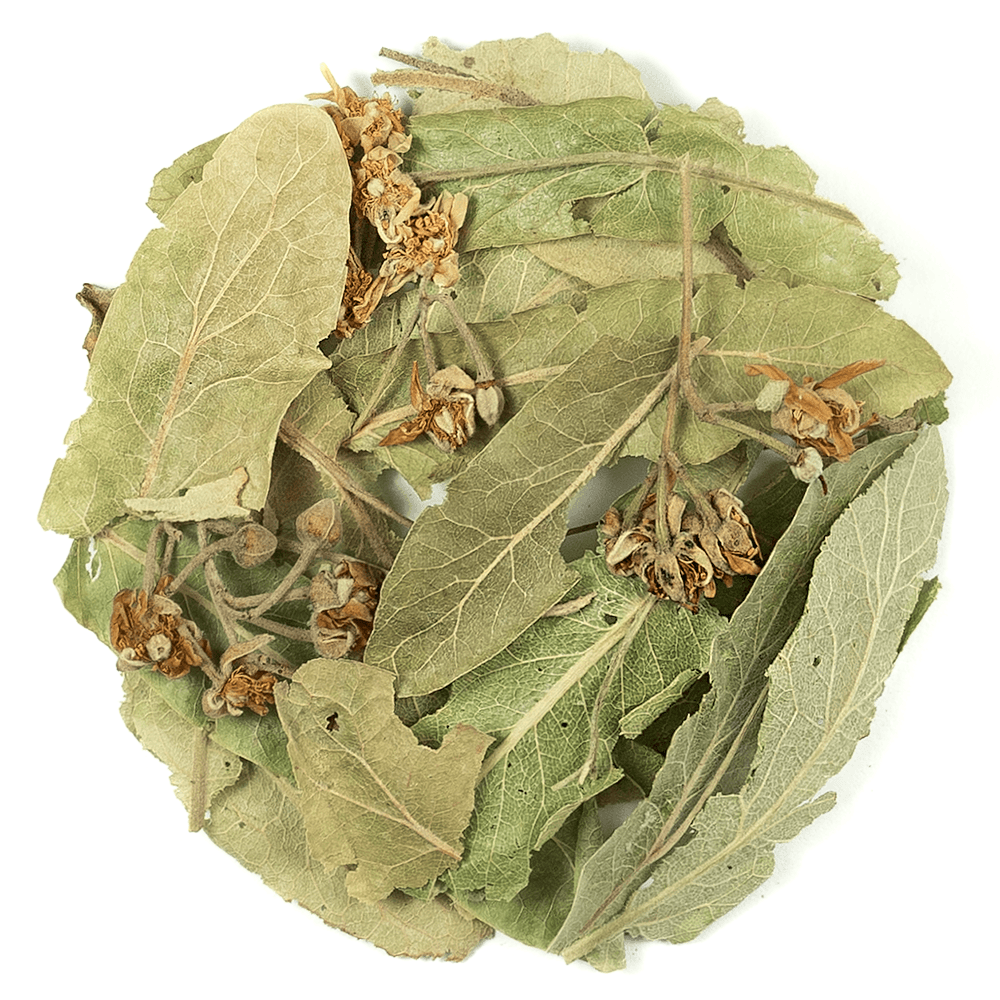
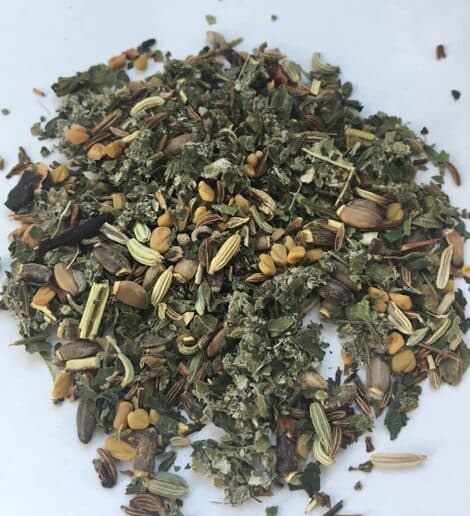
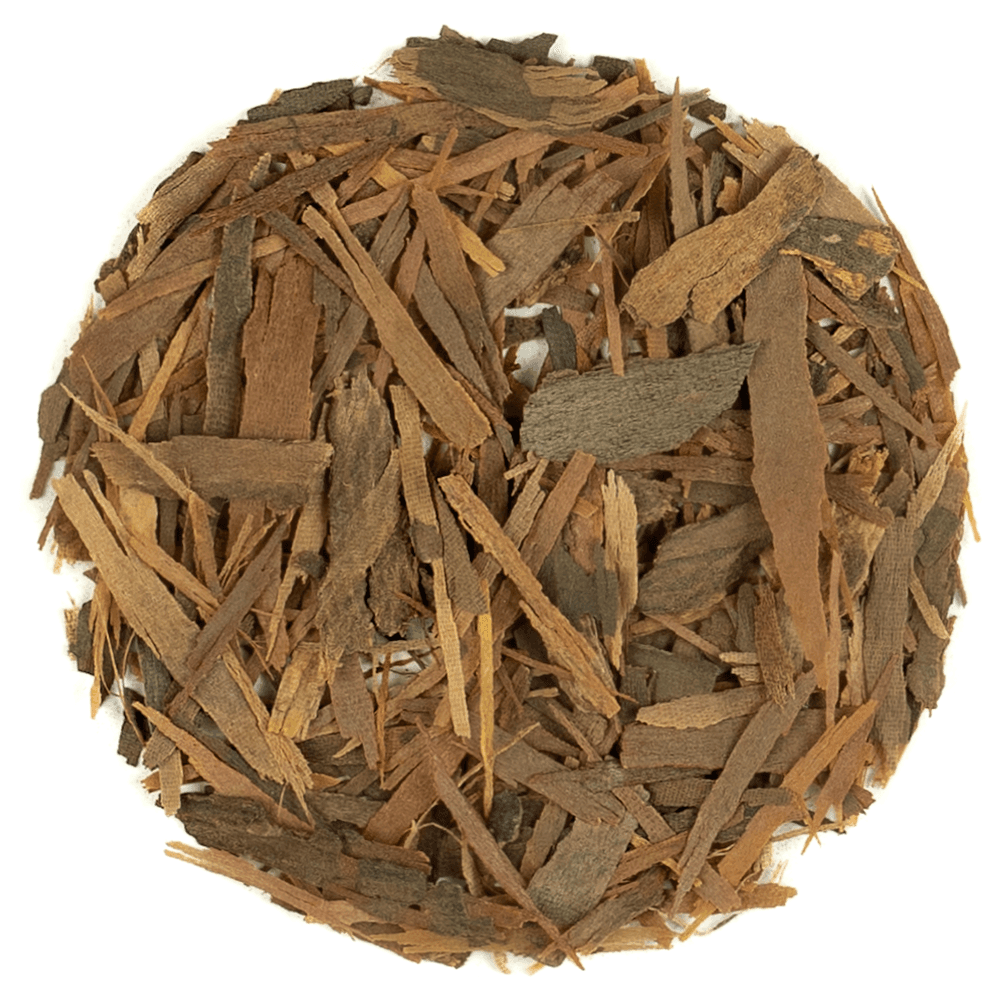
Lime flower has been a countryside remedy for as long as people have kept lime trees near their homes, and the tea earns that reputation with a genuinely pretty cup: pale gold, floral in a soft rather than perfumey way, with lemon and lime brightness running under it and a trace of honey sweetness on the finish. There's a woodier, mineral note too — bark and something like wet limestone — which grounds the citrus and keeps it from tasting like potpourri.
The flowers come from the lime tree, a large deciduous species that can reach 20 to 40 metres, often found growing on limestone soils and cliffs. Young trees have smooth grey bark and reddish twigs that turn shiny in the sun; with age the bark ridges and fissures, and the crown fills out into a broad oval. The heart-shaped leaves are largely hairless apart from small tufts in the vein axils. None of that shows up in the cup directly, but it's the plant behind the tea.
Lime flower has traditionally been drunk for calm — a cup people reach for to unwind, ease anxiety, or settle the stomach after a meal. Treat that as folk use rather than medicine; nothing here is a substitute for actual care. It's naturally caffeine-free, so it works as an evening pour as easily as an afternoon one.
To brew it, use freshly steeped flowers or petals with justboiled water, cover, and let it steep for around ten minutes — Teatico's brewing guidance suggests up to ten minutes for a fuller cup. Strain before drinking. It's good hot, and holds up well over ice too; a spoonful of honey or a squeeze of lemon plays nicely with the natural sweetness and citrus already in the leaf.