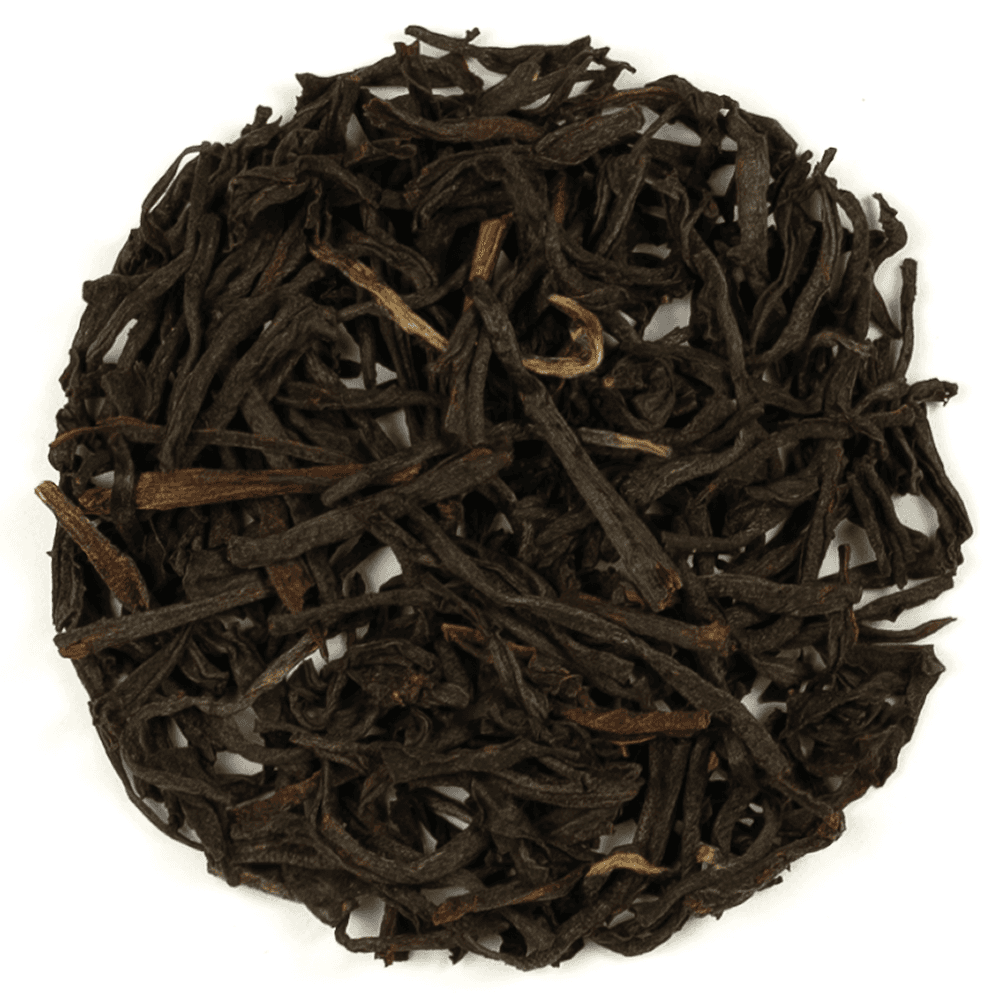
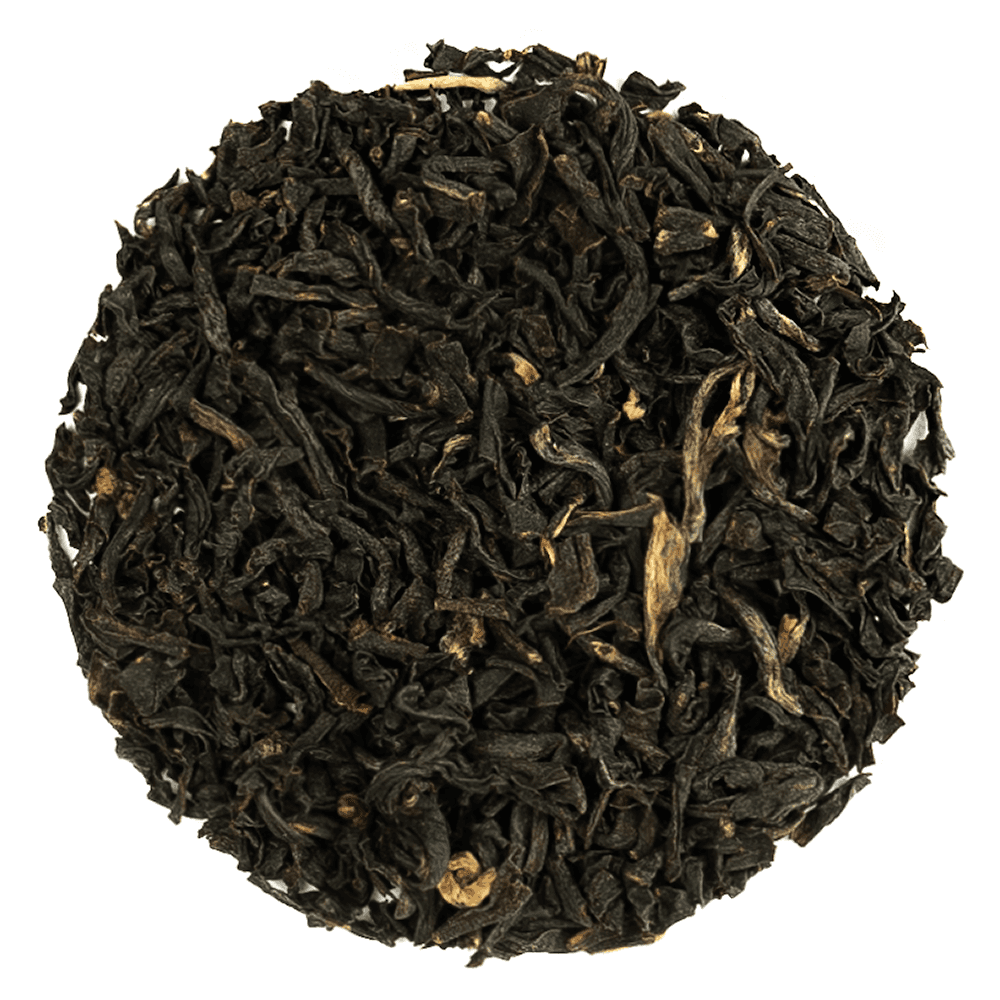
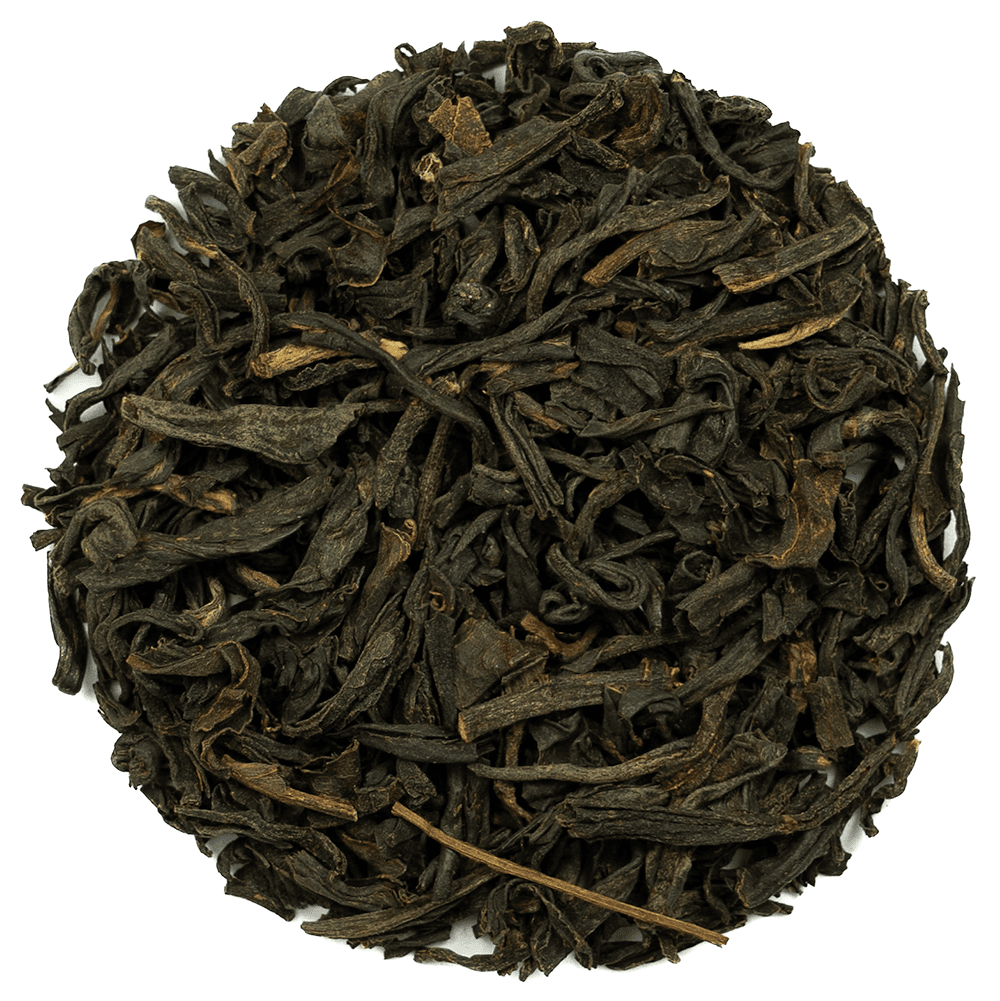
Anhui province, in eastern China, has built its reputation on green tea for centuries, but Qimen county in its south has spent the last while proving black tea deserves attention too. Qimen's older English spelling gave this tea its name: Keemun. The Yangtze runs through the province, with flat plains to the north and the Huangshan mountain range rising to the south; the low temperatures, high humidity and frequent fog that settle around Qimen are usually credited for the character teas from here develop. Hao Ya A is picked at a higher elevation than its counterpart, Hao Ya B, which is where the name comes from, and is worked into a neat, dark leaf that sets it apart from more everyday grades.
Brewed, it pours a coppery, dark liquor with a smooth, well-rounded, nutty character. Notes come through as lemon, honey and milk alongside that nuttiness, and it's counted among the stronger examples of Keemun for that reason. Like other black teas, it carries a fair amount of caffeine — an 8-oz cup runs to roughly 40mg — which is part of why it suits a morning cup better than an evening one. Caffeine of that kind has long been reached for simply for the lift it gives, rather than for any particular health claim, and a cup of this in the morning does the job well.
To brew it, use freshly boiled water and steep for three to five minutes. It holds up fine served black, letting the nutty, smooth character show through on its own, but it also takes milk, sugar, honey or lemon if you'd rather soften it. Either way it makes a decent case for itself as a first-cup-of-the-day tea rather than something to save for the afternoon, and it's an easy one to keep coming back to once you know what to expect from the cup.