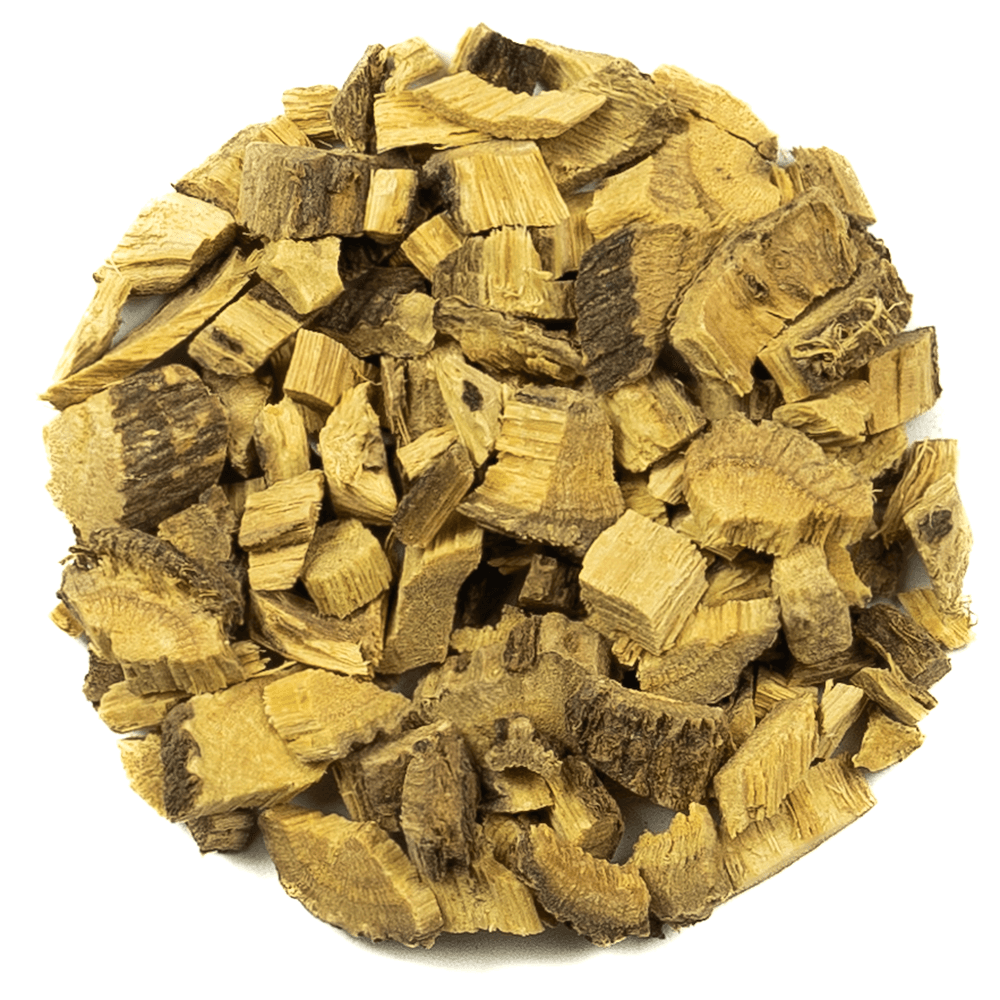
Angelica root tea comes from the roots of a plant in the carrot family, native to Northern Europe and Asia, dried and cut or ground for steeping. Medieval herbalists prized it enough to grow it in monastery gardens, valuing it for protective and healing properties, and both its medicinal and culinary uses spread across Europe from there.
The cup itself is earthy and layered rather than simple. Expect a smooth, mellow body with a woody undertone, like wild roots or forest floor, before celery and anise notes surface and a mild bitterness rounds things out. Lemon and honey brighten the edges, spice and coffee-like depth sit underneath, and the finish turns clean and faintly cooling, leaving a warm herbal trace behind. It reads as grounding rather than sharp, and works equally well drunk on its own or folded into a blend that needs some backbone.
This is traditionally a digestive tea, drunk to settle bloating and general discomfort, and it has long been used as a calming, stress-relieving cup as well. Some herbalists have also reached for it to ease coughs, support circulation, or help with menstrual discomfort, though these are traditional uses rather than proven effects, and anyone pregnant, nursing, or on medication should check with a doctor first.
To brew it, pour freshly boiled water over the dried root and let it steep about seven and a half minutes, adjusting up or down to taste since a shorter steep keeps the earthiness milder. Strain and drink plain, or add honey or lemon.