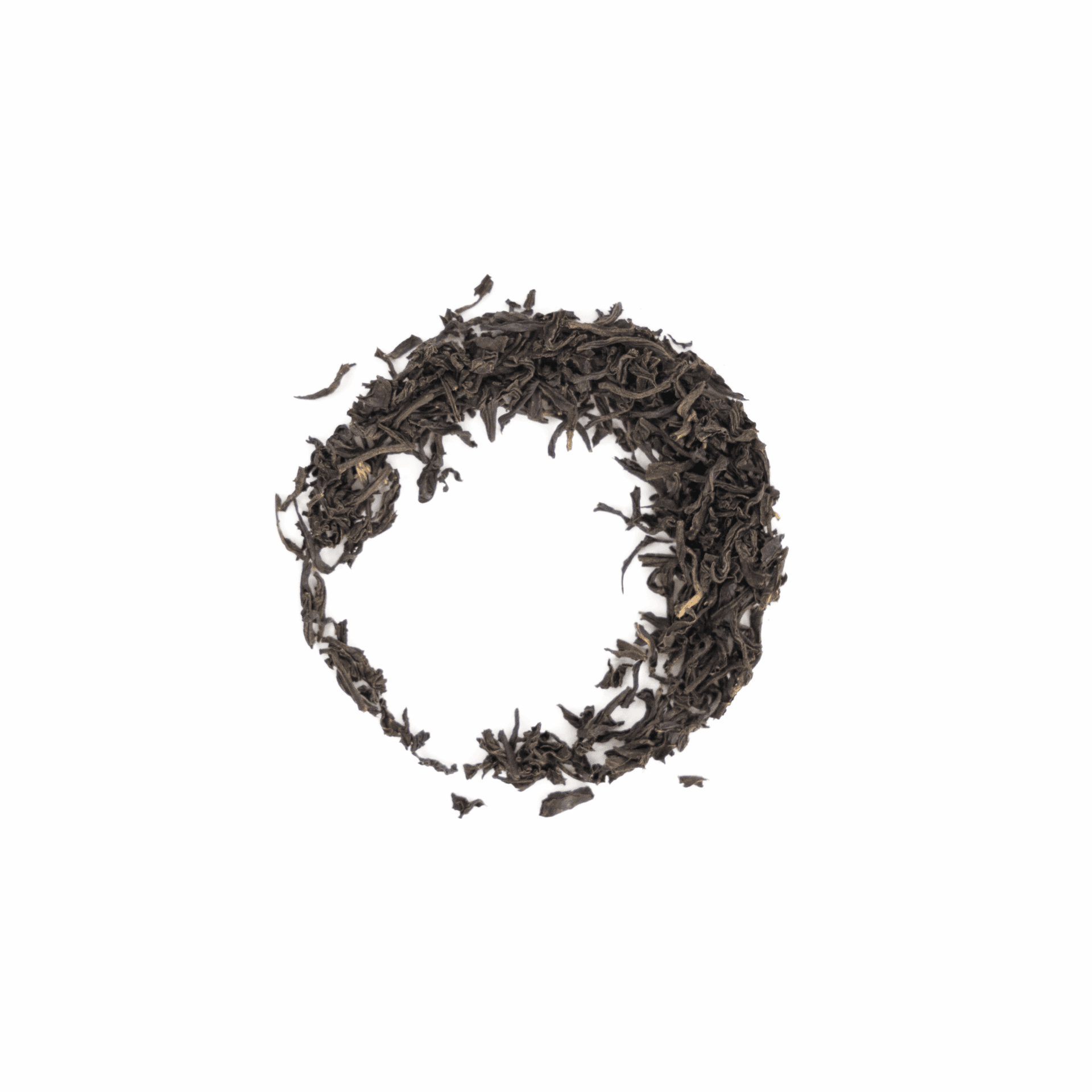
The malty, brisk character that made Assam famous shows up in full here, from an estate on the southern bank of the Brahmaputra River in Upper Assam. FTGFOP1 grade means it's made up of the finest leaves, tipped with gold, and that shows in the cup: a deep amber liquor with an aroma that leans spicy and earthy, backed by malt and a hint of sweet florals. The first sip is bold and full-bodied, carrying that classic Assam malt with a spicy edge that lingers, and the golden tips lend a touch of sweetness underneath it all. Texture-wise it's smooth and velvety, medium to full in body, with a long, resonant finish that fades from malt and spice into a gentle sweetness. Tasting notes run through orange, date, milk, malt, spices, earth, and loam.
The estate takes its name from the Assamese words for a tall, thick bamboo and for a garden or place — roughly, "a garden of thick bamboo trees." Its location on the Brahmaputra's southern bank matters more than the name suggests: the river carries nutrient-rich sandy loam soil down from its glacial source near Tibet's Lake Mansarovar, and that soil is what made this stretch of land so suited to tea in the first place. Mokalbari dates to 1876, founded by British planter Robert Brown during the era when British planters were building Assam into a major tea-producing region. It has since passed from British colonial ownership to Indian proprietors, growing into one of the larger tea gardens anywhere, spanning just over 1,000 hectares and turning out both CTC and orthodox teas across two factories.
This is a black tea suited to a hearty morning or afternoon cup, and it holds up well with milk if that's your preference, or on its own if you want the earthy, malty notes unfiltered. To brew it, use boiling water at 100°C and steep for about four minutes — long enough to draw out the full malt and spice character without turning harsh. Adjust the leaf-to-water ratio to taste if you like it stronger or lighter, and expect the golden tips to round out the finish with a bit of natural sweetness rather than bitterness.