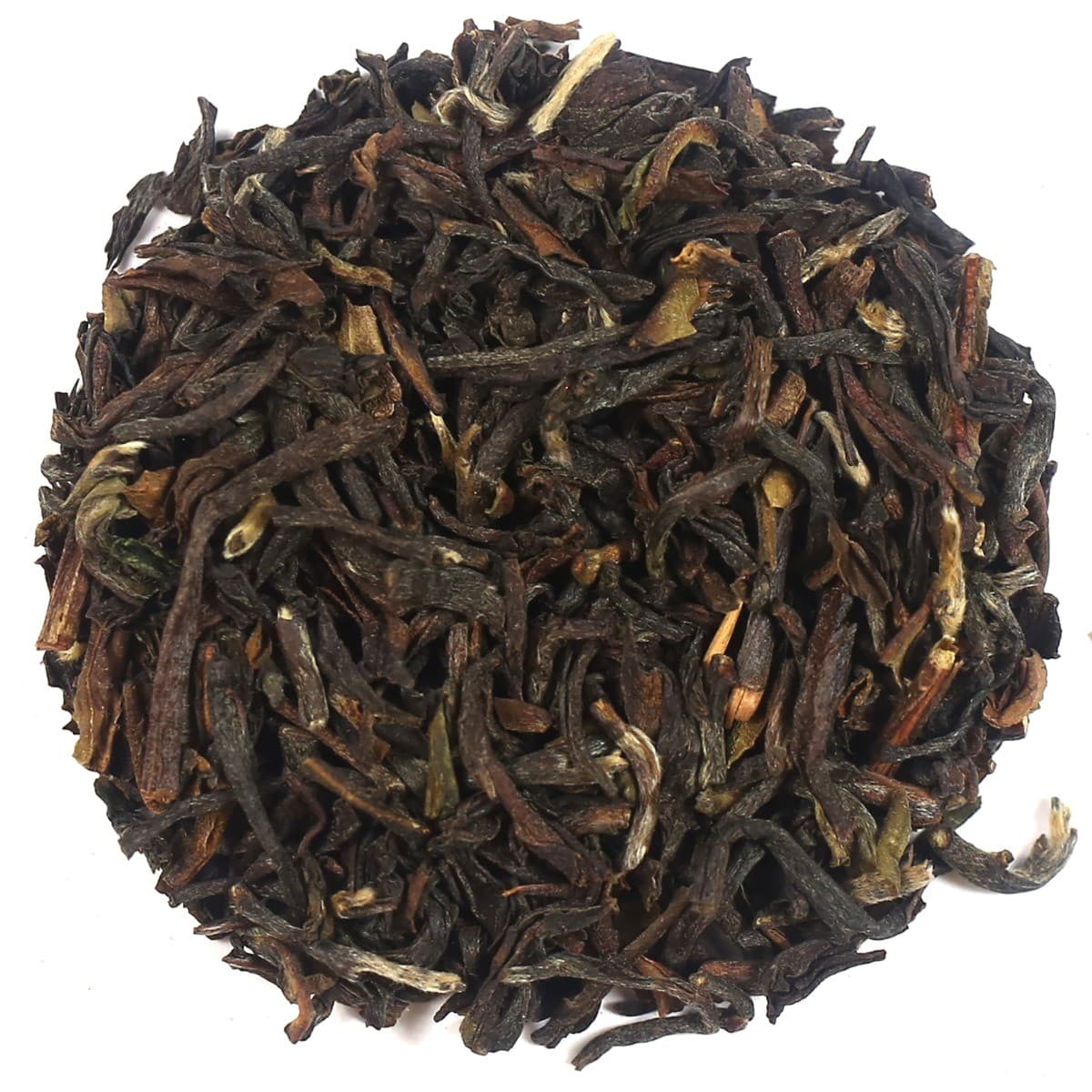
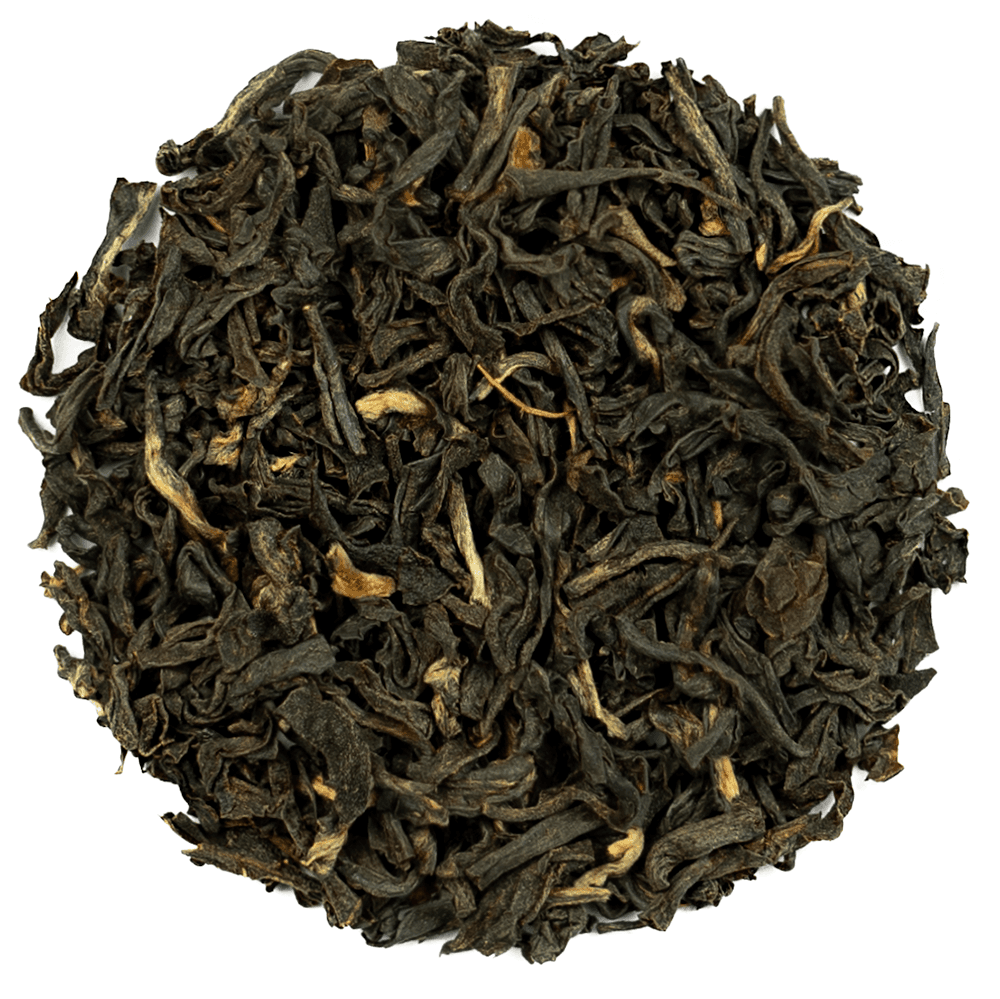
The name comes from Lepcha, the local dialect of Darjeeling's hills, and translates loosely to "Mary's place" — though the estate that grows this tea started out as Kyel, renamed only after merging with a neighbouring garden. Louis Mandelli founded Marybong in 1876, and today the estate sits near the town of Ghoom, bordered by Tumsong and Lingia to the west, Liza Hill to the north, and Risheehat to the east. Of its 285 hectares under cultivation, this FTGFOP1 grade (Fine Tippy Golden Flowery Orange Pekoe) represents the pick of the harvest.
Darjeeling earned its "Champagne of teas" nickname long before this particular lot was picked, and the cup goes some way to explaining why: golden liquor with peachy highlights, light in tone, carrying grassy, lemony notes alongside orange and honeyed sweetness, with a milky softness underneath and a lingering finish. It's a departure from the heavier, maltier character many people expect from black tea.
Tea only reached India in 1823, and Darjeeling's plantations followed within a few decades: by the 1860s the district already counted 39 gardens across 1,000 acres, producing around 133,000 lbs a year. The region's more recent history has been harder. From the 1980s onward, Gorkha National Liberation Front-led demonstrations pushed for a separate Gorkhaland state, and clashes between 1986 and 1988 alone cost an estimated 1,200 lives. Unrest flared again in 2017 but has since settled. Darjeeling now has 87 gardens employing roughly 55,000 permanent workers, swelling to 120,000 during harvest, Marybong among them.
Steep the loose leaves in freshly boiled water for three to five minutes. Tea & Coffee suggests drinking it plain to taste the grassy, honeyed character in full, though milk, sugar, honey or lemon all work if you'd rather. Black tea has long been drunk for its LDL-lowering and immune-supporting reputation, and some research points to metabolism benefits worth weighing alongside a decent diet and exercise, not as a substitute for either.