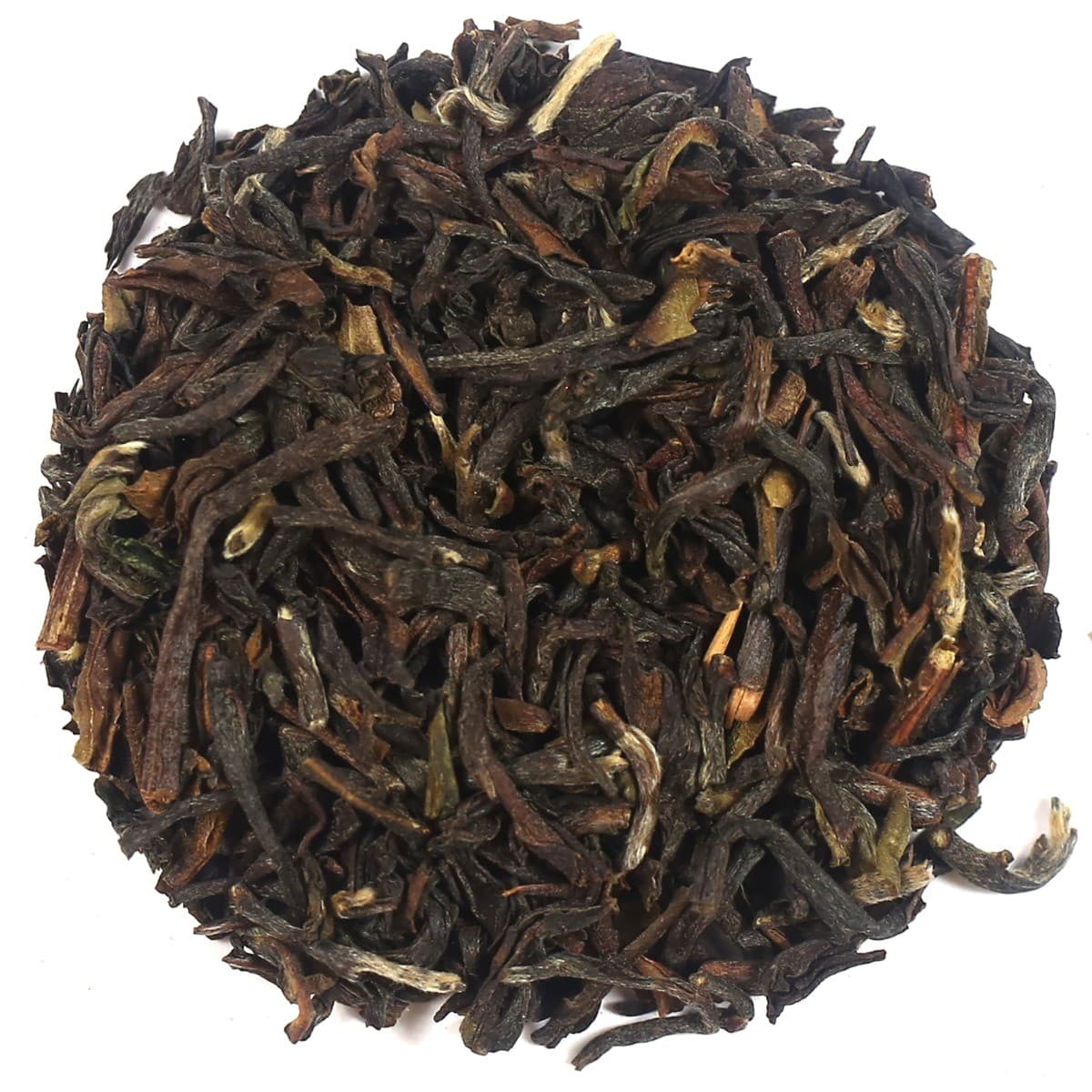
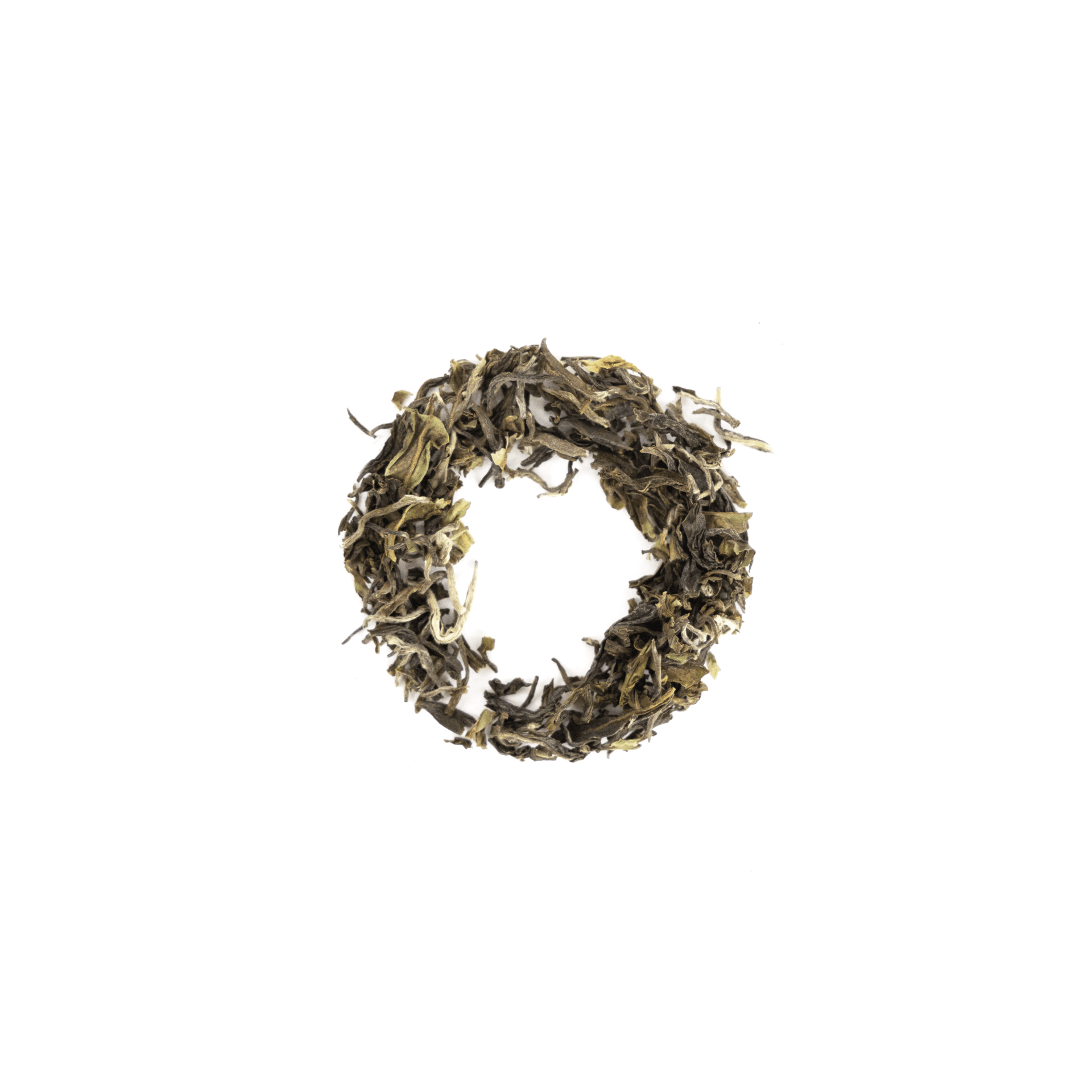
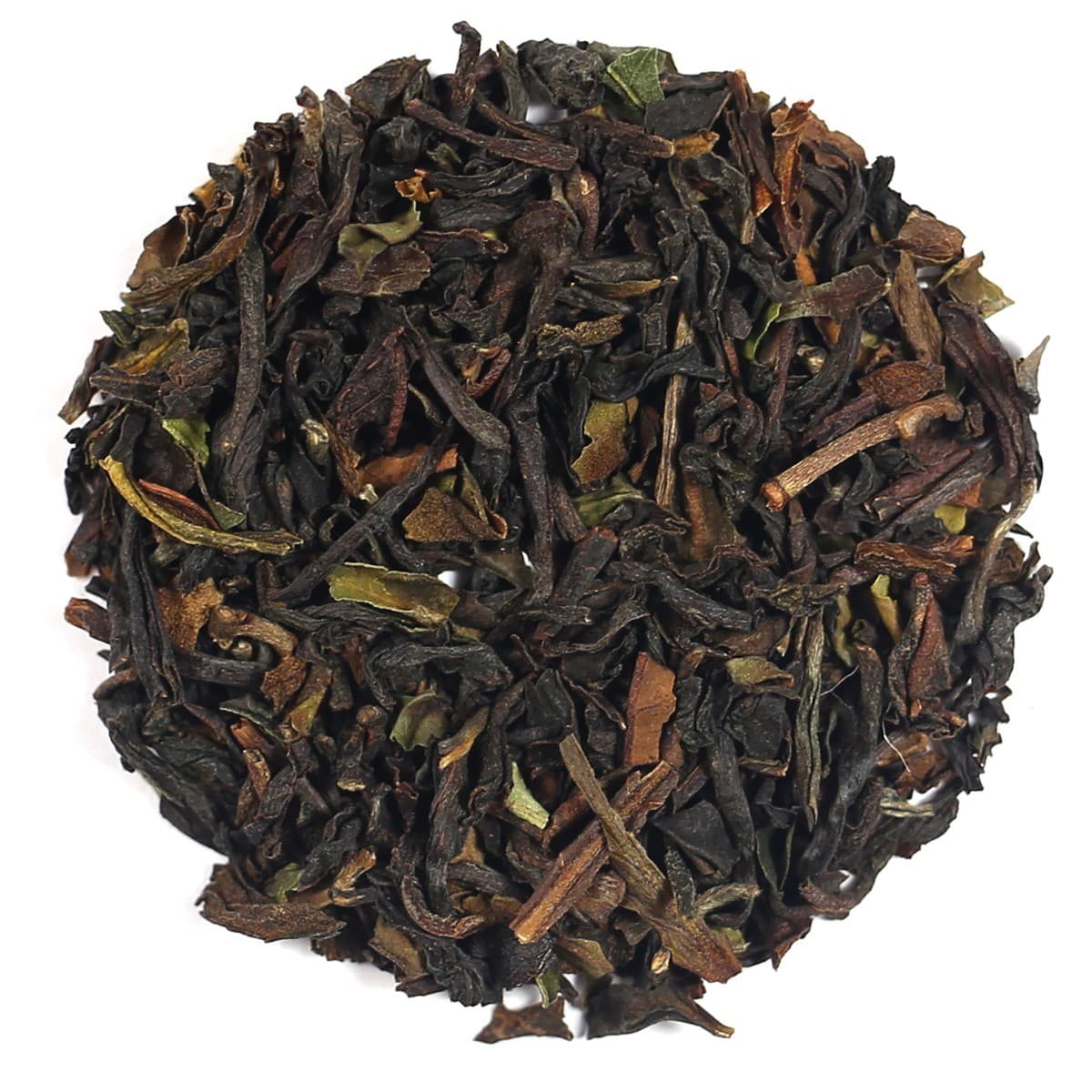
Second flush is the odd one out in Darjeeling's calendar, and for many drinkers it's the one that matters most. First flush gets the early reputation, picked from late February into mid-April, delicate and light with an unmistakable floral edge. Second flush follows, and this is a blend of high-grown estate teas made to that grade, SFTGFOP1 — Super Finest Tippy Golden Flowery Orange Pekoe, meaning it's plucked as the top bud and first two leaves of each new shoot, with a high share of golden tips.
That grade shows up in the cup: coppery-orange, light in tone, and built around the muscatel character second flush is known for, threaded with floral notes, lemon, orange, honey and something close to champagne. Some drinkers take it plain; a little honey or lemon on the side is common too.
The Darjeeling district itself, in India, produces tea on ground so steep and broken that it accounts for only about 1% of India's total output, despite the tea having been grown there since the 1830s, after Robert Fortune helped get the industry started using plants of largely Chinese origin. Later harvests in the calendar — monsoon, third and winter flush — exist but don't carry the same reputation as first and second.
To brew it, use freshly boiled water and steep for two to four minutes. Black tea of this kind has long been drunk with the belief that its antioxidants support general health, though that's a traditional association rather than a settled claim.