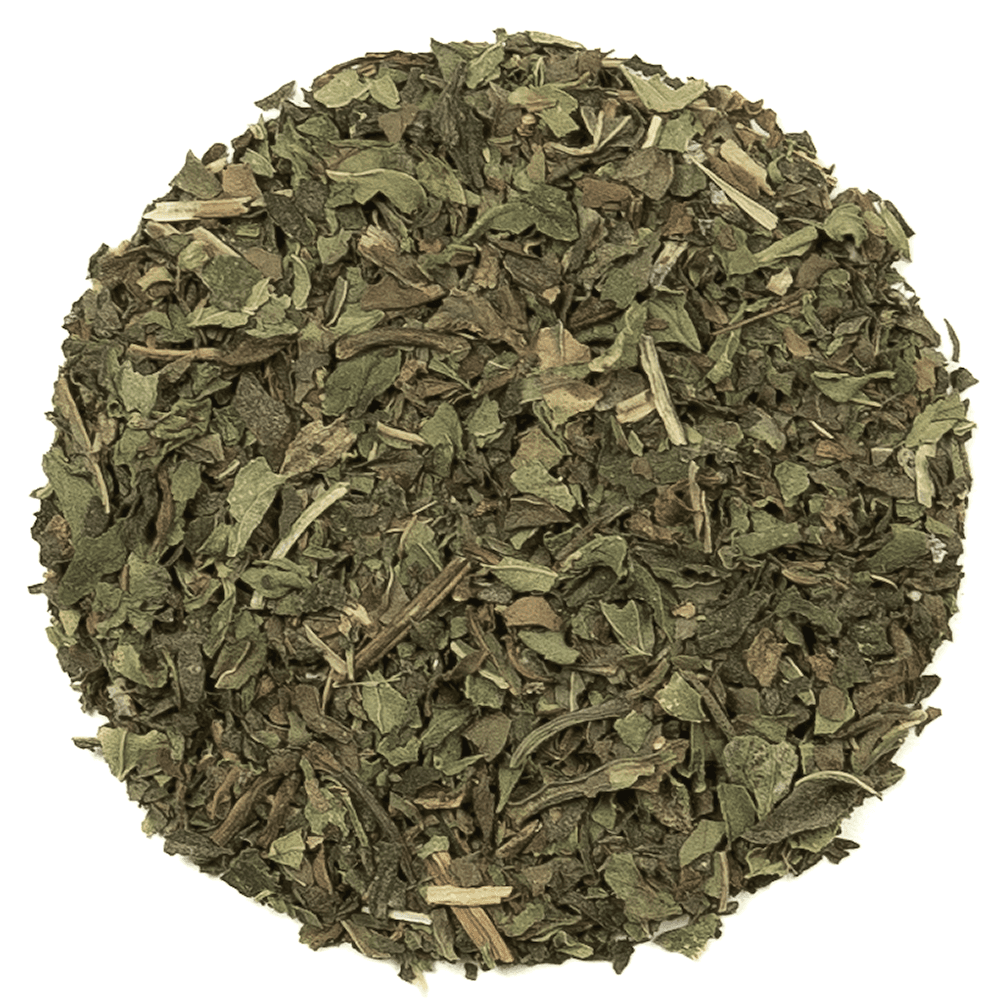
Lemon Balm's charm is right there in the name the Greeks gave it: they called the plant Melissa, meaning honey bee, because the crushed leaves smell so sweetly of citrus that bees can't stay away. This tea is made from those heart-shaped, serrated leaves, harvested in late summer as the plant begins to flower, then dried to keep the lemony aroma intact. Melissa officinalis is a mint-family perennial native to southern Europe, the Mediterranean, and parts of West Asia, and people have been steeping it for a very long time — the Greeks recorded its use over 2,000 years ago, and by the Middle Ages herbalists such as Paracelsus prized it highly. It found its way into Carmelite water, a tonic made for French royalty in the 17th century, and it's remained a household herb ever since.
In the cup, expect bright lemon and citrus over a soft mint undertone, rounded out with a honeyed sweetness — some drinkers also pick up a faint medicinal note typical of the herb. It's naturally caffeine-free, so it works as well at night as it does in the morning, and it holds up hot or iced. A slice of fresh lemon or a little honey plays well with the citrus character if you want to build it out.
Lemon balm has traditionally been used to ease anxiety and support restful sleep, and some also reach for it to settle digestion — treat these as long-standing folk uses rather than guarantees. To brew it, pour water just off the boil (95–100°C) over a teaspoon or two of leaf and let it steep for around ten minutes, long enough to draw out the full citrus character. Store the dried leaf somewhere cool, dry, and out of direct sunlight to keep that aroma from fading.