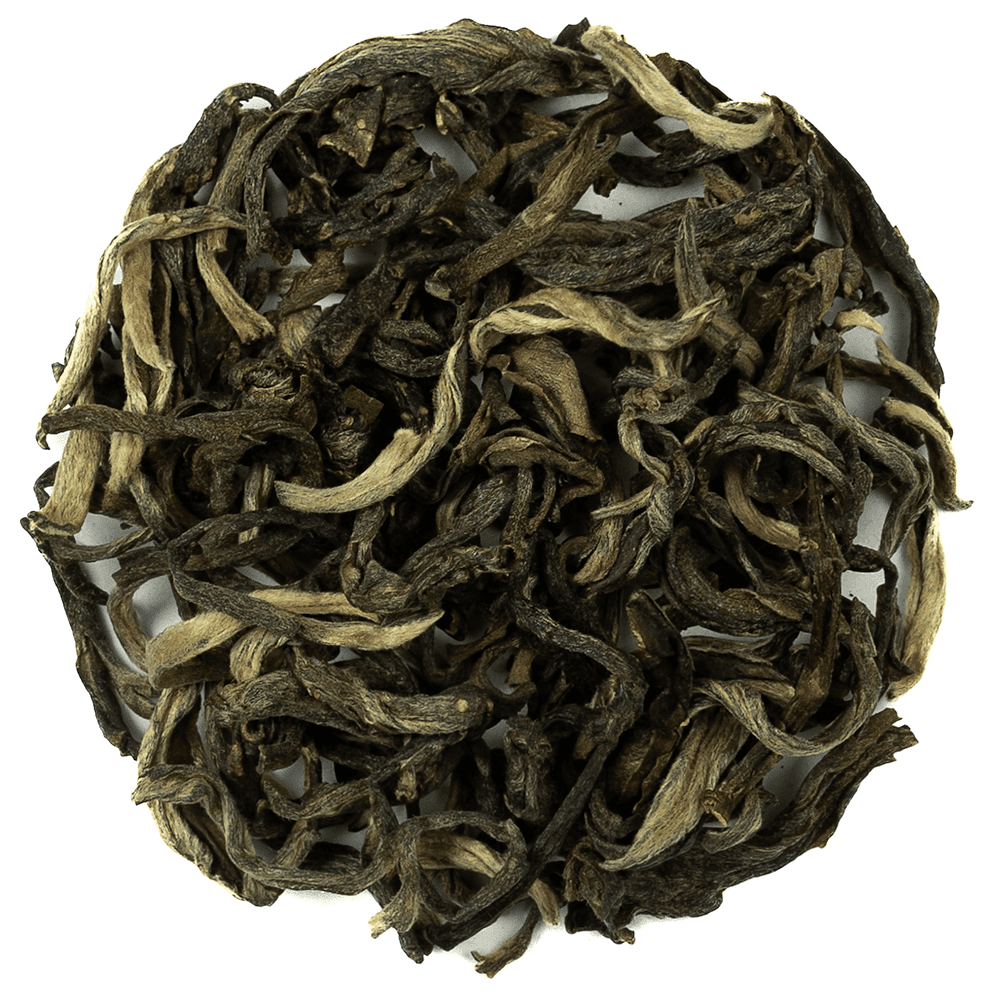
Longjing, or Dragon Well, comes from the hills around West Lake in Hangzhou, in Zhejiang province, and it's one of the teas most people picture when they think of Chinese green tea. The name refers to a production method as much as a place: leaves are withered, then pan-fired by hand in wide skillets rather than machine-dried, a step that halts oxidation quickly and gives the leaves their flat, smooth shape. That firing is also where the tea gets its character — a nutty edge close to hazelnut, floral notes, and a vegetal backbone that some drinkers describe as grassy or coffee-like in the finish. Superior grade means it was picked in spring, when the plants are tenderest and most fragrant, and processed by the traditional method that has stayed largely unchanged for generations.
The colour in the cup is a clear jade green, and the aroma carries some sweetness alongside the vegetal notes. The first sip can taste fairly strong, then settles into something smoother and lighter as you keep drinking — people sometimes call this mellowing the "taste of early spring." Texture-wise it's smooth rather than astringent, though it can leave a slight drying sensation on the palate, which is part of what makes the finish feel clean rather than heavy.
Brew it with water around 85°C rather than a full boil, which would scorch the leaves and flatten the flavour. A rough guide is about a teaspoon of leaf per 150ml of water. Let the leaves unfurl fully, covering the cup or pot while they steep, and start checking the tea after a minute — shorter steeps give a lighter cup, longer ones bring out more body. Strain off the leaves once you're happy with the strength rather than letting them sit in the water.
Longjing has a long association with quiet, deliberate tea drinking in Chinese culture, tied to ideas of taking a pause and resetting rather than just drinking for thirst. Some traditional use also credits it with a calming, settling effect, though that's worth treating as cultural practice rather than established fact. Stored away from light, moisture, and strong odours, it's said to keep well for up to two years.