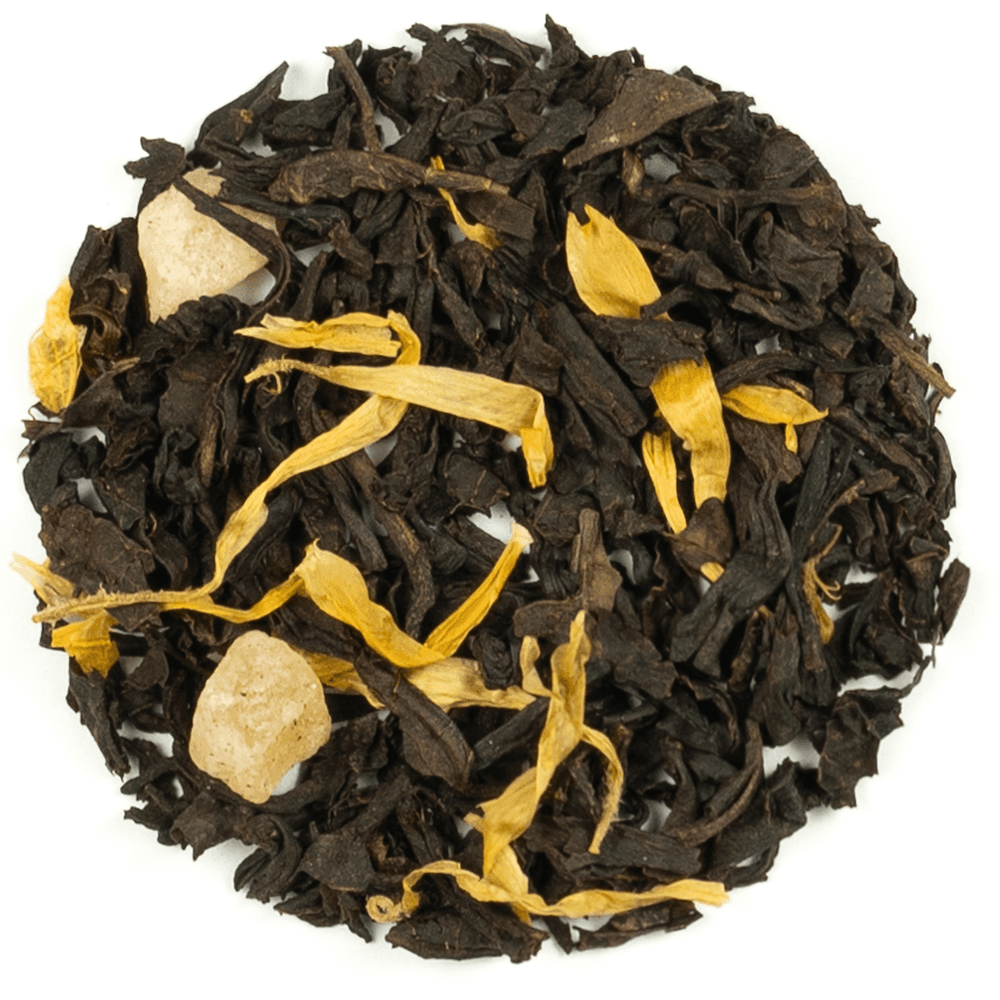
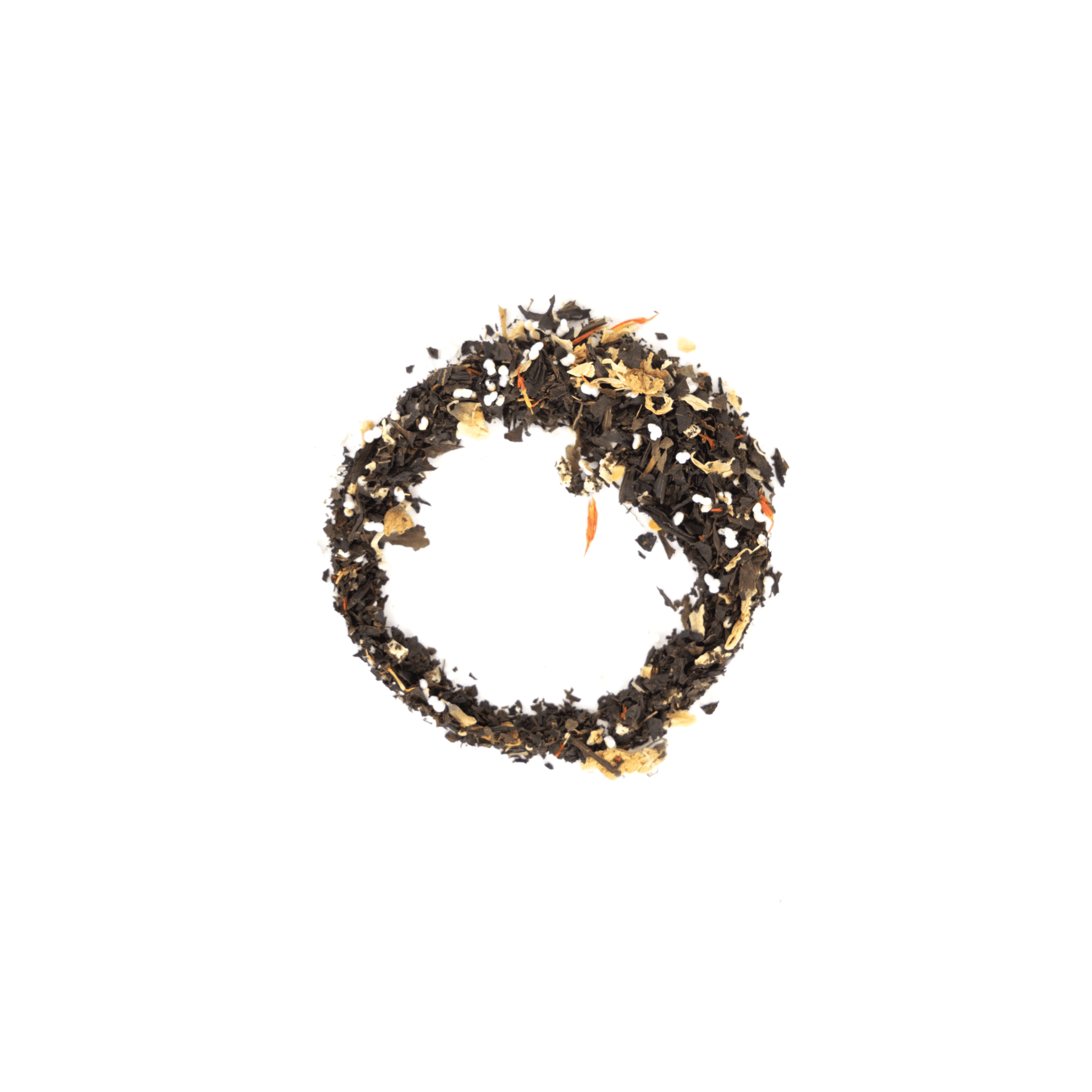
Mango Indica Tea pairs China black tea with Ceylon, then scents the leaves with mango and layers in marigold petals and chunks of dried pineapple. The result pours a golden-orange cup, light in tone, with sweet, fruity flavour up front and a malty backbone underneath — tropical without losing the character of the black tea base.
Black tea itself traces back to China's Qing Dynasty, with legend crediting Lapsang Souchong, a smoked variety, as the accidental original from which today's many styles descended. The Ceylon component comes from Sri Lanka, where tea took hold commercially in the 19th century after disease devastated the island's coffee plantations — tea proved an economically viable replacement and helped steady the country through that period. Blends like this one draw on both traditions, pairing China's black tea heritage with Ceylon's brisk character.
Brew it with freshly boiled water and let it infuse for three to five minutes. It's best taken plain, without milk or sugar, so the tropical fruit notes come through clearly. A cup carries a moderate dose of caffeine, enough for a morning lift without being overpowering. Black tea contains antioxidants including theaflavins and thearubigins, and it has long been associated with general health and wellbeing in traditional use — claims worth taking as folklore rather than medicine, since the evidence for specific benefits remains preliminary at best.