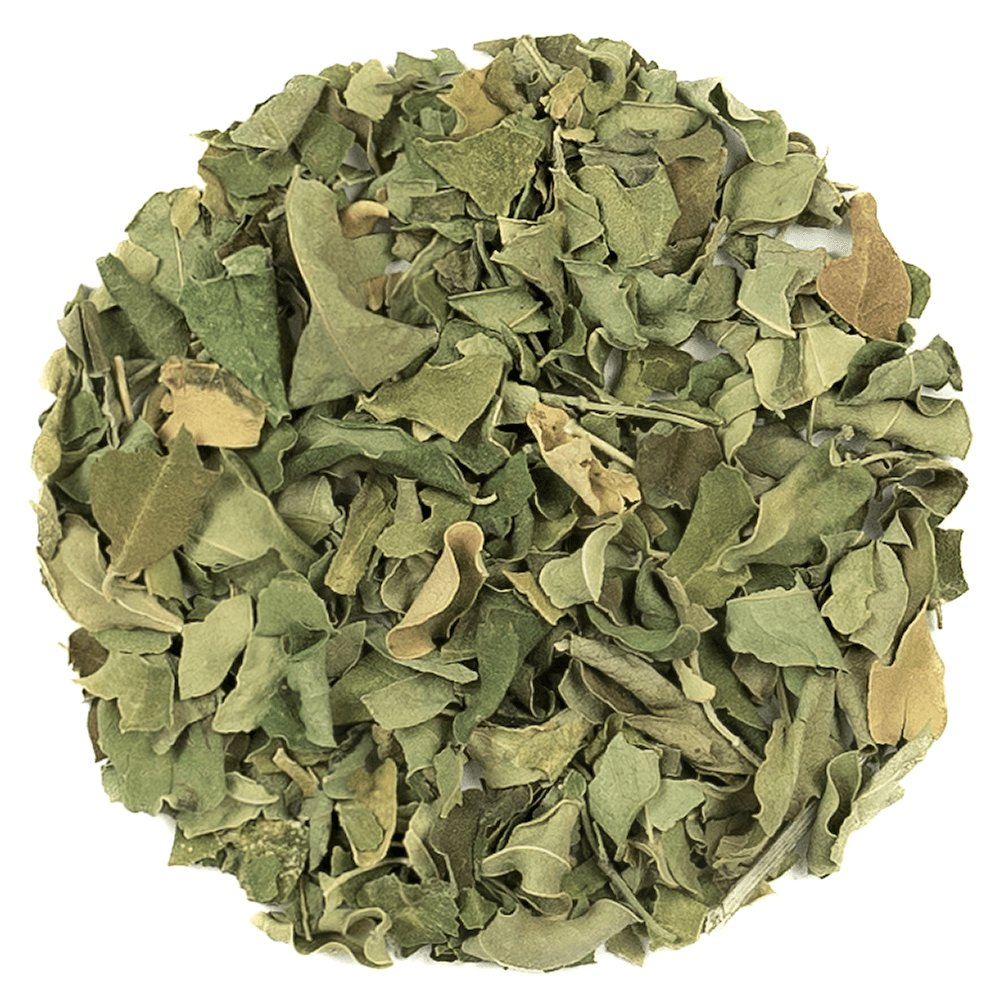
Mulberry leaves have been picked and dried across temperate to subtropical stretches of Asia, Africa, and the Americas since long before anyone called this a wellness drink — the mulberry tree, genus Morus, took root there first as food for silkworms, and the tea followed as a byproduct of that cultivation. China's use of it traces back to the Shang dynasty, roughly 1600 to 1046 BCE. By the Tang dynasty it had earned a place in the Bencao Gangmu, an old herbology text that recorded it as a remedy for fever, headache, and the common cold, and Ming-era physicians later prescribed it for blood sugar, vision, and blood detoxification. From there it spread through Japan and Korea, then slowly into European and North American tea circles as global trade opened up, arriving by the early twentieth century as something between a curiosity and a health drink.
In the cup, expect date and vanilla sweetness layered over grass and earth, with a medicinal edge and a texture that runs thick and drying rather than light. It's naturally caffeine-free, which makes it a reasonable choice whenever you want something warming that won't touch your sleep. Traditional use in Chinese medicine has long credited it with managing blood sugar and cholesterol and supporting weight loss, and some modern research has looked into those same effects, though that's a far cry from a guarantee for any one drinker.
To brew it, use about a teaspoon of dried leaf per 250ml of water, just off the boil, and let it steep for up to 10 minutes — the longer end of that range pulls more flavour and body out of the leaves, so adjust to taste. Strain before drinking. It holds up equally well hot or over ice, and the leaves themselves should look green and aromatic, with no trace of mould or dampness, before you ever get to the pot.