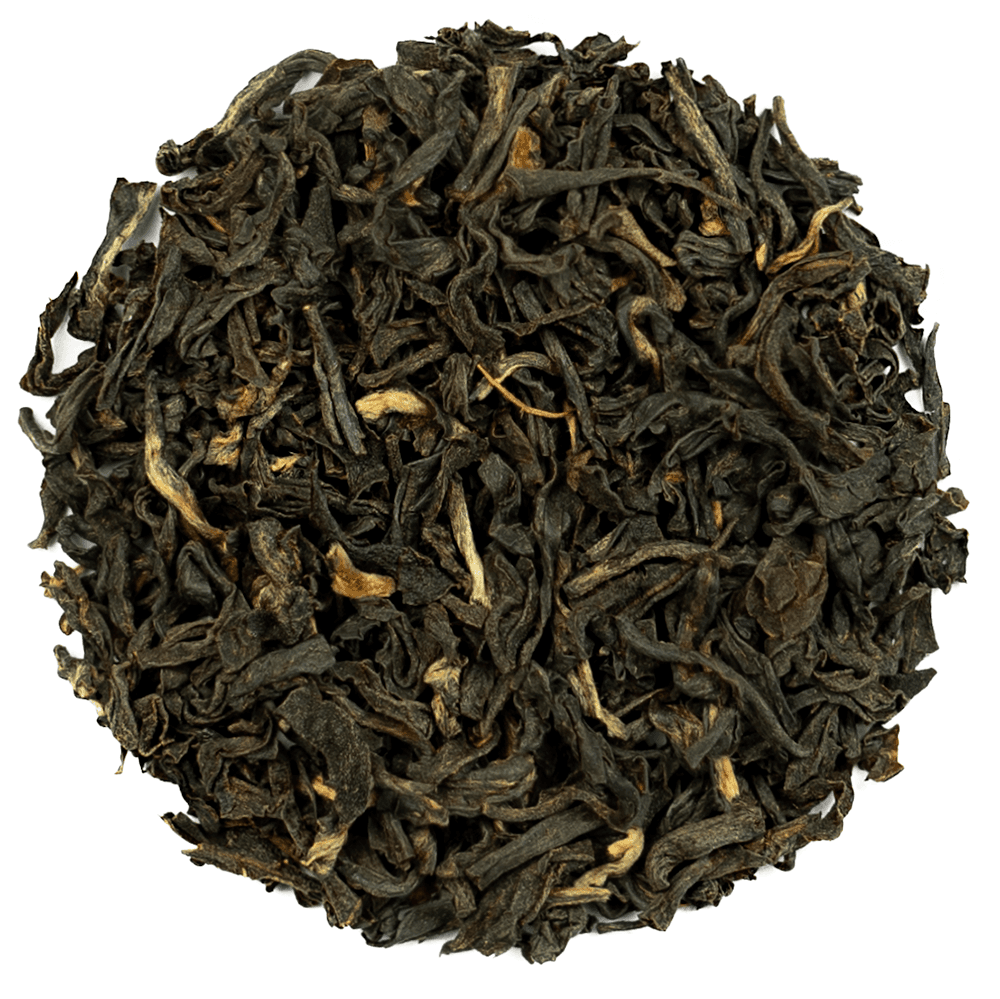
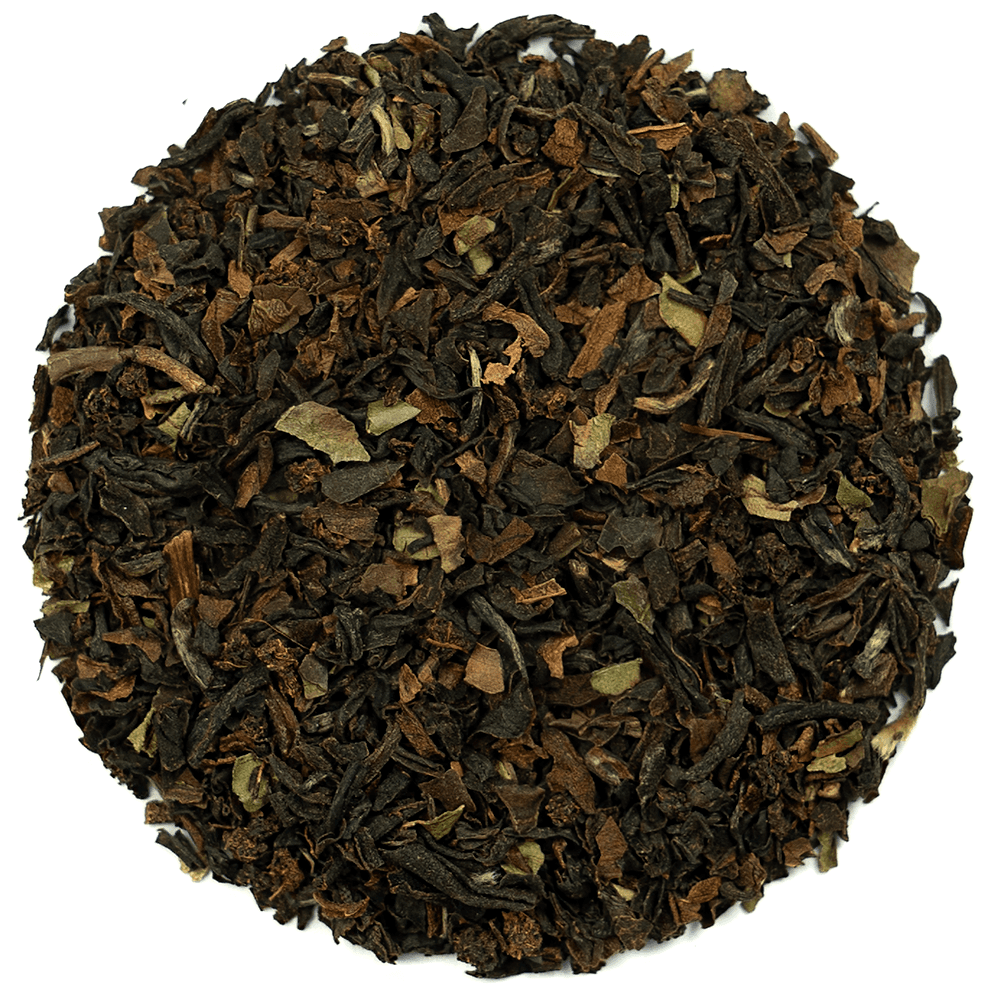
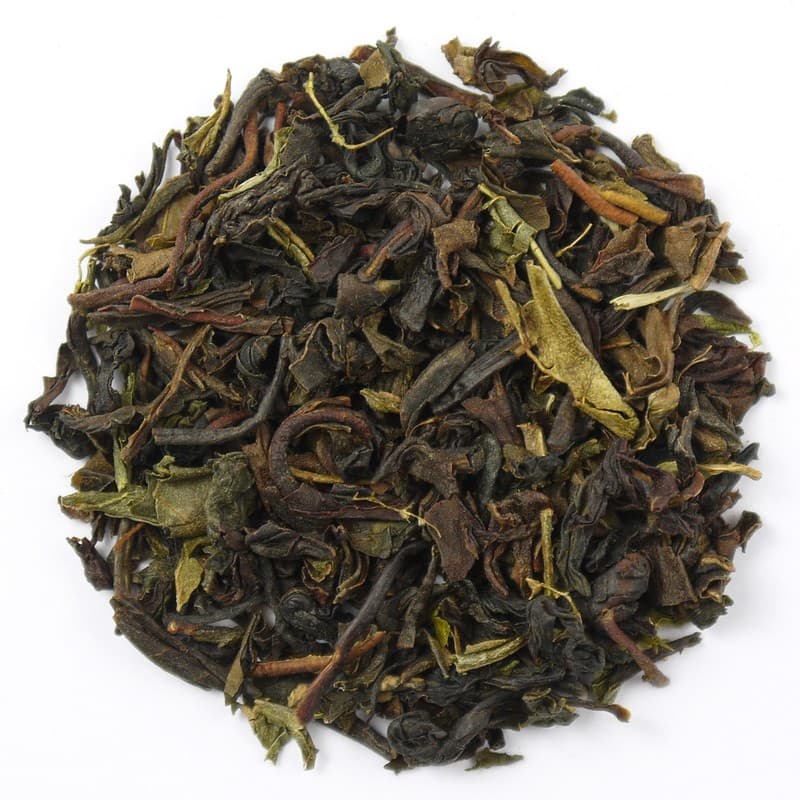
Nilgiri's tea gardens sit high in the hills of Tamil Nadu, South India, between 1,000 and 2,500 metres, and this GBOP shows what that altitude does to a black tea: a bold, smooth cup with floral notes, a fresh lemon-orange lift, and enough body to take milk well. GBOP stands for Golden Broken Orange Pekoe — the broken leaf tends to give a stronger, more assertive character in the cup than whole-leaf styles like FOP. In the cup it runs coppery with reddish highlights, dark in tone.
The name Nilgiri comes from Sanskrit for "blue hill," a reference to the Kurinji flowers that blanket the hillsides in blue every seven to twelve years. These hills stretch across Kerala and Tamil Nadu and have grown tea since the 1830s, producing some 130 million kilos a year, though the region stays less well known than Assam or Darjeeling. The monsoon arrives here in midsummer, and unlike most tea regions, harvesting continues through winter — leaves picked in that season are known locally as Frost Teas. Nilgiri has traditionally made CTC (cut, tear, curl) tea, though growing demand has pushed estates into orthodox large-leaf and organic production as well.
To brew, use freshly boiled water and steep for three to five minutes. It takes milk or a slice of lemon well, and also works as a base for iced tea. Black teas like this one carry more caffeine than green, oolong or white tea, and have long been drunk for a steady lift of alertness and energy.