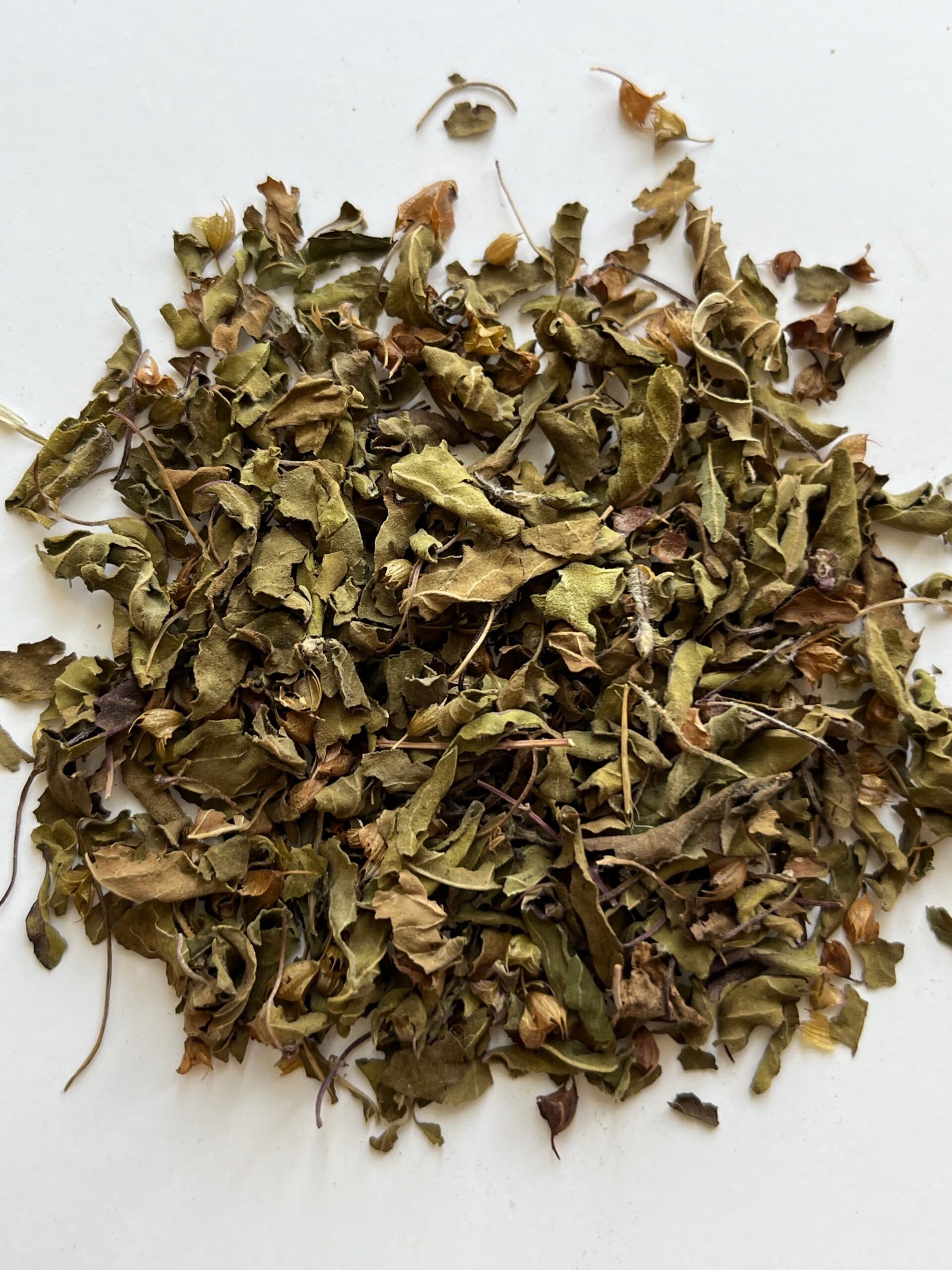
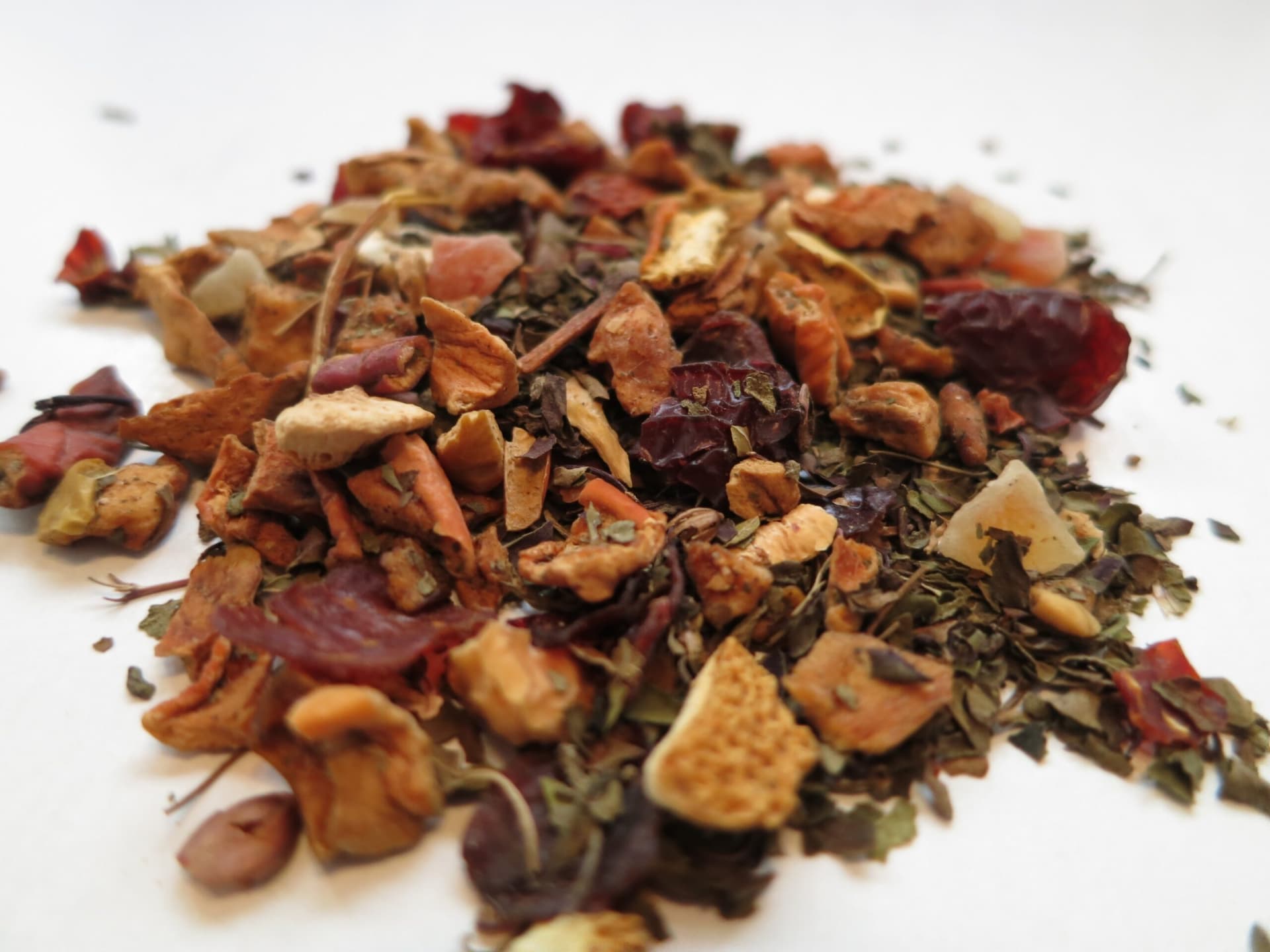
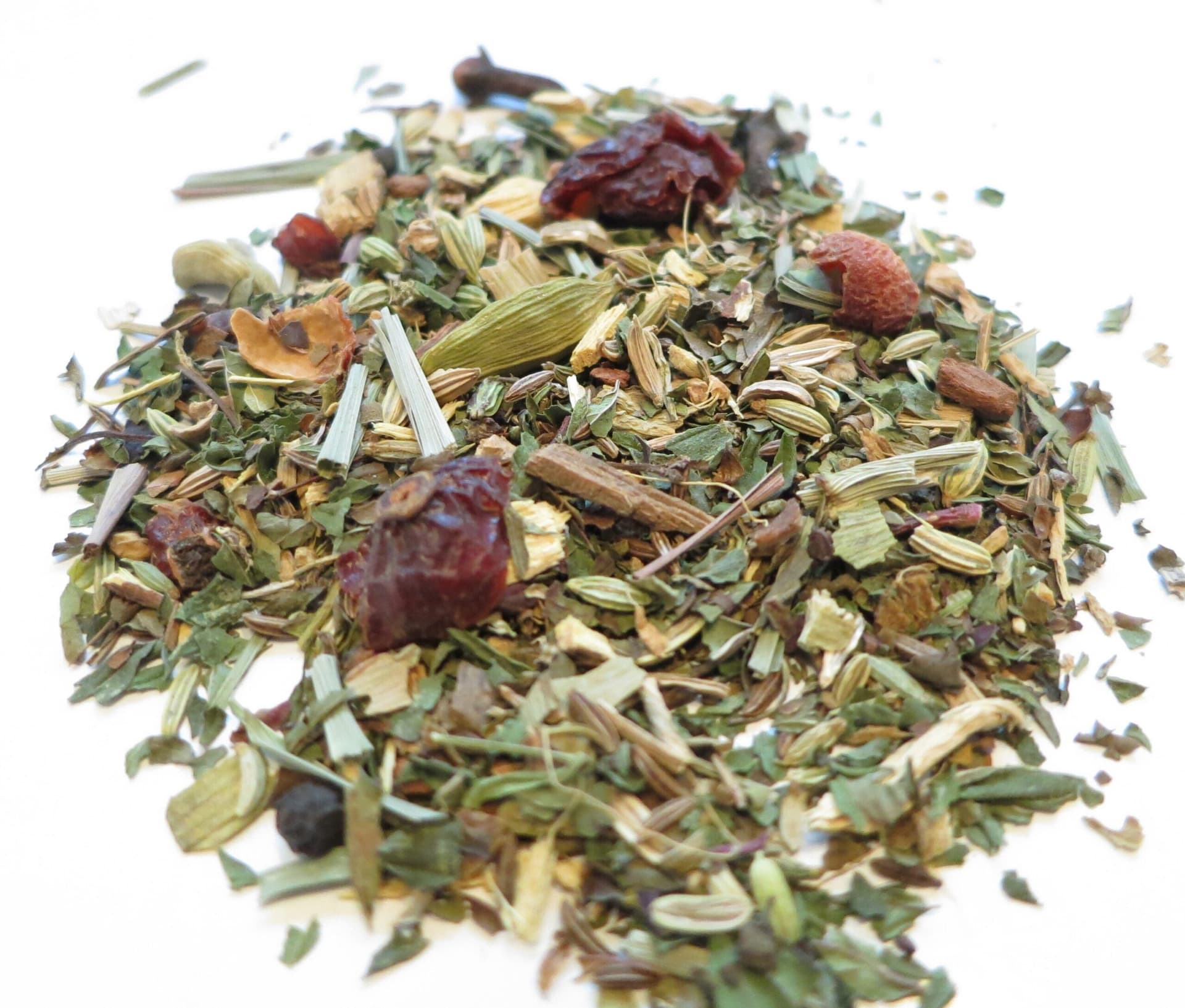
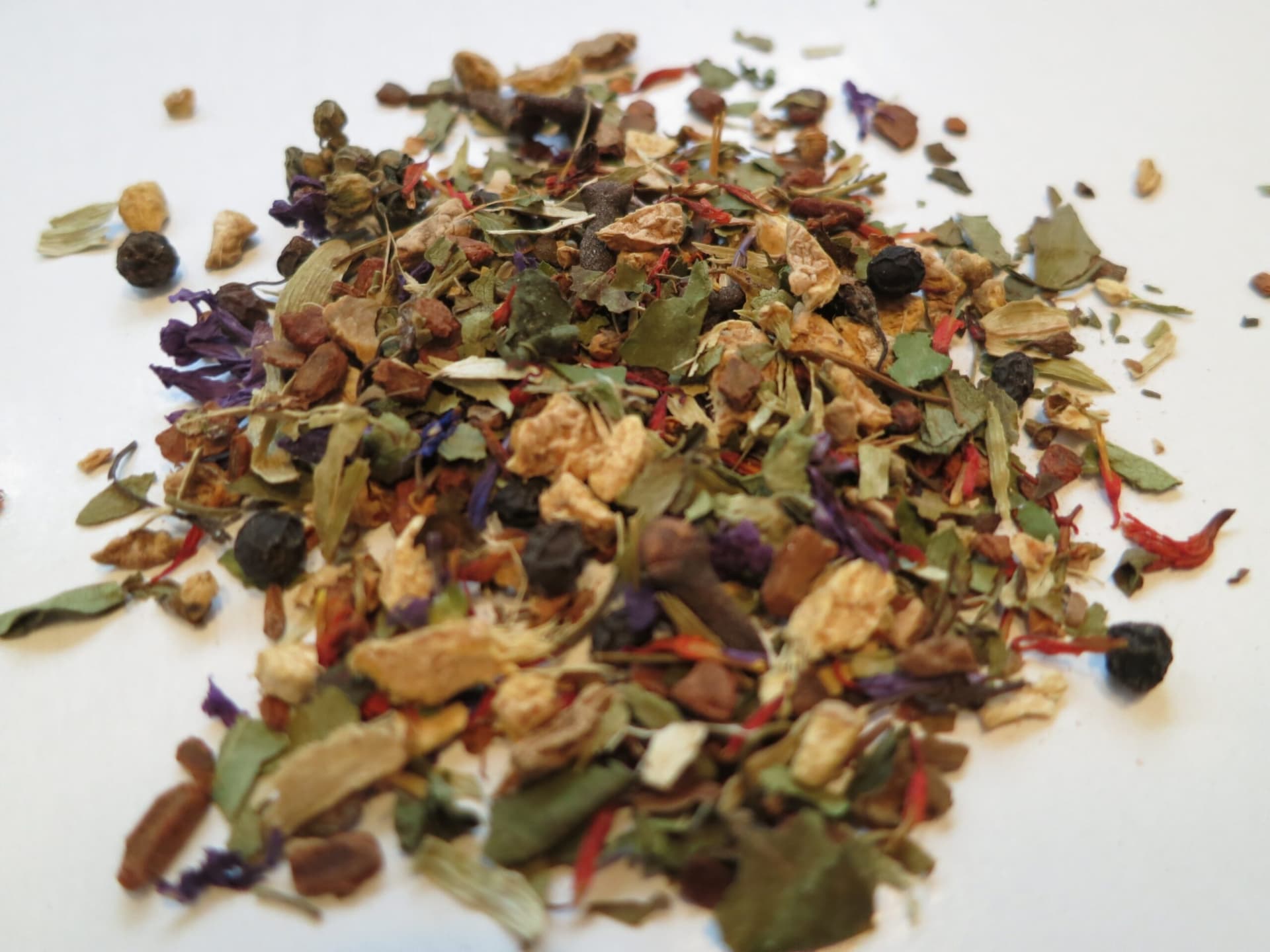
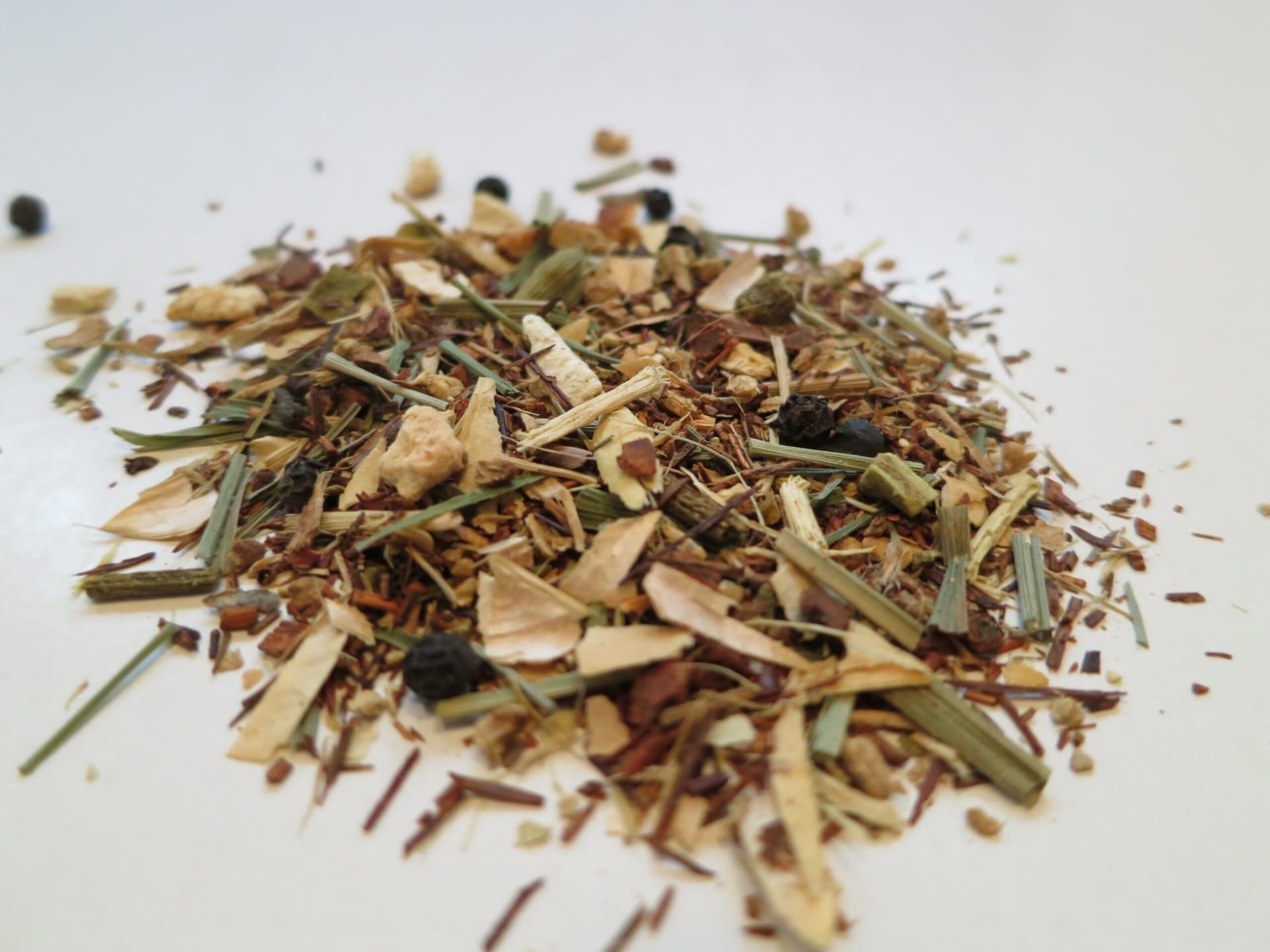
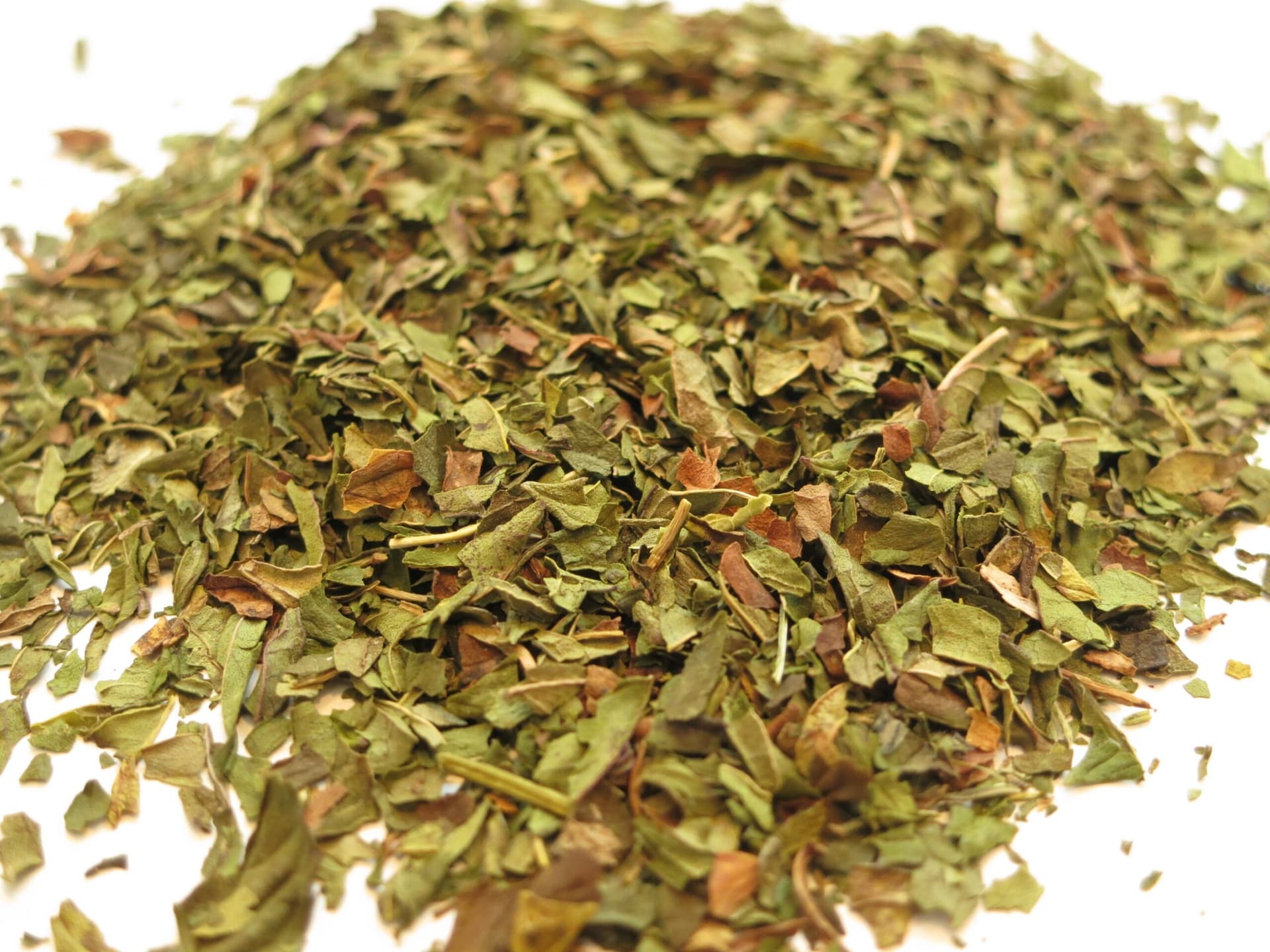
Tulsi holy basil brews up sweeter and mintier than most herbal blends, with lemon and tropical fruit notes threading through the herb and peppermint base, plus a touch of date and honey sweetness. Caffeine-free by nature, it belongs to the same botanical family as culinary mint but is a distinct plant, Ocimum sanctum, grown across the Indian subcontinent in warm, tropical conditions and loamy, well-drained soil.
The tea carries centuries of history alongside its flavour. Tulsi has been cultivated on the subcontinent for millennia and holds a sacred place in Hindu tradition, where it is associated with the god Vishnu and used in daily rituals as well as in Ayurvedic medicine. Its name, meaning roughly "the incomparable one," reflects that standing. Harvesters traditionally pick the leaves at dawn toward the end of the rainy season, when the plant's oils are considered most concentrated — the whole leaf goes into the tea, not just an extract.
Ayurvedic tradition treats tulsi as an adaptogen, and it has long been drunk to help the body handle stress and to support calm. It's also traditionally used for digestive comfort, often taken after a meal, and has a long history as a home remedy for respiratory complaints and seasonal congestion. Some traditional use extends to immune support and general antioxidant benefit, though none of this should be read as a guarantee of any particular health outcome.
To brew it, use water just under a full boil, around 95°C, and let the leaves steep for six to ten minutes to draw out the essential oils fully. A teaspoon of dried leaf per cup is a reasonable starting point, more if you want it stronger. The tea takes well to honey if you want it sweeter, and to a squeeze of lemon, fresh ginger, or a little cinnamon for variation. Blending it with peppermint or cardamom is also a traditional pairing worth trying.