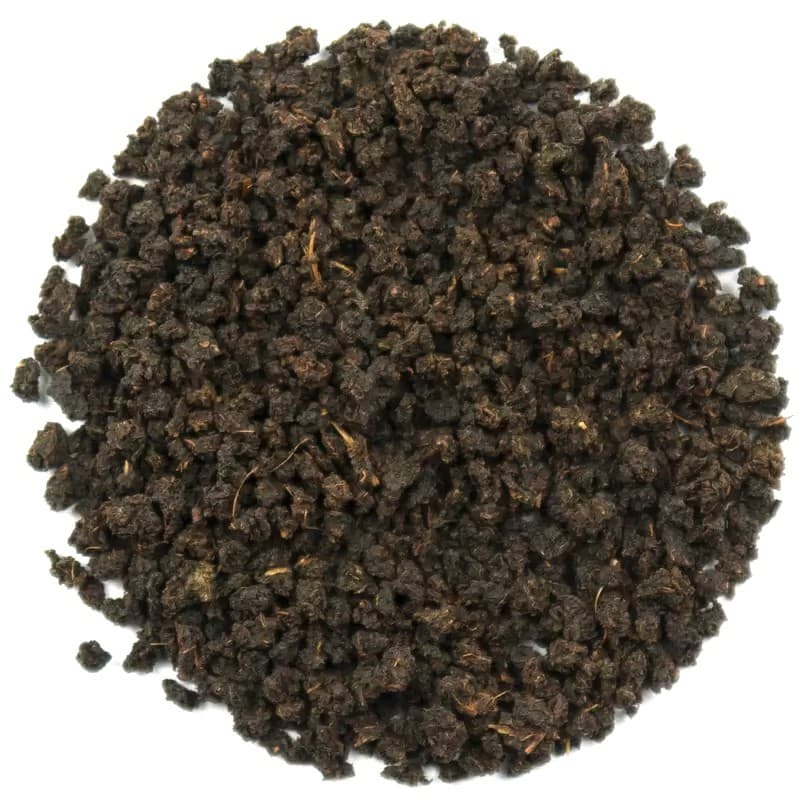
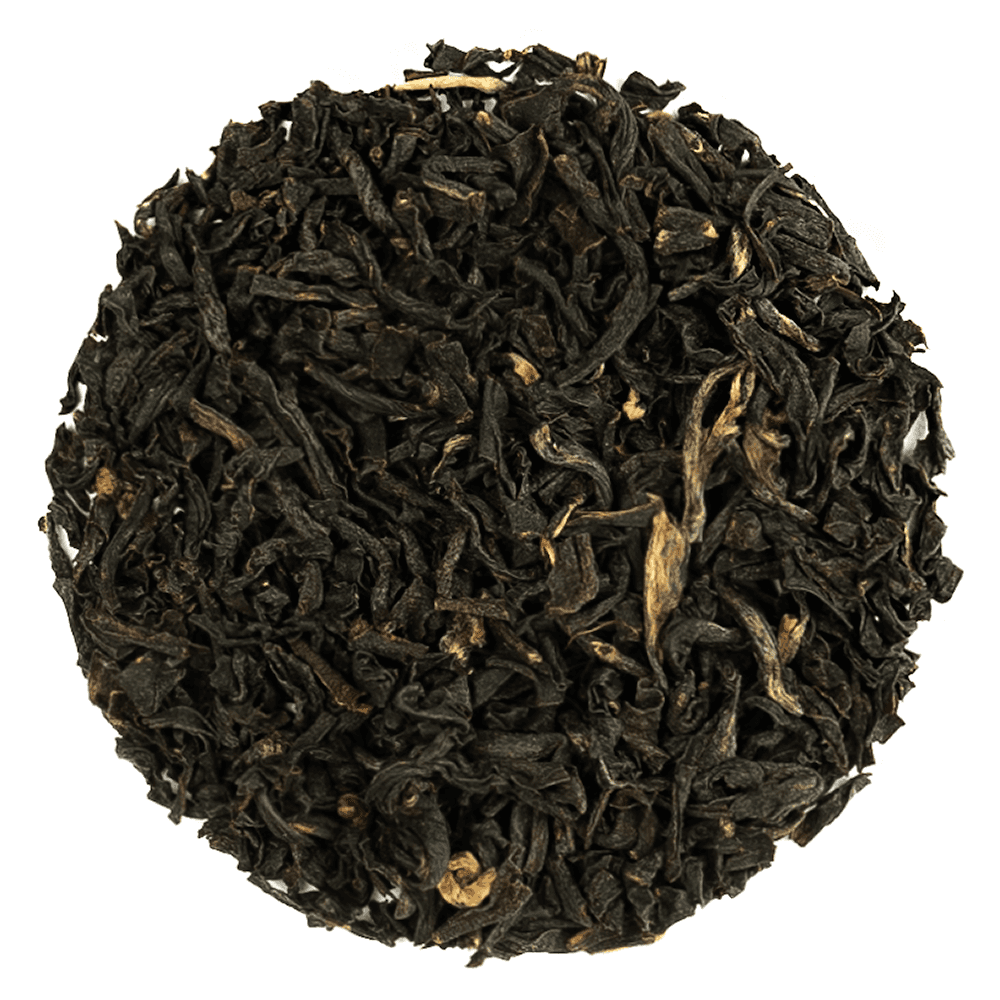
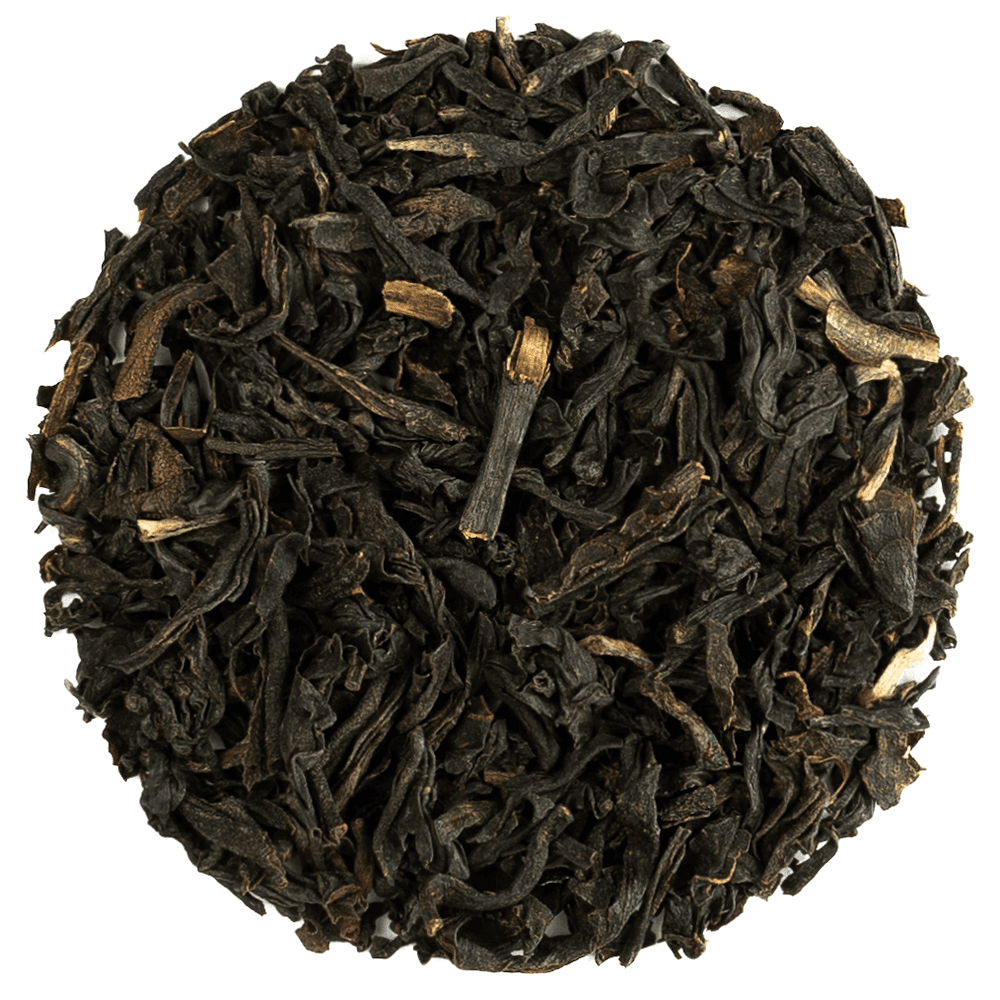
Chinese black tea earns its place at the breakfast table through sheer versatility: malty, smooth, with a thread of honey and lemon running underneath. Some drink it plain to let those layers show; others cut it with milk, where the malt and honey notes hold their own against dairy rather than disappearing into it. There's a grassy edge too, along with a thickness on the palate that keeps the cup from feeling thin.
The tea comes from Anhui Province, in the hilly country that also produced Keemun, one of China's most recognized black teas, first made there in the late 19th century under the Qing Dynasty. Black tea itself is older, tracing back to the Ming Dynasty in the mid-17th century, when tea makers in the Wuyi Mountains of Fujian worked out how to oxidize leaves fully rather than stop the process early as with green tea — the change that darkens the leaf and deepens the flavor, and that gave rise to teas like Lapsang Souchong. Chinese black tea traveled well and kept well, which helped it spread and eventually reach English breakfast blends, where its strength suited British taste. That demand also pushed the British to plant black tea in India and Ceylon, and Chinese production held its reputation for quality even as those colonies became competitors.
To brew it, use water just off the boil, around 95-100°C, and about a teaspoon of leaves per 150-200ml. Pour with a swirl to help the leaves open, then let it steep three to five minutes depending on how strong you want it — tasting around the three-minute mark is a reasonable way to judge. Strain fully before serving to keep the liquor clear, and expect a coppery-red color in the cup. Leaves generally give more than one infusion, each a little different from the last. Stored airtight in a cool, dry spot, they hold their character well.