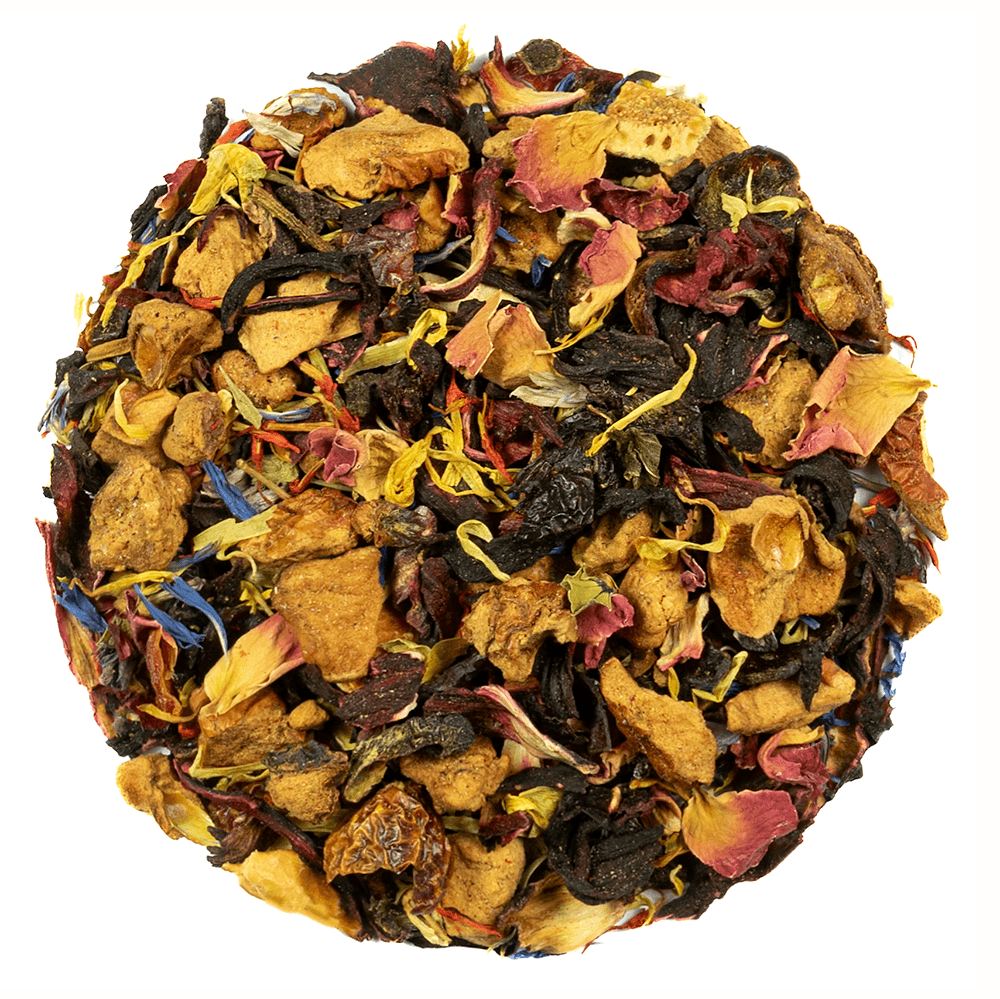
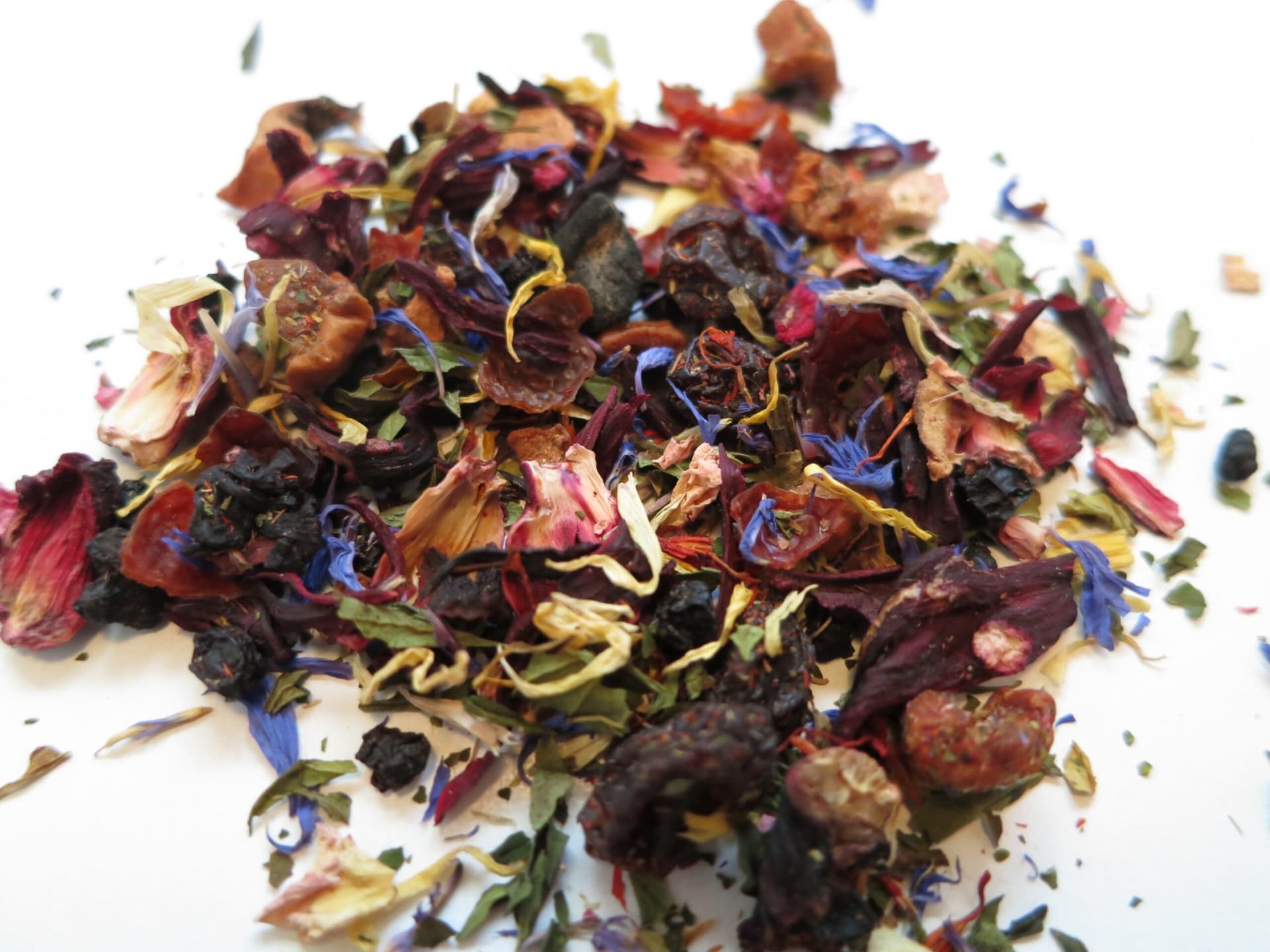
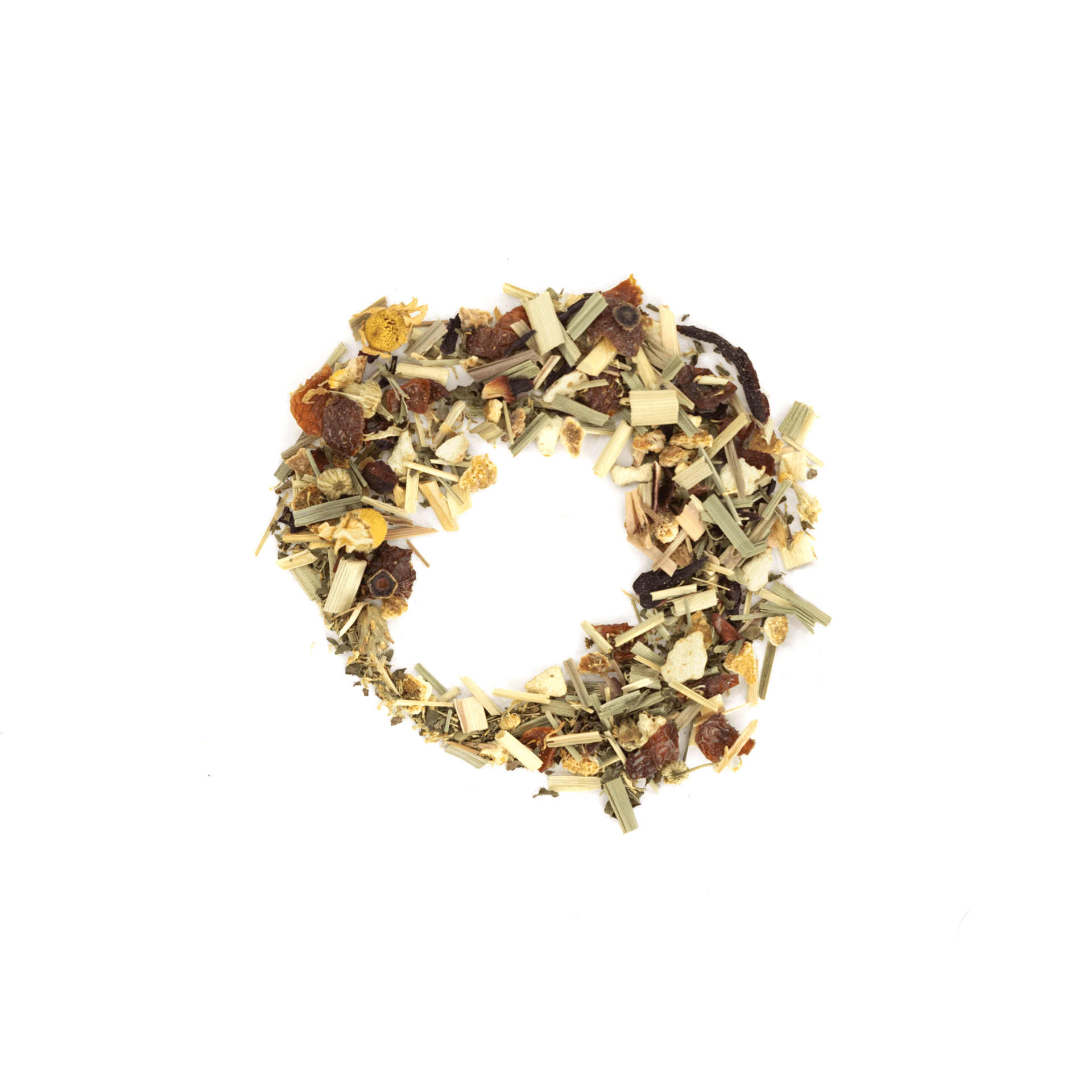
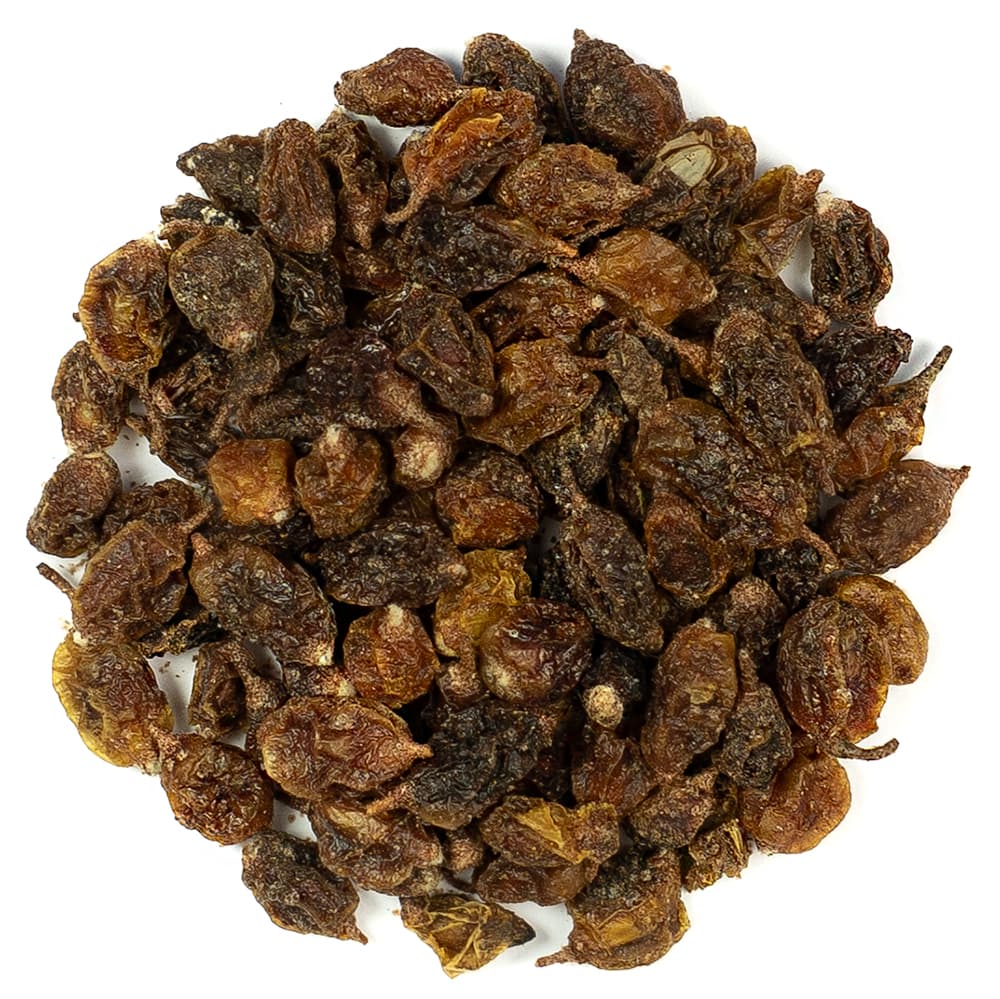
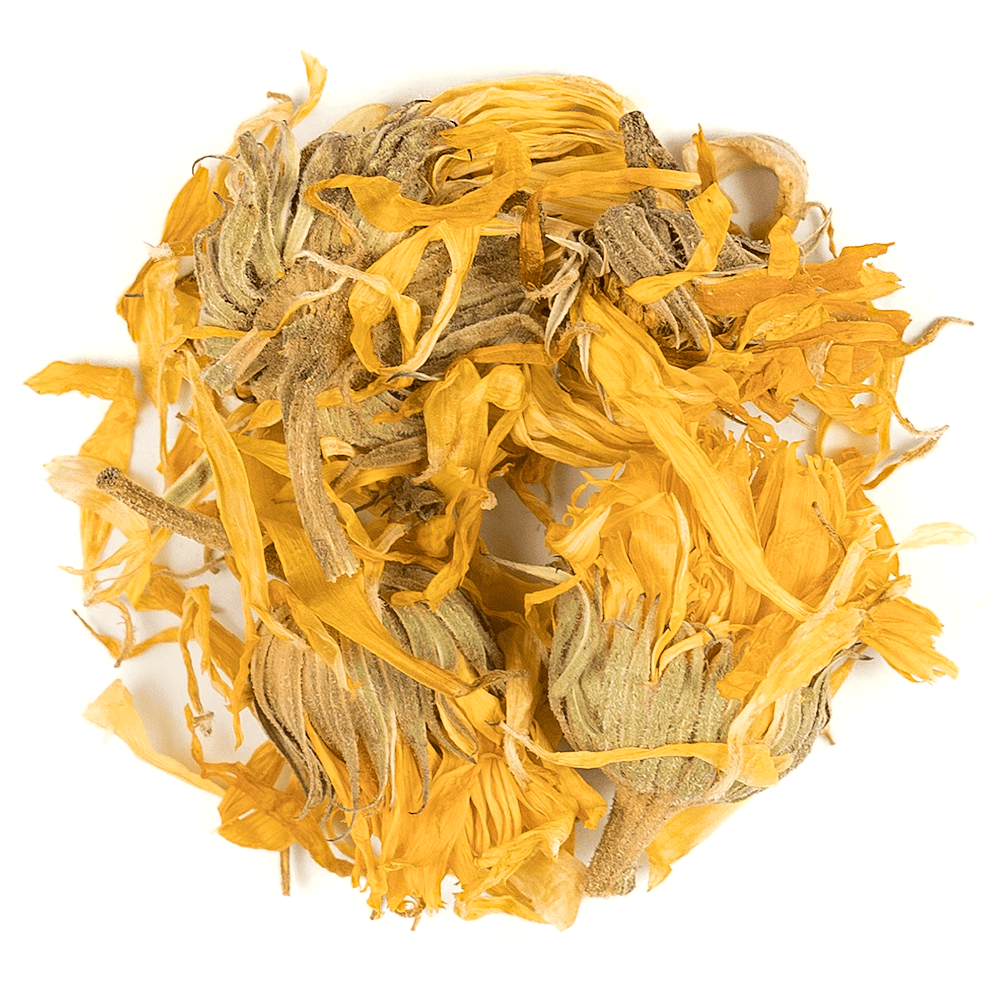
Rosehip and hibiscus make an old pairing that turns out an almost startling ruby-red cup. Hibiscus brings the tartness, rosehip rounds it out with a slight fruity sweetness, and the result carries strong floral, rose, and citrus notes alongside a berry finish — orange and lemon show up at the edges too. It's caffeine-free, so it works as a chilled pour in summer or a warm one when the weather turns.
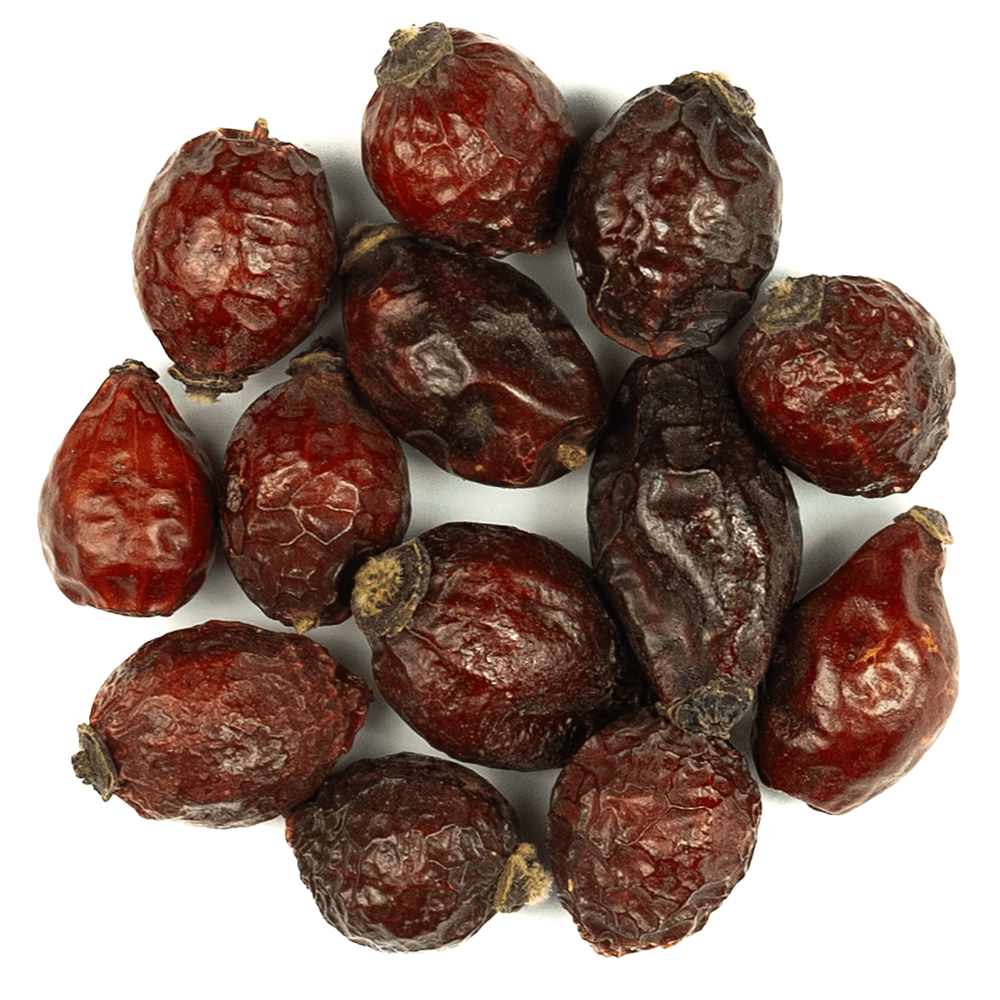
The two plants come from opposite ends of the world. Rosehips are the fruit of the wild rose, native to Europe, western Asia, and parts of Africa and North America, ripening from green to deep red or orange through late summer and autumn. They're usually picked after the first frost, which sweetens them, and grow on shrubs that need little beyond regular watering and an annual prune. Hibiscus is a tropical plant, most closely associated with West Africa, grown in sandy, well-drained soil under plenty of sun; the calyces used for tea are harvested in late autumn while still plump, before winter dries them out.
Each plant carries its own long history. Rosehips were valued in ancient Persia and Greece for both cooking and medicine, and in Britain during the Second World War they became a substitute vitamin C source when citrus was scarce — many households made their own rosehip syrup at home. Hibiscus has deep roots in Egyptian and Sudanese tradition, where it's long been brewed as Karkade, served hot or cold, and has traditionally been used to ease a range of ailments including heart trouble and jangled nerves. By the eighteenth century its cultivation had spread to Central America, India, and China. Blending the two into one tea is a newer idea, one that only really took hold in the twentieth century.
To brew it, use one teaspoon per 200ml of freshly boiled water and let it steep for five to ten minutes — longer steeps draw out more of the tart, floral depth. Strain and drink as is, or add honey or a slice of lemon.