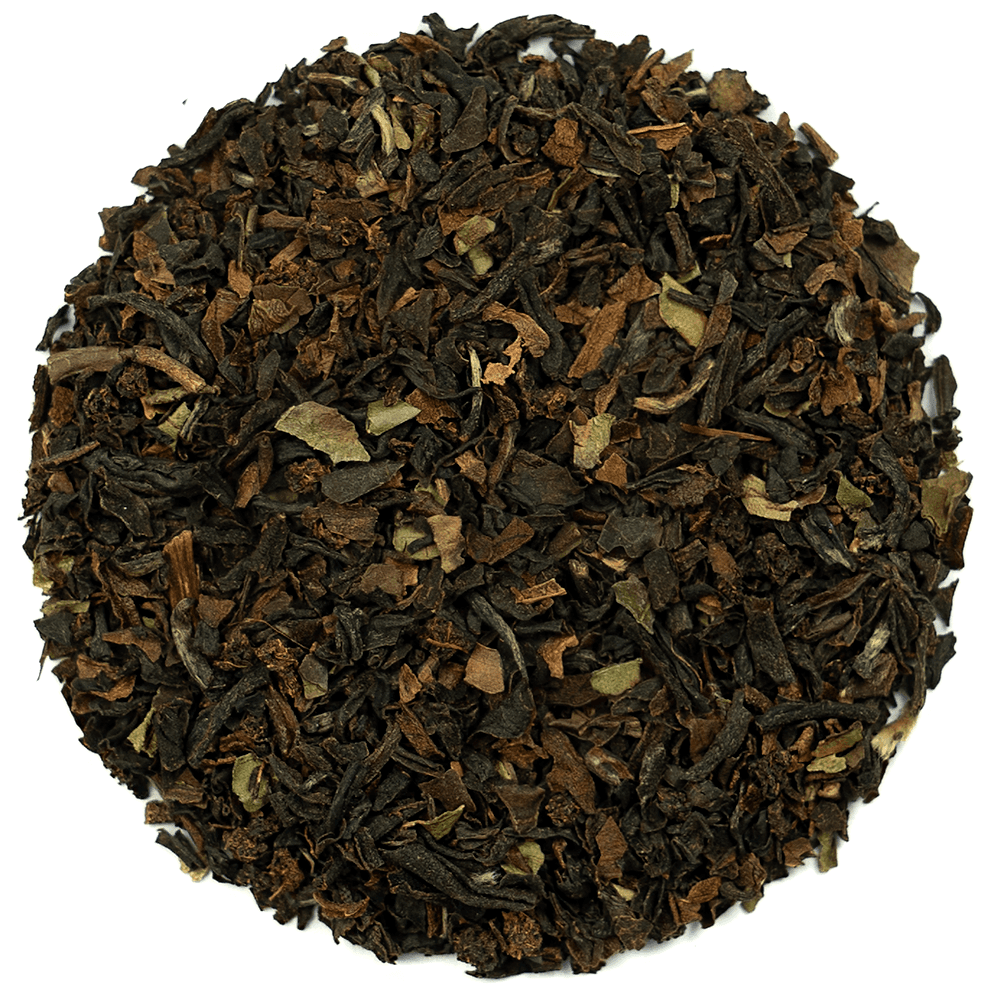
Gingia is not a well-known name in Assam tea, but the estate sits on the north bank of the Brahmaputra, in the Biswanath district, where the river runs through the middle of the Assam valley. The irrigation that comes with that river, combined with fertile soil and the local climate, shows up directly in the character of the leaf, and people who know the estate expect it to become better known over the coming years. This is a second flush, picked between mid-May and June once the leaves have had time on the bush to mature — the flush most Assam drinkers reach for first, unlike Darjeeling, where the early spring picking gets most of the attention.
The grade is GTOP, Golden Tippy Orange Pekoe, less common on shelves than the standard FOP or BOP grades and marked by a high proportion of golden tips. That tip content softens the cup: rather than the sharper, brisker edge some Assams carry, this one leans smoother and milder, with a malt character that runs from the first sip through the last without dropping off. Some drinkers pick up lemon, orange and honey sitting around that malt, and the leaf takes milk well for anyone after a creamier pour rather than a straight black cup.
Steep it for around four minutes in a mug or infuser, using water at a full boil. Expect roughly 45 milligrams of caffeine per 8-ounce cup, enough for a genuine energy lift rather than a token one. Serve it with milk, sugar, honey or lemon, or leave it black. Black tea drinking has also been linked in some research to better cognitive performance later in life, though that is a reason to enjoy the cup rather than a reason to expect it to do any medical work. Tea & Coffee packs this batch fresh to order at its factory in Kent.